You push the vacuum across a rug and the dirt just sits there. You go over the same patch three times. Still there. Your vacuum cleaner is running, making all the right sounds, but picking up almost nothing.
This is one of the most common vacuum complaints, and the good news is that most causes are diagnosable without any special tools. The less good news: some of them require a technician, especially if you own a quality machine worth preserving. This guide walks through every major cause of suction loss, what you can check yourself, and when a local vacuum repair shop will save you time, money, and a lot of frustration.
Why Suction Loss Happens: The Short Version
A vacuum cleaner picks up dirt through a combination of airflow and mechanical action. Anything that interrupts airflow, reduces the pressure differential, or stops the brush roll from agitating the carpet will cut performance fast. These two systems, airflow and brush roll, tend to fail for different reasons, and knowing which one is the problem points you straight to the fix.
The Physics Behind Why Vacuum Cleaners Pick Up Anything at All
The fan inside a vacuum doesn’t pull dirt in. What it does is spin fast enough to drive air toward the exhaust port at high speed. According to Bernoulli’s Principle, faster-moving air carries lower pressure, so that high-speed air streaming out the back drops the pressure inside the machine below the pressure of the room air around it. Air always moves toward lower pressure to balance things out, so the higher-pressure room air rushes in through the intake port to compensate. Whatever loose debris sits in that path comes along with it.
That’s also why every cause of suction loss in this guide traces back to the same root problem: anything that slows the movement of air through the machine shrinks that pressure difference, and a smaller pressure difference means weaker pickup. A clogged filter, a full bag, a cracked hose, a worn belt — they all undermine the same underlying principle.
Common Causes of a Vacuum Cleaner Not Picking Up
1. Full or Improperly Seated Bag or Canister
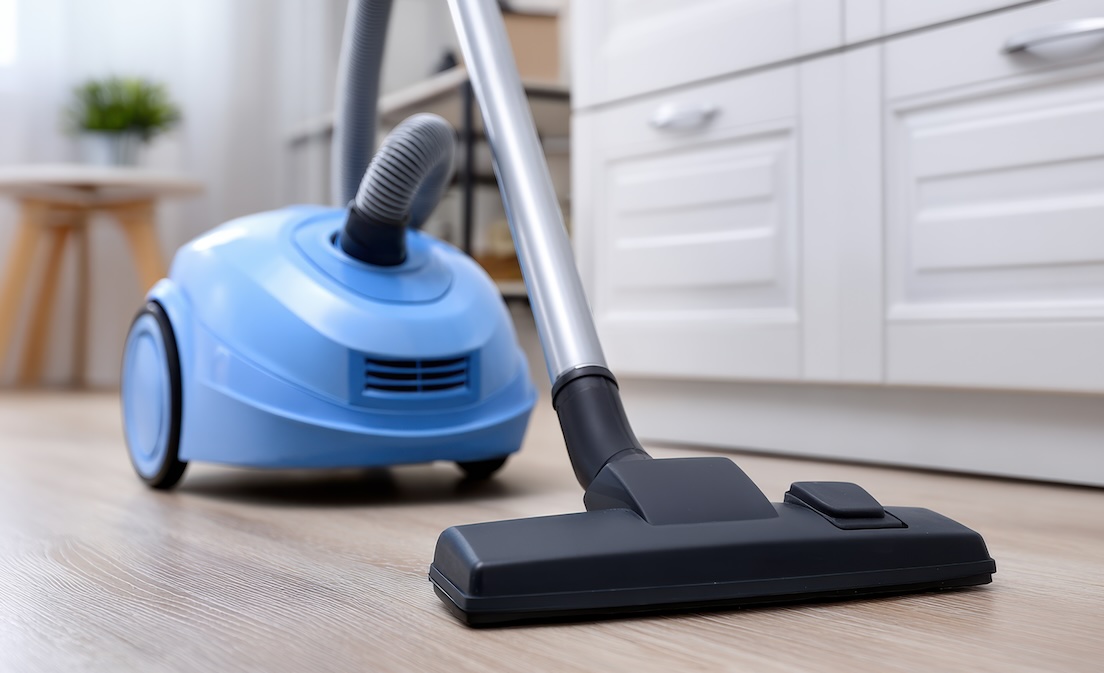
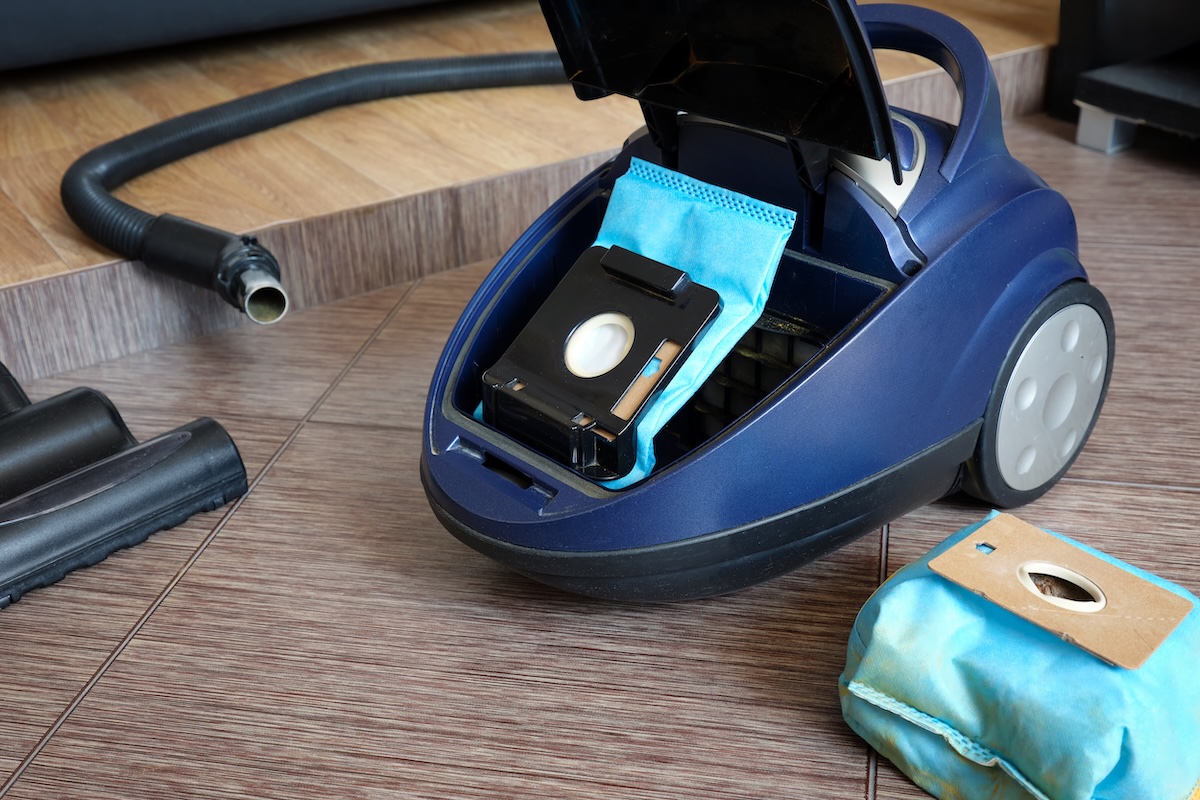
A full bag is the single most common cause of suction loss, and it kicks in earlier than most people expect. Bagged vacuums lose measurable airflow once the bag hits roughly 50–60% capacity because dust packs into the pores of the bag material and restricts air passage. Waiting until the bag looks completely stuffed means running at reduced performance for weeks.
For canister (bagless) vacuums, check that the dust cup is fully seated and that the gaskets around it are clean and intact. A hairline crack or a loose seal is enough to drop suction noticeably.
What to do: Replace the bag or empty and rinse the canister. With premium bagged vacuums like Miele or SEBO, use the manufacturer’s branded bags rather than generic substitutes. Third-party bags are often made from lighter filtration material that collapses more easily under airflow, which reduces both suction and filtration.
2. Clogged or Saturated Filters
Every vacuum has at least one filter, and most modern machines have two or three. These sit between the dirt-collection chamber and the motor to protect it from fine particles. When they clog, airflow drops sharply.
Common filter locations:
- Pre-motor filter (usually a foam or felt pad behind the dust cup or bag compartment)
- HEPA or exhaust filter (near or at the back, where air exits the machine)
- Cyclone separator filters on bagless models
Filters in bagged vacuums need attention less frequently, but they still need it. On bagless vacuums, especially those marketed as “washable,” filters need thorough rinsing and complete drying before reinstallation. A damp filter restricts air worse than a dusty one, and it can promote mold growth inside the motor housing.
What to do: Remove, inspect, and clean or replace filters according to the manufacturer’s schedule. For machines with HEPA filtration like Miele AirClean or SEBO S-Class filters, replacement on schedule matters for both performance and air quality, especially in households with allergies or asthma.
3. A Blockage in the Hose, Wand, or Floor Tool
Clogs in the hose or attachments are more common than most people realize. A sock, a small toy, a clump of pet hair, or a wad of debris can lodge in the hose or the neck of a floor tool and create a near-total blockage.
What to do: Disconnect the hose from the machine and shine a flashlight through it. If you can’t see light at the other end, there’s a clog. A long, flexible brush or a broom handle pushed gently through can usually clear it. Check the elbow joint where the hose meets the floor tool as well; this is a frequent collection point for debris.
On upright vacuums, check the intake port at the base of the machine where it meets the hose connection. Coins and small objects love to wedge there.
4. A Worn or Broken Brush Roll Belt
If your vacuum is running but the floor tool is making a burning rubber smell or a high-pitched squeal, the belt driving the brush roll is the likely culprit. Belts stretch, slip, and eventually snap. A slipping belt lets the brush roll turn slowly or intermittently. A snapped belt stops it entirely.
On carpet, a non-spinning brush roll reduces pickup dramatically. The brush isn’t just cosmetic; it agitates carpet fibers to loosen embedded dirt so the airflow can carry it away.
What to do: Many upright vacuums and floor tools have accessible belt covers you can remove with a coin or a screwdriver. Replacing a belt is a straightforward job on most consumer machines. That said, if the belt has snapped repeatedly in a short period, the brush roll itself may have a bearing problem or there may be hair and debris wound around the axle that’s creating excess drag. At that point, a technician can assess whether cleaning and relubrication will fix it or whether the brush roll needs replacing.
5. A Cracked Hose, Loose Gaskets, or a Broken Seal
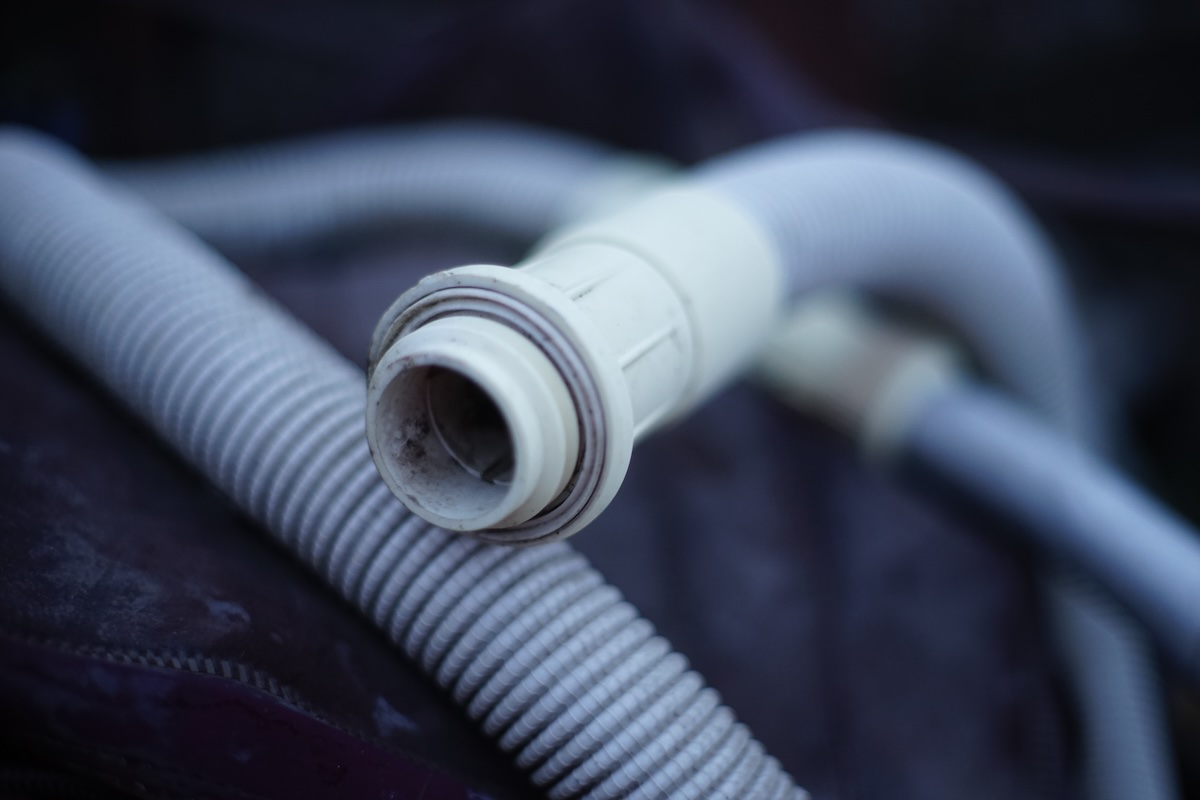
Suction depends on a sealed system. Any air leak between the motor and the floor tool reduces the pressure differential that pulls dirt up. Cracks in the hose (especially near the bends where flex fatigue accumulates), worn door gaskets on the bag compartment, or loose fittings on the wand all allow ambient air to enter the system and short-circuit airflow.
You can feel for leaks by running your hand along the hose while the vacuum is on, or by pressing a piece of tissue near connection points. If the tissue gets pulled toward a joint, air is leaking there.
What to do: Minor hose cracks can sometimes be patched temporarily, but a cracked hose should be replaced. Gaskets for most name-brand vacuums are available through specialty vacuum retailers. Fitting replacements yourself is straightforward on some models and fussy on others; a vacuum shop can do it quickly.
6. Wrong Height Adjustment for the Floor Type
This one gets overlooked. Most upright vacuums and some canister floor tools have a pile-height adjustment that raises or lowers the brush roll relative to the surface. If the head is set too high for low-pile carpet or hard floors, the brush never makes contact. If it’s set too low for thick carpet, the brush drag can stall the motor or reduce airflow by sealing the nozzle against the pile.
What to do: Consult the manual for the correct height setting for each surface type. The correct adjustment lets the brush tips barely graze the carpet surface with light resistance as you push the machine forward.
When Your Vacuum Needs Professional Attention
The checks above will solve most suction problems, and they cost nothing but a few minutes. When they don’t fix it, or when you find the problem is in the motor, the brush roll assembly, or the internal air path, that’s the point where a local vacuum repair shop earns its keep.
Vacuum technicians work with the actual components of these machines every day. They carry parts, have access to manufacturer diagrams, and can often diagnose the exact failure in minutes by listening to the machine run. A repair that would take a careful DIYer several hours of research and tentative disassembly might take a technician 20 minutes.
Common Repairs That Call for a Technician
- Motor inspection and replacement. A motor that whines, surges, smells burnt, or cuts out intermittently has reached the end of its service life or has an electrical fault. Motors are often the most expensive single component in a quality vacuum, and replacing them with a manufacturer-spec or equivalent motor is a job for someone with both the part and the wiring knowledge.
- Brush roll rebuilds and replacements. On premium models, brush rolls are precision components with specific bristle depths and strip patterns engineered for particular carpet types. A worn brush roll on a Miele or SEBO picks up less effectively even when everything else is fine. Technicians can tell on inspection whether a roll needs cleaning, rebalancing, or full replacement.
- Suction path diagnostics. On complex machines like Miele canisters with electronic suction controls, a loss of suction can trace to a sensor fault rather than a physical blockage. Diagnosing electronic components without the service knowledge is difficult to do well.
- Seal and gasket overhauls. After years of use, multiple gaskets can degrade simultaneously. A full gasket inspection and replacement brings the machine back to factory sealing performance.
Why Premium Vacuums Are Worth Repairing
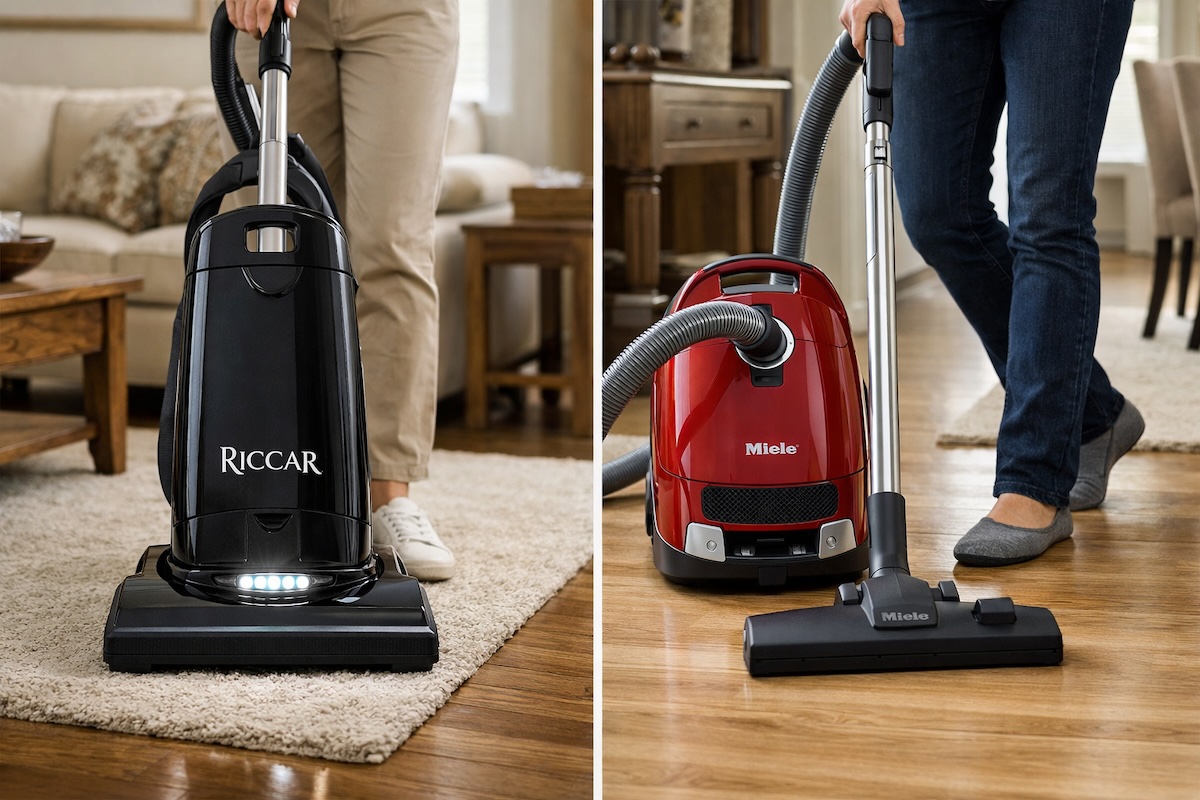
If you own a Miele, SEBO, Riccar, Kirby, Oreck, or a similar quality vacuum, the repair calculus is different from a cheap, disposable big-box store machine.
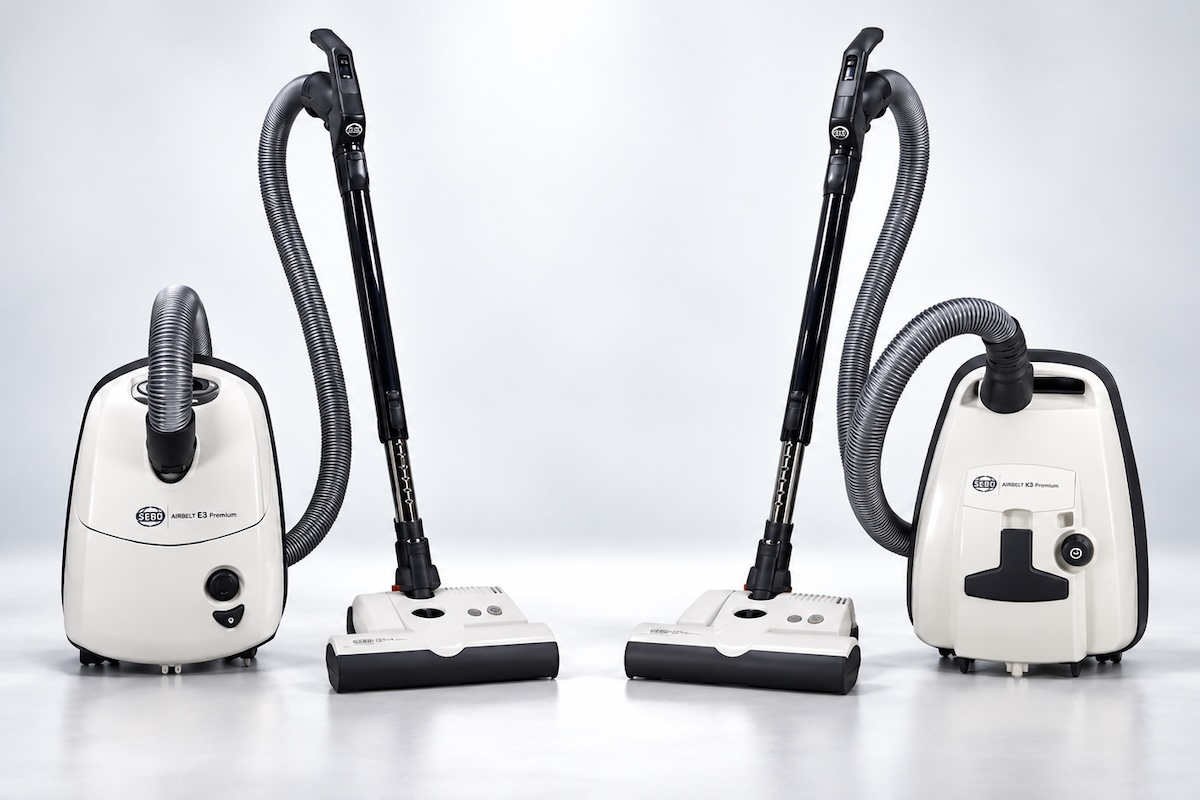
These vacuums are engineered with metal brush roll housings, precision motors wound for longevity, and filtration systems designed to maintain air quality over years of use. A Miele C3 or a SEBO X4 is built with a service life measured in decades, not years. Replacement parts are available, technicians are trained on these machines, and a full overhaul costs a fraction of buying a new machine with comparable performance.
The cut-rate bagless vacuum that came with the apartment move, on the other hand, may not justify the repair cost once the motor or brush roll fails. The engineering isn’t there to support long-term maintenance.
Quality vacuums also do more for the air in your home. HEPA filtration in a sealed system like a Miele AirClean or SEBO S-Class captures particles down to 0.3 microns, which matters for people with allergies, asthma, or pets. That system only performs if the seals, bags, and filters are maintained, which is another reason professional servicing makes sense: you’re maintaining the filtration performance, not just the pickup performance.
Why Local Vacuum Shops Outperform the Alternatives
When a vacuum cleaner isn’t picking up, three options come to mind: fix it yourself, take it to a big-box service center, or bring it to a specialty vacuum shop.
Local vacuum shops carry manufacturer-branded replacement parts, not just generic substitutes. They work on these machines week after week, so they’ve seen most failure modes. Many offer a diagnostic inspection at low or no cost before committing to a repair estimate. And they have an incentive that a big-box service counter doesn’t: they want you to leave satisfied so you come back for bags, filters, and eventually your next machine.
For premium vacuums, local authorized dealers and repair shops often have factory training on Miele, SEBO, Riccar, and similar high-end vacuum brands. That training means they know the tolerances and service procedures for those specific machines, not just general vacuum repair principles.
There’s also a practical convenience argument. A shop familiar with your machine can usually turn around a routine repair in a day or two. Manufacturer mail-in service can take weeks. And unlike trying to navigate parts orders yourself, a good shop will tell you upfront whether a repair pencils out given the machine’s age and condition.
Quick Checklist Before You Call a Shop
Run through these six checks before picking up the phone:
- Is the bag full, or is the dust cup empty?
- Have the filters been cleaned or replaced recently?
- Is there a visible clog in the hose, wand, or floor tool?
- Is the belt intact, and is the brush roll spinning?
- Is the height adjustment set correctly for the floor surface?
- Are all hose connections tight, and is the bag compartment fully latched?
If you check all of these and the machine still underperforms, take it in. A technician can identify in minutes what might take you hours to track down, and on a quality vacuum, the time is well spent.
Frequently Asked Questions
Why does my vacuum lose suction on carpet but not on hard floors?
On hard floors, the brush roll and pile height matter less because airflow across a flat surface is efficient even with a partial clog or a worn brush. On carpet, both factors matter. A worn brush roll, wrong height adjustment, or a partial blockage that only shows up under high airflow resistance will often only become obvious on thick carpet.
Can I use any replacement bag in my vacuum?
Third-party bags will often fit, but performance varies significantly. The filtration media in replacement Miele AirClean bags and SEBO bags for example is matched to the airflow and particle load of those machines. Some alternatives may pass more fine dust back into the room and collapse more easily under suction, reducing airflow sooner. For vacuums purchased for their filtration performance, OEM manufacturer bags or quality generics are worth the price.
How often should I service a quality vacuum cleaner?
For everyday residential use, some technicians recommend an inspection and tune-up every 2 to 3 years. This typically includes a deep cleaning of the air path, belt replacement, brush roll inspection, gasket check, and motor test. At that interval, it’s inexpensive preventive maintenance rather than an emergency repair.
My vacuum smells burnt. Should I keep using it?
Stop using it until you’ve checked it out.
A burning smell usually means the belt is failing, the brush roll is stalled and the belt is burning against it, or the motor is overheating. Continuing to run the machine can damage the motor or create a fire risk. Turn it off, let it cool completely, and check the belt and brush roll. If those look fine and the smell returns when you run it again, bring it in to a vacuum technician before using it further.
Is it ever worth repairing a vacuum vs. buying new?
For inexpensive machines under about $100, the answer is usually no once a major component fails. For mid-range machines between $150 and $400, it depends on the repair cost. For quality machines from Miele, SEBO, Riccar, Kirby, and similar brands, repair is almost always the better economic choice. These machines hold their performance when properly maintained, and the cost of replacing equivalent filtration, build quality, and longevity is substantially higher than a professional repair.