Bagged upright vacuums have been steadily overshadowed by bagless and cordless models in mainstream retail, but they remain the preferred choice among allergy specialists, professional cleaners, and households managing pet hair or heavy carpet at scale. The reasons come down to how the bag itself functions: as a sealed filtration chamber rather than an open canister, it changes what happens to dust and allergens the moment the vacuum is turned off.
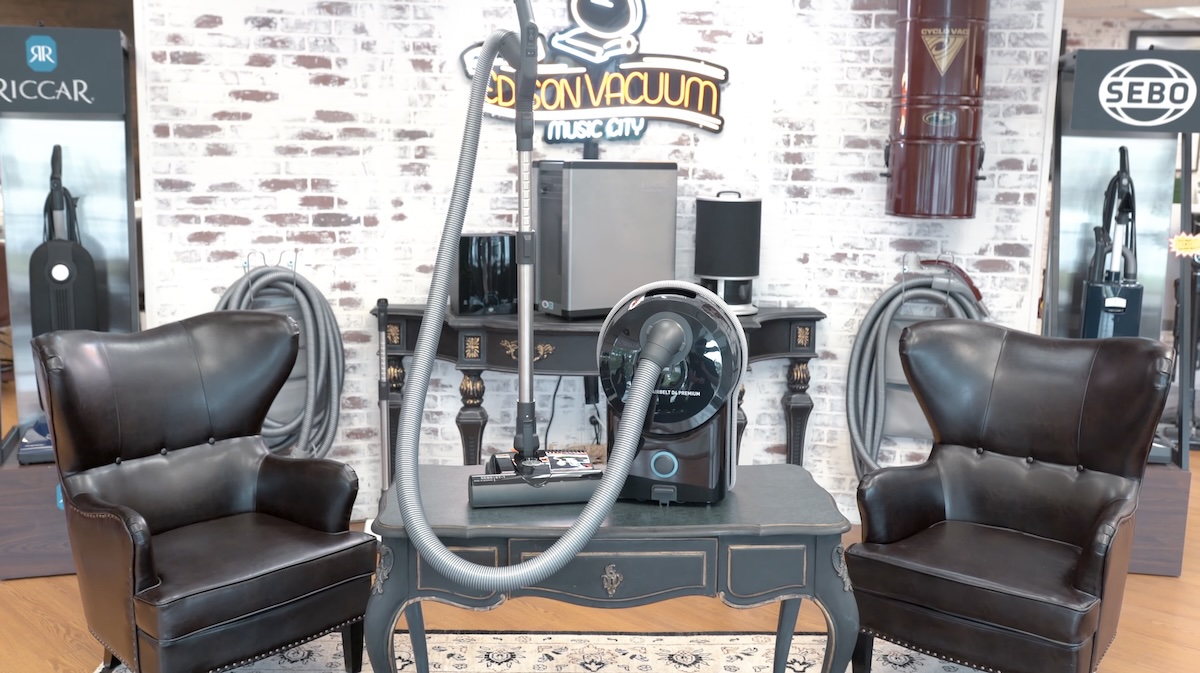
This guide covers how bagged upright vacuums work, who benefits most from choosing one, how they compare to bagless models on the specific dimensions that matter, what to look for when evaluating one, and how established vacuum cleaner brands like SEBO, Riccar, and Miele have approached the category differently.
How Bagged Upright Vacuums Work
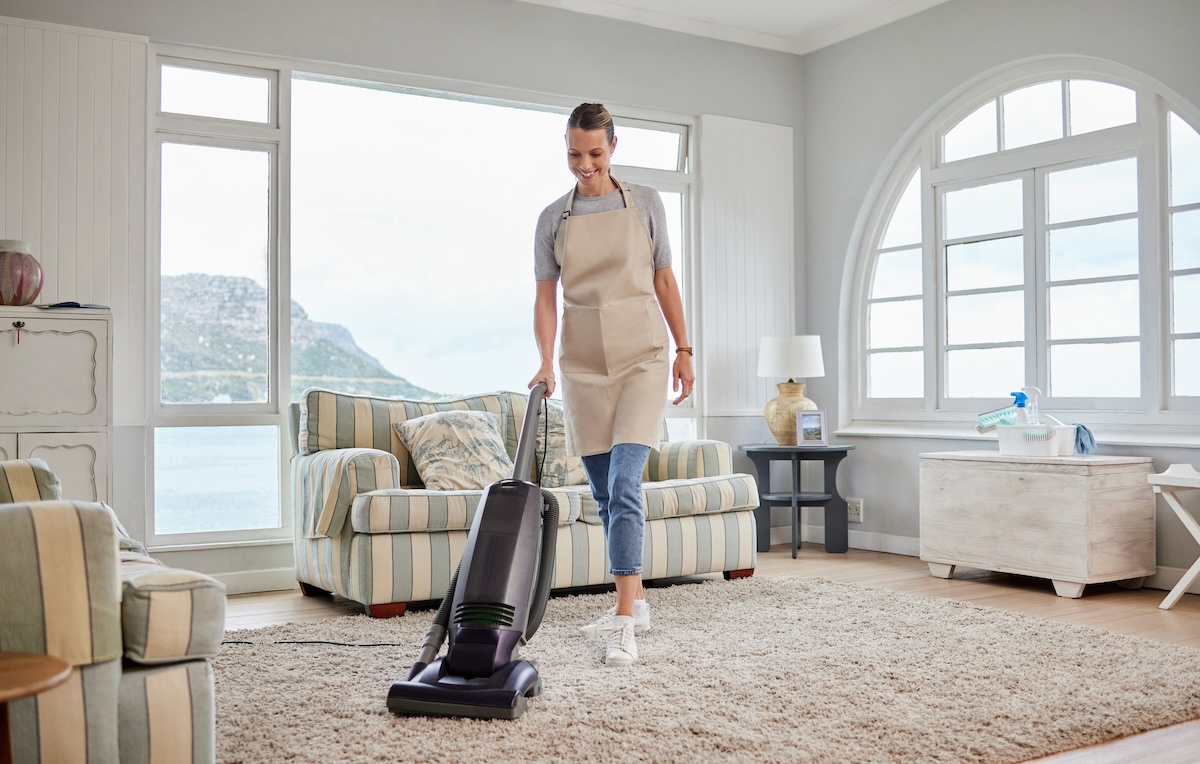
A bagged upright vacuum pulls air and debris through a hose or intake channel into a disposable or reusable bag positioned inside the machine body. The bag itself is the primary filtration medium: air passes through its porous fibers and exits the vacuum, while dust, debris, and particulate matter are captured inside. Once full, the bag is removed and either discarded (in disposable systems) or emptied and reused (in cloth systems), and a replacement is installed.
This differs structurally from bagless vacuums, which use a rigid plastic canister to collect debris and rely on a separate filter, typically HEPA or a multi-stage cyclonic system, to catch fine particles before exhaust air leaves the machine.
Both approaches can achieve strong filtration performance, but the mechanism by which debris is contained (and more importantly, released back into the room!) differs in a way that can be very important for certain households.
Bagged vs Bagless: The Meaningful Differences
The comparison between bagged and bagless vacuums tends to get flattened into a simple convenience argument, but the meaningful differences sit in three areas: dust exposure during disposal, filtration consistency, and long-term maintenance cost.
Emptying a bagless canister means opening it directly over a trash bin, which exposes the user to a cloud of fine dust and allergen particles at the exact moment the canister is opened. This is the single biggest practical difference for allergy sufferers. Replacing a full bag in a bagged vacuum, by contrast, involves sealing the bag closed (most disposable bags self-seal or have a cardboard collar that closes the opening) and disposing of the entire unit without exposing its contents to the room air.
Bagless vacuums also tend to lose suction as their canister fills, because the debris itself begins to obstruct airflow well before the canister reaches capacity. Bagged vacuums generally maintain more consistent suction through more of the bag’s fill cycle, particularly with cloth or multi-layer paper bags designed for airflow. Bagless filters also require regular washing and complete drying, and using a filter that has not fully dried, or skipping cleaning altogether, can degrade both suction and filtration performance over time.
| Factor | Bagged Upright | Bagless Upright |
|---|---|---|
| Dust exposure at disposal | Minimal; sealed bag removal | Higher; open-canister dumping |
| Suction consistency | Steadier through most of the fill cycle | Declines as canister fills |
| Ongoing cost | Recurring bag purchases | Occasional filter replacement |
| Maintenance required | Swap bag when full | Wash and dry filters regularly |
| Capacity visibility | Fill indicator or weight/feel | Visible through canister |
| Typical unit weight | Comparable to bagless in most models | Comparable to bagged in most models |
Who Benefits Most From a Bagged Upright
A few household profiles tend to see the clearest benefit from choosing a bagged model over a bagless one.
Allergy and asthma sufferers. The sealed-bag disposal process avoids the dust plume that comes with emptying a bagless canister. For households managing dust mite allergies, pollen sensitivity, or asthma, this single difference is often the deciding factor. Bagged vacuums with HEPA-rated filtration are often recommended specifically for this reason—this article on the American Lung Association website recommends using a vac with a HEPA filter inside as well.
Pet owners with heavy shedding breeds. Pet hair and dander accumulate quickly, and a bag with strong capacity and good airflow design can handle repeated full loads without the suction drop-off that bagless canisters can experience as pet hair mats against filter surfaces. Pet dander, in particular, is a fine particulate that benefits from the containment a sealed bag provides.
Households with substantial carpeted square footage. Carpet holds far more embedded debris than hard flooring, and vacuuming carpet regularly fills a collection chamber faster than the same routine on hard floors. A bagged system’s more consistent suction across the fill cycle tends to matter more in carpet-heavy homes, where the vacuum works harder and processes more debris per session.
Commercial and high-frequency use. Cleaning businesses, offices, and rental properties that vacuum daily or near-daily often favor bagged uprights for the same suction-consistency and dust-containment reasons that matter to allergy sufferers, plus the practical advantage of a quick bag swap over a canister emptying and filter-washing routine mid-shift.
Filtration & Allergen Containment
Filtration quality in a bagged vacuum depends on both the bag material and any additional filtration stages built into the machine. Multi-layer bags, sometimes marketed as HEPA bags or micro-filtration bags, are constructed from several layers of increasingly fine material, allowing the outer layers to capture larger debris while inner layers trap microscopic particles down to the sub-micron range.
Many bagged upright vacuums pair the bag with a secondary filter positioned before the exhaust, and some include a true HEPA filter certified to capture 99.97% of particles at 0.3 microns. The combination of a well-designed bag and a certified exhaust filter creates two points of containment rather than one, which is part of why sealed-system vacuums are frequently recommended for households managing significant allergy or respiratory sensitivity.
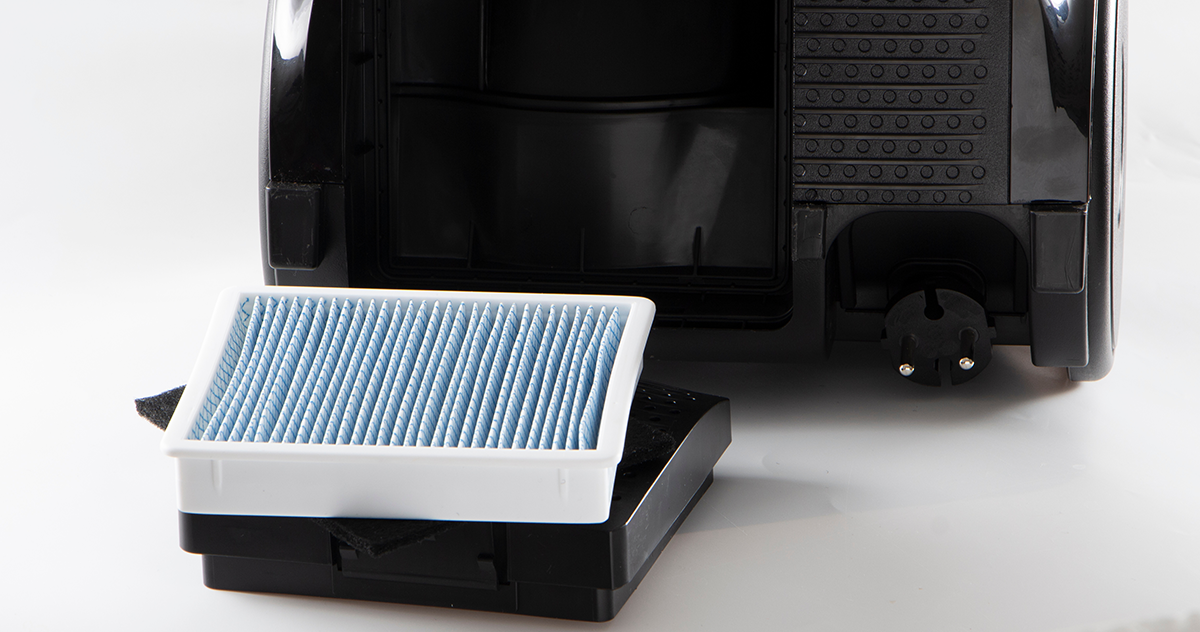
It is worth noting that not every bag marketed as “allergen” or “HEPA-style” is independently certified. Checking whether a specific filtration claim carries a recognized certification, rather than relying on marketing language alone, is a reasonable step when filtration performance is the primary purchasing consideration.
Suction Consistency Over the Life of the Bag
Suction performance in any vacuum is a function of airflow, and airflow is affected by how much resistance the collection system creates as it fills. In a bagless canister, incoming debris settles directly in the airflow path, and larger debris in particular can begin restricting airflow well before the canister looks full. In a well-designed bagged system, the bag material itself is engineered to maintain porosity even as it fills, distributing debris in a way that keeps more of the surface area available for airflow.
This is not universal across all bagged vacuums. Cheaper single-ply paper bags can clog faster than multi-layer cloth or synthetic bags, and a bag that is overfilled past its rated capacity will restrict suction regardless of design quality. Manufacturers generally recommend replacing a bag once it reaches roughly two-thirds full, rather than waiting until it is packed to capacity, to maintain consistent performance.
Bag Types & What They’re Made From
Vacuum bags fall into a few general categories, and the material affects both filtration quality and durability.
Single-ply paper bags are the most basic and least expensive option, offering adequate but not exceptional filtration. They tend to clog more readily under heavy debris loads.
Multi-layer paper or synthetic bags use two or more layers of material with progressively finer pores, capturing a broader range of particle sizes while maintaining better airflow than single-ply designs. These are the standard bag type in most mid-range and higher-end bagged vacuums today.
Micro-filtration or HEPA-style bags add a dedicated fine-particle layer designed to trap allergens and microscopic dust. These typically cost more per bag but offer the strongest containment performance for households prioritizing air quality.
Cloth bags are a reusable option found on some higher-end and commercial-grade models. Rather than being discarded, they are removed, emptied, and returned to service. Cloth bags reduce the ongoing cost of disposable bags but require the user to empty them, which reintroduces some of the dust exposure that bagged systems are otherwise chosen to avoid, so this tradeoff is worth considering for allergy-focused buyers specifically.
Top Brands: SEBO, Riccar, and Miele
A handful of manufacturers have built their reputations specifically around bagged upright design, at a time when much of the broader vacuum market shifted toward bagless and cordless models. Each has taken a somewhat different engineering approach.
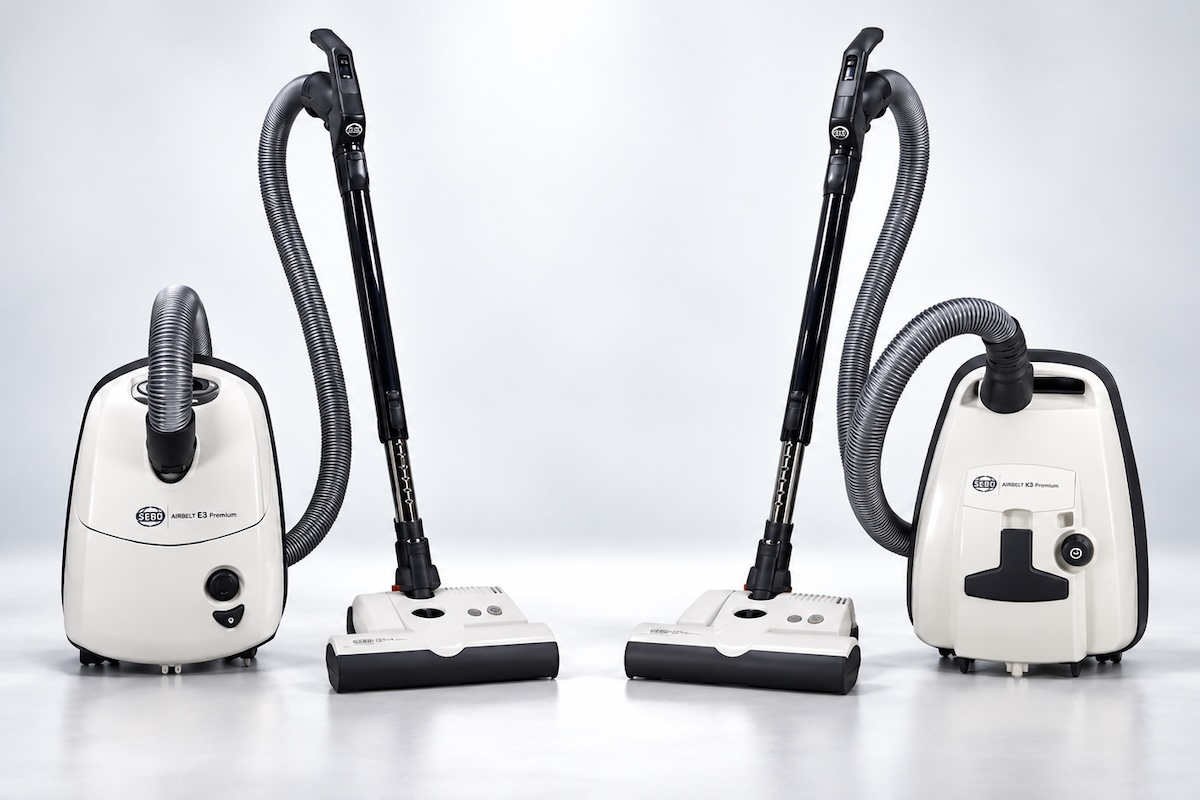
SEBO, a German manufacturer, is widely known in the vacuum industry for durability and consistent suction performance, with commercial-grade motors used across both its residential and commercial upright lines. SEBO’s bagged uprights are frequently used in commercial cleaning settings, which speaks to their build quality under repeated daily use. The brand’s sealed filtration system and bag design are commonly cited by allergy and asthma organizations that maintain product recommendation lists.
Riccar, a U.S.-based manufacturer, has built its reputation around bagged upright vacuums specifically, rather than treating bagged models as one line among many. Riccar vacuums are known for metal construction in higher-tier models and a service-oriented approach, often sold and serviced through independent vacuum retailers rather than mass-market channels. This distribution model tends to appeal to buyers who value long-term parts availability and repairability over the disposable-appliance approach common in big-box retail.
Miele, a German manufacturer with a broader home appliance portfolio, produces bagged canister vacuums as well as upright vacs known for engineering precision, sealed HEPA filtration systems, and a reputation for longevity that extends across the company’s full appliance line. Miele’s AirClean sealed system is a frequently referenced example of how a well-engineered bag and filter combination can minimize allergen release during normal operation as well as during bag changes.
These three brands do not represent the entire bagged upright category, but they illustrate the range of engineering priorities available: commercial-grade durability, U.S.-based service infrastructure, and precision-engineered sealed filtration, respectively. Evaluating any bagged upright against these reference points is a reasonable way to calibrate expectations for build quality and filtration performance.
What to Look For When Choosing One
- Sealed system design. A vacuum can use a bag and still leak dust from poorly sealed joints, hose connections, or an exhaust that lacks a secondary filter. Look for manufacturers that specifically describe their filtration as a “sealed system,” which indicates the entire airflow path is engineered to contain fine particles.
- Bag capacity and cost per unit. Bag capacity varies meaningfully between models, and larger capacity means fewer bag changes over time. Weigh the per-bag cost against how frequently you vacuum and how large the space is, since a cheaper vacuum with small, expensive bags can cost more to run over several years than a pricier model with larger, more affordable bags.
- Certified HEPA filtration, if allergies are a priority. Look specifically for a true HEPA rating on the exhaust filter rather than filtration language alone. A certified HEPA filter has been independently tested to a defined particle-capture standard.
- Brush roll type and adjustment. Households with a mix of carpet and hard flooring benefit from a brush roll that can be turned off or adjusted for hard surfaces, since a spinning brush roll on hard floors can scatter fine debris rather than collecting it.
- Parts and service availability. Bagged vacuums, particularly higher-end models, are often designed to be repaired rather than replaced. Brands with strong independent dealer networks or long-standing parts availability tend to support a longer usable life for the machine.
- Weight and maneuverability. Bagged uprights range considerably in weight depending on motor size and build materials. If the vacuum will be carried up and down stairs regularly, testing the weight and handle balance in person, where possible, is worth the extra step.
Maintenance/Bag Replacement
Bagged vacuum maintenance is generally simpler than bagless maintenance, but it is not maintenance-free. Bags should be replaced once they reach roughly two-thirds capacity rather than left until full, since suction and cleaning effectiveness both decline as the bag approaches capacity. Most manufacturers print a fill-line indicator or include a mechanical fill indicator that signals when a bag needs changing.
Beyond the bag itself, most bagged uprights include a secondary motor filter or exhaust filter that requires periodic replacement or cleaning, typically every three to six months depending on usage frequency. Brush rolls should be checked periodically for hair and thread wrap, which can reduce brush contact with the floor and strain the motor over time. Belts, which drive the brush roll, wear out over months or years of use and are a common replaceable part on most upright models.
Cost Considerations
The upfront price of a bagged upright is only part of its total cost. Replacement bags are an ongoing expense, typically ranging from under a dollar to a few dollars per bag depending on brand and filtration tier, and purchased in multi-packs. A household vacuuming a few times a week might go through a dozen or more bags per year, while lighter use stretches that further.
Weighed against this is the reduced likelihood of needing filter replacements or motor repairs caused by fine dust bypassing a bagless filtration system, along with the generally longer service life reported for well-maintained bagged machines from established manufacturers. For buyers comparing total cost of ownership rather than just sticker price, factoring in several years of bag purchases against a bagless model’s filter replacement costs gives a more complete financial picture than comparing upfront prices alone.
Frequently Asked Questions (FAQ)
Q: Are bagged vacuums better for allergies than bagless vacuums?
A: Many allergy and asthma organizations recommend bagged vacuums with HEPA-rated filtration for allergy-sensitive households.
The main reason has to do with disposal. Sealed bag removal avoids exposing the user to a cloud of dust at the moment of emptying, which is a common occurrence with bagless canisters. Filtration quality still depends on the specific model and its filter certification, so the bag alone is not the only factor.
Q: How often should a vacuum bag be replaced?
A: Once the bag reaches roughly two-thirds full, rather than waiting until it is completely packed. Suction and pickup performance decline as the bag nears capacity. Actual frequency depends on usage and the size of the space being cleaned.
Q: Do bagged vacuums lose suction as the bag fills, similar to bagless models?
A: To some degree, yes, though generally less than bagless canisters.
Multi-layer bags designed for airflow tend to maintain more consistent suction through more of the fill cycle than a bagless canister, where debris accumulates directly in the airflow path.
A bag overfilled past its rated capacity, however, will restrict suction regardless of design quality.
Q: Are generic replacement bags as good as brand-name bags?
A: They can fit correctly and perform adequately, but filtration quality and material durability vary between manufacturers. A generic bag made from thinner or fewer layers of material may filter less effectively or clog faster than a bag engineered specifically for that vacuum model. Checking reviews or manufacturer compatibility information before switching from OEM bags is a reasonable step.
Q: Why do commercial cleaning companies often use bagged vacuums?
A: Three reasons come up most often: consistent suction across heavy daily use, a faster bag swap compared to emptying and cleaning a canister and filter mid-shift, and the durability of commercial-grade bagged motors.
Brands like SEBO in particular have built a substantial share of the commercial cleaning market around these advantages.
Q: Do bagged vacuums cost more over time than bagless models?
A: They involve a different cost structure. Bagged vacuums carry the ongoing cost of replacement bags, while bagless models carry occasional filter replacement costs and, in some cases, a higher likelihood of motor or filter issues if maintenance is neglected. Total cost of ownership depends on usage frequency, bag or filter pricing for the specific model, and how well the machine is maintained over its lifespan.