Vacuum cleaner manufacturers don’t always make shopping for replacement parts easy. In fact, they sometimes seem to go out of their way to make it confusing. If you’re shopping for replacement bags, filters, belts, a brush roll, or just about any other compatible vacuum cleaner replacement parts, the first thing you’ll need is your vacuum’s model number.
Now that may sound simple, but it’s one of the most common places people get stuck. Many vacuums look nearly identical, even within the same product line, and manufacturers often make small changes from one model to the next. A filter or vacuum bag that fits one version may not fit another.
A vacuum might have three different names printed on it, a handful of numbers scattered around the housing, and a label hidden somewhere you’d never think to look unless someone pointed it out. Then you get online, type in Miele or Sebo bags, and suddenly you’re staring at dozens of products that all seem like they might fit your machine. The good news is that once you know where to find the vacuum cleaner model number, getting replacement parts instantly becomes much, much simpler.
Whether you’re the proud owner of a Miele canister that’s been cleaning your home for 15+ years, a savvy SEBO upright owner, or have a Riccar, Dyson, Oreck, Shark, Kirby, Hoover, or another brand, taking a minute to learn how to locate the correct model no. before ordering parts can save you time, money… and the frustration of ordering something that almost fits.
ℹ️ A vacuum bag that almost fits might leak dust around the collar. A filter that almost fits may not seal correctly. A belt that’s almost the right size can slip, stretch, or wear out long before it should. In the world of vacuum cleaners, what looks “close enough” usually isn’t.
What’s the Difference Between a Brand, Series, and Model Number?
These terms often get used interchangeably, but they’re not the same thing.
The brand is the manufacturer, such as Miele, SEBO, Riccar, Dyson, Oreck, Shark, Hoover, Kenmore, Simplicity, Kirby, or Lindhaus.
The series or product family groups similar machines together. Examples include the Miele Complete C3, Dyson V-Series, SEBO Felix, or Oreck Elevate.
The model number identifies your specific machine within that lineup. That’s the information parts retailers use to determine exactly which bags, filters, belts, hoses, and accessories your vacuum requires.
Now for example, you might have two vacuums that are both labeled as a Miele Complete C3, but depending on the exact model, they may come with completely different attachments or filtration components. Likewise, several Dyson cordless vacuums can look almost identical while using totally different filters and brush heads.
Where to Find the Model Number on a Vacuum Cleaner

Most manufacturers place the model number on a permanent label attached to the vacuum itself. The location varies depending on the style of vacuum, because apparently no one could agree on a universal hiding spot.
Upright Vacuums
On most upright vacuums, check:
- The underside of the vacuum base
- Behind the brush roll access panel
- Near the rear wheels
- On the back of the machine near the power cord
- Inside the bag compartment or dust cup housing
Brands like Oreck, Riccar, Hoover, Shark, Kirby, and SEBO commonly place identification labels in one of these locations.
Canister Vacuums
For canister vacuums, the label is often located:
- On the bottom of the canister
- Near the cord rewind pedal
- Behind or beneath the hose connection
- Under the bag compartment lid
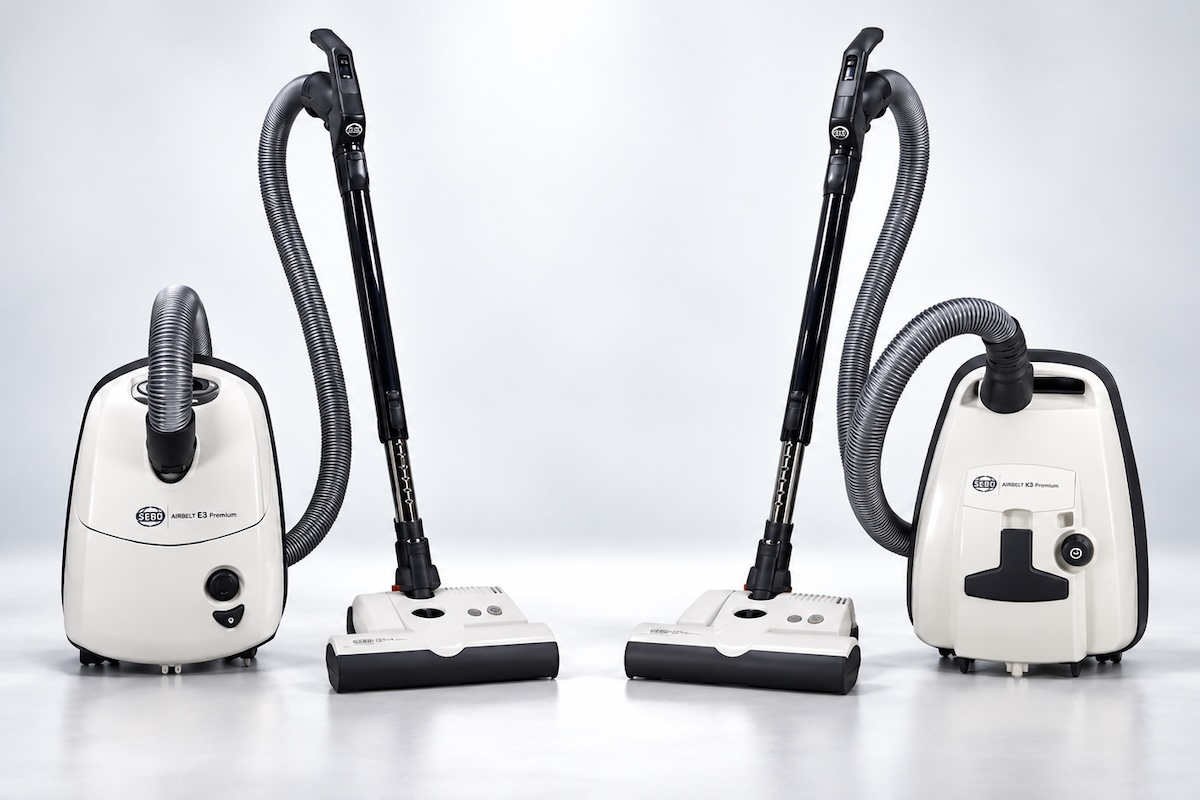
This is common on Miele, SEBO Airbelt, Kenmore, and many premium European canister vacuums.
Cordless Stick Vacuums
Cordless vacuums usually have the model information:
- Behind the dust bin
- Near the battery compartment
- On the handle housing
- On a label underneath the battery
Dyson, Samsung, LG, and Shark cordless models typically follow one of these layouts.
Handheld Vacuums
Compact handheld units often place the label:
- On the bottom of the handle
- Inside the battery compartment
- Beneath the dust cup
Don’t Rely on the Name Printed on the Front
The large lettering on the front of the vacuum usually isn’t the model number.
“Powerspeed.”
“WindTunnel.”
“Complete C3.”
“Ball Animal.”
“Elevate.”
Those are product names or marketing names.
The actual model number is almost always found on the identification label and usually includes a combination of letters and numbers.
For example:
- C1 Classic HomeCare
- 41BAN032USA
- S8590
- UH72630
- V15 Detect
- FELIX 1 Premium
The exact format varies by manufacturer, but it’s rarely just printed on the front of the machine. That would be too easy.
Why Model Numbers are Needed

Vacuum parts are far more specific than many people realize. A bag might slide onto the intake collar but leave small gaps that allow dust to bypass the filtration system. A belt that’s only slightly different in size may stretch too much or place unnecessary strain on the brush roll. A filter that looks identical may use different dimensions or mounting tabs.
Premium vacuums make this even more important.
Miele has used several different bag systems over the years, including GN, FJM, KK, and U styles. SEBO machines use different bags and filters depending on whether you own a Dart, Felix, Airbelt E, K, or D Series vacuum. Dyson’s cordless lineup has evolved quickly, with filters, batteries, and brush bars changing between generations.
Ordering vacuum replacement parts by brand/manufacturer alone simply isn’t enough, in the same way you wouldn’t walk into an auto parts store and ask for brake pads for “a Honda.” The next questions are always going to be, “Which model? What year?” perhaps followed by “Which engine? What trim level?” A 2015 Honda Civic and a 2025 Honda Accord are both Hondas, they’re both sedans made by the same manufacturer, but they don’t share the same parts. Sometimes even two versions of the same model year use different components depending on the trim level.
Vacuum cleaners work much the same way. A Miele is just a Miele until you need replacement bags. A Dyson is just a Dyson until you’re replacing a filter or a battery. That’s where the model number becomes the difference between ordering the right part the first time and ending up with something that looks like the part it’s supposed to replace, but doesn’t quite fit your machine.
What If the Label Has Worn Off?
Older vacuums sometimes lose their identification labels after years of use. Time, friction, dust, and general household life can all conspire against that little sticker.
If you can’t find yours:
Start with the owner’s manual if you still have it.
If not, check the original box or purchase paperwork.
Some manufacturers also list your model in an online account if you registered the warranty.
If none of those are available, take clear photos of the entire vacuum, including any labels that remain, and bring them to a vacuum specialty store. Experienced technicians can often identify many machines by their body style, attachments, or bag compartment.
This is especially true for premium brands that haven’t changed dramatically from year to year.
Should You Search by Serial Number?
Sometimes.
A serial number identifies your individual vacuum, while the model number identifies the design of the machine.
Some manufacturers can use a serial number to determine the model if the identification label has become unreadable. A specialty vacuum dealer may also be able to cross-reference the serial number when ordering OEM parts.
For most online shopping, however, you’ll want the model number rather than the serial number.
What About Older or Discontinued Vacuums?
One of the biggest misconceptions is that an older vacuum automatically means replacement parts are no longer available.
That’s often not the case.
Many premium vacuums are designed to remain in service for decades. It’s still possible to find genuine bags, filters, belts, hoses, brush rolls, and other replacement parts for many older Miele, Kirby, Riccar, SEBO, Oreck, Simplicity, and Lindhaus models.
Even when an original part has been discontinued, an experienced vacuum dealer can often identify an approved replacement or compatible OEM equivalent.
That’s another reason the model number is so valuable—it gives you a solid starting point for finding the correct replacement, even years after production has ended.
Common Mistakes When Looking for Vacuum Parts
Searching only by brand.
Typing “Dyson filter” or “Miele bags” into a search engine returns hundreds of products. Narrowing your search using the model number dramatically improves your chances of finding the correct part.
Ordering based on appearance.
Two filters or vacuum bags can look nearly identical in a product photo while using different dimensions or mounting systems.
Ignoring letter suffixes.
Manufacturers sometimes release multiple versions of the same machine. A single letter at the end of a model number can indicate an important design revision that changes part compatibility.
Assuming all vacuums in the same series use identical parts.
Even closely related models within the same family may use different filters, batteries, or brush rolls.
Still Can’t Identify Your Vacuum?
If you’ve checked the usual locations and still aren’t sure which model you own, don’t guess.
Take several photos of the vacuum from different angles, including the underside, bag compartment or dust cup, hose connection, and any remaining labels. A knowledgeable vacuum retailer can often identify the machine and point you toward the correct replacement parts.
That’s usually much easier—and less expensive—than ordering multiple parts and hoping one fits. Your future self will appreciate not having a drawer full of almost-right vacuum accessories.
Frequently Asked Questions (FAQ)
Q: Where is the model number on a Miele vacuum?
A: Most Miele canister vacuums have the model label on the underside of the canister or inside the bag compartment. Some newer models also include identification near the cord rewind area.
Q: Where is the model number on a Dyson vacuum?
A: On cordless Dyson vacuums, the model number is commonly found near the battery or behind the dust bin. Upright Dyson vacuums usually have an identification label on the base or rear of the machine.
Q: Can I order vacuum bags using only the brand name?
A: It’s not recommended. Most manufacturers produce multiple bag styles, even within the same product family. Using the model number is the best way to make sure the replacement bag is compatible.
Q: Is the serial number the same as the model number?
A: No. The serial number identifies your individual vacuum, while the model number identifies the specific design and determines which replacement parts fit.
Q: What if my vacuum is 20+ years old?
A: Many high-quality vacuums last for decades. Parts are still available for numerous discontinued models, especially from premium vacuum cleaner brands known for long service lives. Having the correct model number makes locating those parts much easier.
Once you’ve identified your vacuum’s model number, you’re ready to choose the correct replacement bags, filters, belts, hoses, brush rolls, and accessories. For a detailed walkthrough of every major vacuum component, compatibility considerations, and replacement recommendations, see our guide to finding Vacuum Cleaner Parts & Replacement Bags.