Vacuum Guides · Buyer Advice
Most household vacuums last somewhere between 5 and 10 years, but that range covers a lot of ground. On one end, you’ve got the budget stick vac that starts losing suction before the warranty card makes it to the junk drawer. On the other, you’ve got a central vacuum system that’s been working away inside the walls of the same house since Seinfeld was still airing new episodes, and still has years left in it. The gap between those two realities comes down to type, build quality, and how well the machine was maintained.
When people start comparing central vacuum vs upright options, the lifespan difference alone is often what tips the decision. A quality corded upright from a brand with good build quality might serve you faithfully for a decade. For high-end corded uprights (i.e. Miele, Sebo, Riccar), 10 years is genuinely the low end. 15–20 years is common, and there are plenty of Mieles out there pushing 25+ years with basic maintenance.
That said, a well-installed central system can easily run for two decades, 25–30 years is realistic, and the in-wall infrastructure essentially never needs replacing. Some power units do hit 30+ years. Whether you’re trying to figure out how long your current vac has left, whether it’s worth taking it down to the local vacuum repair shop, or whether installing central vac systems makes financial sense over the long haul—the answer starts with understanding what actually determines how long these machines last.
In this article
Average Lifespan by Vacuum Type
The biggest driver of how long a vacuum lasts isn’t any single factor, it’s the combination of type and build quality. A well-made corded upright from a brand that engineers for longevity will reliably outlast a cheaper version of the same machine by years, sometimes by a decade.
That said, even the finest cordless stick vacuum is fighting a losing battle against its own battery, and no amount of engineering fully solves that. Larger, corded machines with fewer electronic components simply have more room to be built right and when they are, the lifespan difference is significant. Here’s where each type lands:
| Vacuum type | Expected lifespan | Longevity |
|---|---|---|
| ⬛ Central vacuum system | 20–30 years | ████████████ Best |
| Corded upright vacuum | 8–10 years (15-20+ for high-end vacuum cleaners) | ██████ Good |
| Canister vacuum | 8–10 years | ██████ Good |
| Cordless stick vacuum | 3–5 years | ███ Fair |
| Handheld vacuum | 2–4 years | ██ Short |
| Robotic vacuum | 2–4 years | ██ Short |
As you can see in the table above, machines that run on battery packs (cordless sticks, handhelds, robot vacuums, and so on) are limited by the battery’s lifecycle. Lithium-ion cells start losing usable capacity after a few hundred charge cycles, and once the runtime drops to 10 or 15 minutes, most people consider the unit dead even if the motor is still fine. Robotic vacuums have the added complication of navigation sensors and circuit boards, which add more points of failure.
Corded uprights and canisters avoid the battery problem entirely, and a well-built one—the kind engineered with quality motors and serviceable parts rather than designed to be thrown away—can run reliably for a decade or more with basic maintenance. This is where brand and construction quality start to matter in a real, measurable way.
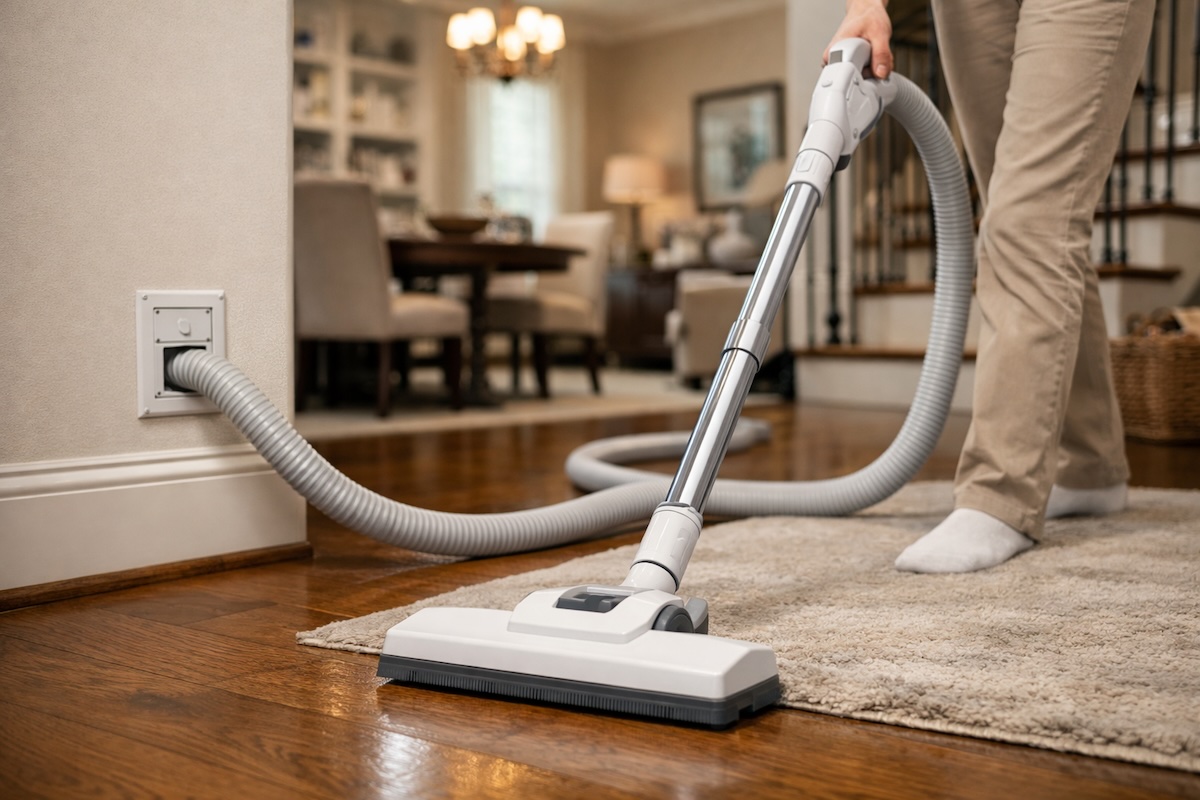
Central systems take this even further by removing the motor from the equation of day-to-day wear altogether. The power unit lives in a utility room, basement, or garage—bolted to a wall, never dropped, never dragged, never overheated from being run on its side under a bed frame. What you carry around the house is just a lightweight hose. That physical separation is the core reason central vacuums last as long as they do, and it’s also why a properly installed system with quality tubing and inlet valves is genuinely a decades-long investment rather than an appliance you’ll eventually replace.
Note: The ranges above reflect the full market — from entry-level machines to built-to-last ones. For corded uprights and canisters especially, build quality has an outsized effect on where a vacuum lands within that range. A budget/big box store upright might clock out at 5 years, but a well-engineered one from a brand like Riccar or Miele can realistically run for 15 to 20.
Why Central Vacuums Last So Much Longer
“A central vacuum system is structurally different from every other type of vacuum, and that’s exactly why it lasts so much longer. With a portable vacuum, you’re carrying the motor, the filtration, the dirt collection, and the suction head all in one unit. Every component stresses every other component.”
If you’ve gathered that the stationary motor is a big part of the reason these vacuum cleaners last a long time, you’re right. But it’s only part of it.
The deeper reason central systems age so well is that every major source of mechanical stress in a portable vacuum simply doesn’t exist in a central system.
With a portable (i.e. upright or canister), the motor, filtration, dirt collection, and suction head all live in the same housing. Every component shares vibration with every other component. The motor that’s also getting bumped down hallways and wedged under furniture is the same motor doing the actual work.
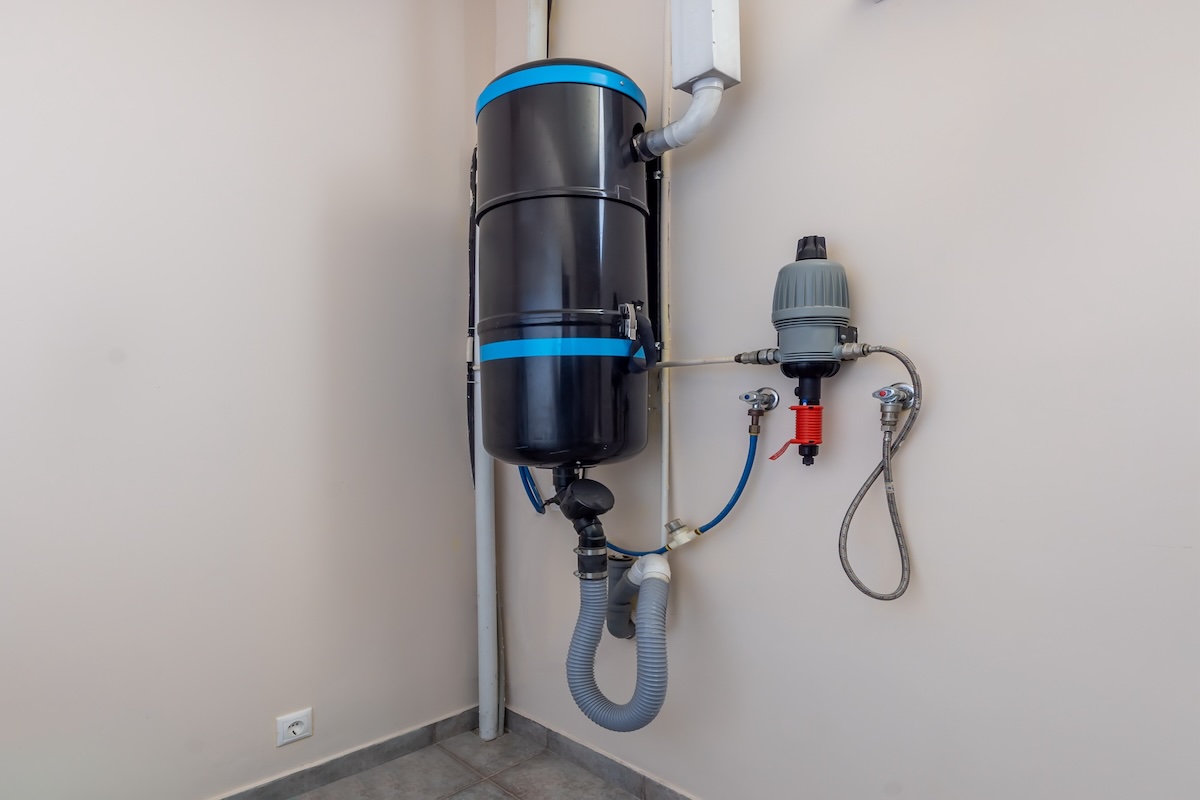
With a central system those jobs are separated by design. The power unit handles suction and nothing else. It never moves, never flexes, never takes impact. Central vacuum motors are also built to a different specification than portable motors — thermally protected, rated for longer duty cycles, and housed in a way that lets them breathe. The wiring doesn’t fatigue from repeated movement, the casing doesn’t crack from being dropped, and the motor doesn’t overheat from being run at odd angles. There’s just not much for time to get at.
“With proper care and regular maintenance — changing filters on time, emptying bags or canisters, and replacing worn parts — you can easily push the lifespan of a vacuum well beyond its average. With a central system, that upper limit is genuinely impressive.”
It’s not unusual for a central vacuum power unit installed in the late 1990s or early 2000s to still be running today. Some manufacturers offer warranties of 20 to 25 years on the power unit itself, which should tell you something about how confident they are in the durability.
Worth knowing
Even if your central vacuum power unit eventually fails, replacing just the unit — without touching the in-wall tubing or inlet valves — is far cheaper than a full system replacement. The infrastructure installed in your walls essentially lasts forever.
Central Vacuum Parts & Replacement Schedules
The power unit may last 20 years, but it doesn’t operate in isolation. There are consumable and semi-durable components attached to every central system, and knowing what to expect from each one helps you budget and plan.
| Component | Lifespan | Notes |
|---|---|---|
| Power unit motor | 18–25 years | The long-haul workhorse |
| In-wall tubing | Lifetime | PVC — essentially permanent |
| Inlet valves | 10–15 years | Cheap to replace when needed |
| Vacuum hose | 4–6 years | Cracks and loses flexibility over time |
| Power head / beater bar | 4–6 years | Has its own motor — replace as needed |
| Attachments / tools | 5–10 years | Varies by use |
| Filters | 1–3 years | Most neglected, most important |
| Bags / canisters | Consumable | Empty before full, always |
The hose and power head are the components you’ll replace most often — roughly every four to six years under normal use. Hoses develop cracks, lose flexibility, or suffer internal tears that leak suction. Power heads contain their own small motor for the brush roll, and that motor operates under real stress every time you vacuum. Neither replacement is particularly expensive relative to what you’d spend buying a new portable vacuum.
Filters deserve more attention than most people give them. A clogged or deteriorated filter forces the motor to work harder than it should, which shortens its life. Check your specific system’s manual, but a general rule is to inspect filters every six months and replace them every one to three years depending on use.
How to Make Any Vacuum Last Longer
Type matters more than anything else for longevity, but maintenance is what separates a vacuum that hits the high end of its lifespan from one that dies early.
For central vacuums specifically, it’s worth having a quick inspection done to check the inlet valves every year or two. Valves that don’t seal fully allow air leakage and reduce suction throughout the system, even if the motor is perfectly healthy. They’re inexpensive to replace if needed.
The following habits can be applied across all vacuum types:
- ✓ Empty the bag or dustbin before it gets completely full — a stuffed bag cuts airflow and makes the motor strain.
- ✓ Replace filters on schedule. This is the single most neglected maintenance task and one of the most damaging when ignored.
- ✓ Clear tangled hair, string, and debris from the brush roll regularly. That tangle puts load on the motor and wears out the belt.
- ✓ Don’t vacuum up wet debris, fine plaster dust, or large hard objects — these are the fastest ways to damage a motor or clog a filter permanently.
- ✓ For cordless vacuums, avoid running the battery completely flat repeatedly — partial discharges preserve cell health.
- ✓ Store the vacuum properly — wrapped cords, hung hoses rather than coiled tight, and away from moisture.
- ✓ Get it serviced if you notice a drop in suction — don’t wait for it to stop working entirely. Catching a minor issue early is almost always cheaper.
Common Questions
Q: Is a central vacuum system worth the upfront cost?
For most homes — especially larger ones — yes. The upfront installation cost (typically $1,500 to $3,000 for a whole-home system) looks steep compared to a $400 upright, but when you factor in that the system lasts 20+ years versus 8–10, and that replacement parts are relatively affordable, the math works in the central system’s favor over time. There are also comfort benefits: no motor noise in the room you’re cleaning, better filtration, and a lighter hose to carry around.
Q: Can a central vacuum system be installed in an existing home?
Yes, it can — though it’s easier during new construction or major renovation. Retrofit installation involves running tubing through walls, floors, and ceilings, which requires some access cuts that are then patched. A good installer can do this with minimal disruption. It’s not a weekend DIY project, but plenty of existing homes have been retrofitted successfully.
Q: How do I know when my central vacuum needs the motor replaced vs. just serviced?
Start by ruling out the easy stuff: check if the bag or canister is full, replace the filter, and inspect the hose for cracks or blockages. If suction is still weak after all of that, the motor may be starting to fail. If the unit is making a grinding or high-pitched whining noise it didn’t used to make, that’s also a motor warning sign. Have a technician check it — motors can sometimes be rebuilt or replaced in the existing housing for less than a full unit replacement.
Q: What kills central vacuums most often?
In rough order: running with a full bag or clogged filter (which causes the motor to overheat), sucking up wet debris or fine construction dust, and neglecting the hose and power head until they’re leaking suction. Most early failures are preventable — the motor itself is built to last, and it’s usually the consumable components that bring a system down when they’re ignored long enough.
The bottom line
Central vacuum systems are clear winners for longevity at 18–20+ years, followed by corded uprights and canisters at 8–10 years. Battery-powered vacuums — cordless sticks, handhelds, and robots — cap out around 3–5 years before the battery becomes the limiting factor. Whatever type you have, consistent filter changes and not letting the bag get completely full are the two habits that make the biggest difference in how long vacuum cleaners last.