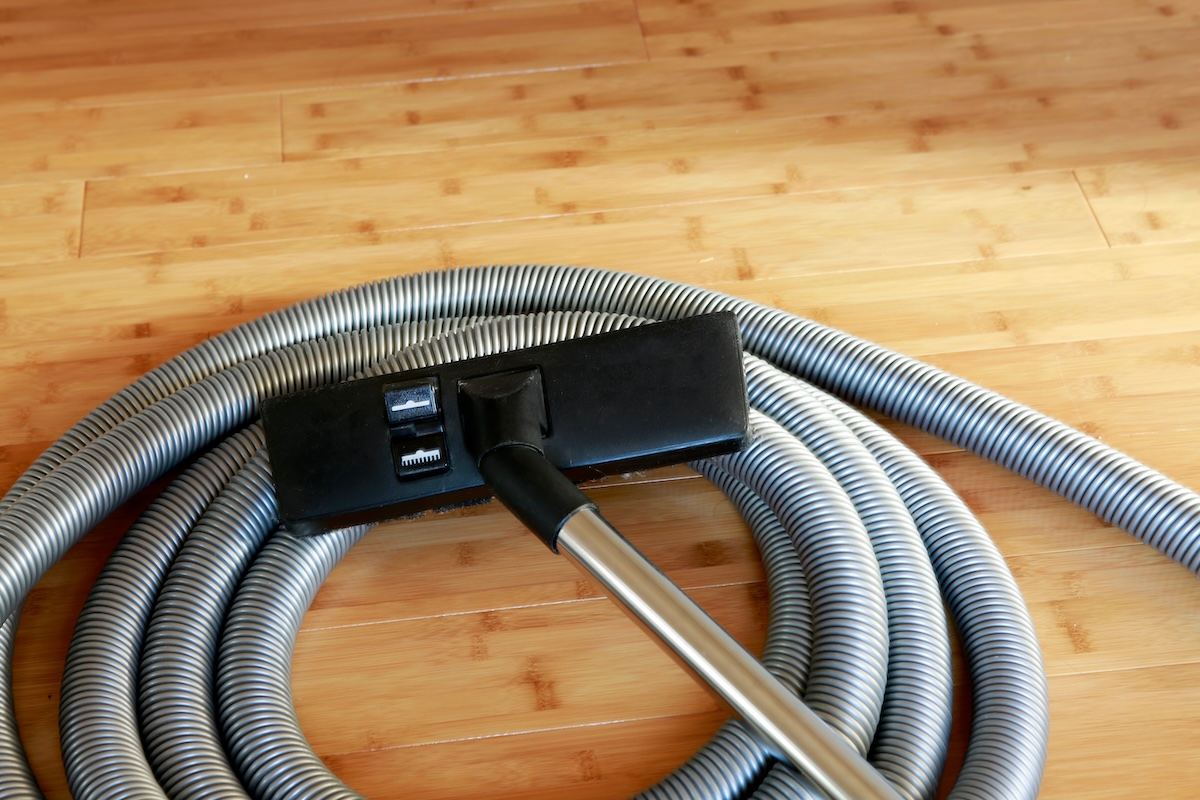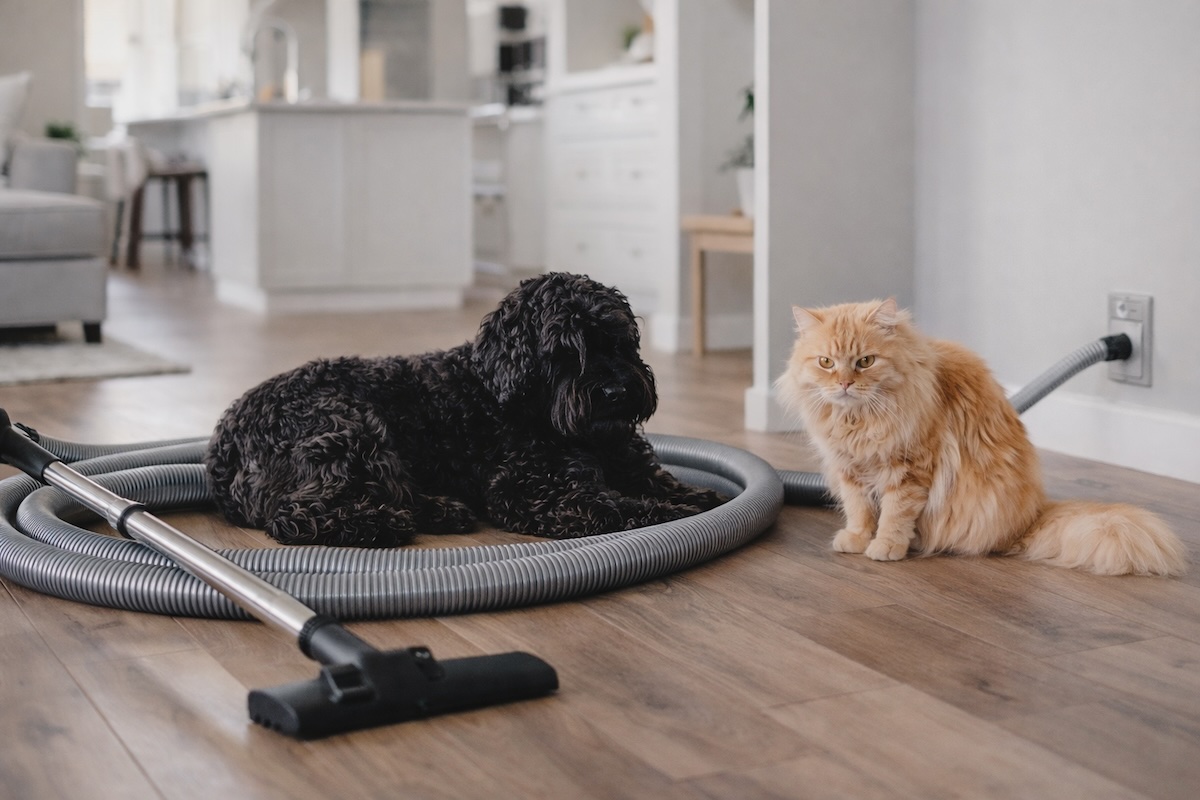
If you live with pets, you already know the mess is not limited to “shedding season.” For many households, shedding season is just called “the entire year.”
Pet hair shows up under furniture, along baseboards, across stairs, in corners, on area rugs, and somehow inside rooms your dog definitely did not go into. Add dander, tracked litter, kibble crumbs, dirt from the yard, and the occasional mystery fluff tumbleweed drifting through the hallway, and vacuuming starts to feel less like maintenance and more like crowd control. That’s why so many pet owners end up asking a very specific question: Is a central vacuum actually worth it when you have animals in the house?
In many cases, yes. Pet-related cleaning tends to expose the weak spots in ordinary portable vacuums pretty quickly. Of course, that doesn’t mean every portable vacuum struggles here. Higher-performing vacuum cleaners from premium brands like Miele, SEBO, and Riccar can handle pet hair, dander, and daily messes very well, especially when the vacuum is a good match for the home. (If you’re comparing built-in and portable options, read our guide comparing central vac systems vs upright vacuum cleaners to see which setup fits your home best.)
That said, a central vacuum system generally gives you stronger suction, more capacity, less noise in the living space, and better control over fine dust and dander. For pet owners dealing with ongoing cleanup—not just the occasional fur patch on the rug—that can make a real difference in daily life.
Why Pet Owners Put More Demands on a Vacuum

A vacuum in a pet-free home may mostly deal with dust, crumbs, and everyday debris. A vacuum in a pet home has a much harder job.
It has to handle:
- pet hair on carpet and hard floors
- dander and fine particles in the air and upholstery
- tracked-in dirt near entryways
- litter, kibble, and floor debris around feeding areas
- fur collecting on stairs, furniture edges, and under beds
- repeated whole-house cleaning instead of occasional touch-ups
This is where a lot of portable vacuums start to show their limits. Small bins fill fast. Filters get dirty quickly. Brush rolls wrap up with hair. Suction can drop off as maintenance piles up. And if you have more than one pet, the workload only increases.
For some homes, a quality upright or cordless vacuum is enough. But once you’re vacuuming frequently and still feeling behind, that’s usually the moment central vacuum systems start to look a lot more appealing.
The Biggest Advantage: Stronger Suction for Pet Hair
Pet hair is stubborn in a way that regular dust simply is not. It weaves into carpet fibers, clings to upholstery, hangs onto stair edges, and settles into corners where weaker airflow struggles to lift it cleanly. If you’ve ever vacuumed a room, looked down, and still seen a soft layer of fur in the carpet, you know the frustration.
This is one of the clearest reasons pet owners often prefer central vacuum systems.
Because the motor is larger and housed away from the cleaning area, a central vacuum can usually deliver stronger and more consistent suction than a portable vacuum. That matters when you’re trying to remove:
- embedded pet hair from carpet
- fur gathered along baseboards
- dander and dust in rugs
- litter or debris around pet zones
- heavier hair buildup in multi-pet households
You are not just cleaning what’s visible. You are trying to keep up with a continuous cycle of fur and fine debris that keeps coming back. Better suction helps break that cycle.
Better for Dander and Fine Dust
For many pet owners, the hair is annoying. The dander is the bigger issue.
Even homes that look clean can still feel dusty when pets are part of the picture. Dander is light, fine, and easy to stir back into the air. Some portable vacuums do a decent job containing it, but others release a bit of fine dust during use or while emptying the bin.
A central vacuum system helps by moving debris away from the living space to a separate power unit, usually in a garage, basement, or utility area. That setup can reduce the amount of fine dust recirculating where you actually live.
This can be especially helpful for:
- households with allergies
- homes with indoor pets year-round
- families with both carpet and upholstered furniture
- people who feel like dust comes back right after cleaning
If your house has pets and someone in the home is sensitive to dander, this benefit tends to matter a lot more than people expect at first.
Less Emptying, Less Mess
Pet homes fill vacuum bins fast.
That sounds like a small complaint until you’re emptying a dusty canister every couple of cleaning sessions and dealing with fur clouds, filter buildup, and clumps of hair packed around the inside of the machine.
Central vacuum systems typically have much larger collection capacity than portable vacuums. That means less frequent emptying and less day-to-day maintenance. For busy pet owners, that alone can feel like a quality-of-life upgrade.
Instead of constantly stopping to deal with a full bin, you can focus on the actual cleaning.
This is especially useful in homes with:
- large dogs
- multiple shedding pets
- several carpeted rooms
- frequent full-house vacuuming
- heavy seasonal shedding periods
It’s one of those improvements that sounds minor until you live with it. Then you realize how much friction it removed from the routine.
Easier Whole-House Cleaning
Pet mess rarely stays in one neat little area.
Sure, there may be a favorite shedding spot on the sofa or a steady trail of litter near the box, but most pet owners are cleaning across the entire home. Hair moves. Dirt gets tracked. Fur collects upstairs even when you’re pretty sure the dog was downstairs all day.
That’s where central vacuum systems become especially attractive in larger homes.
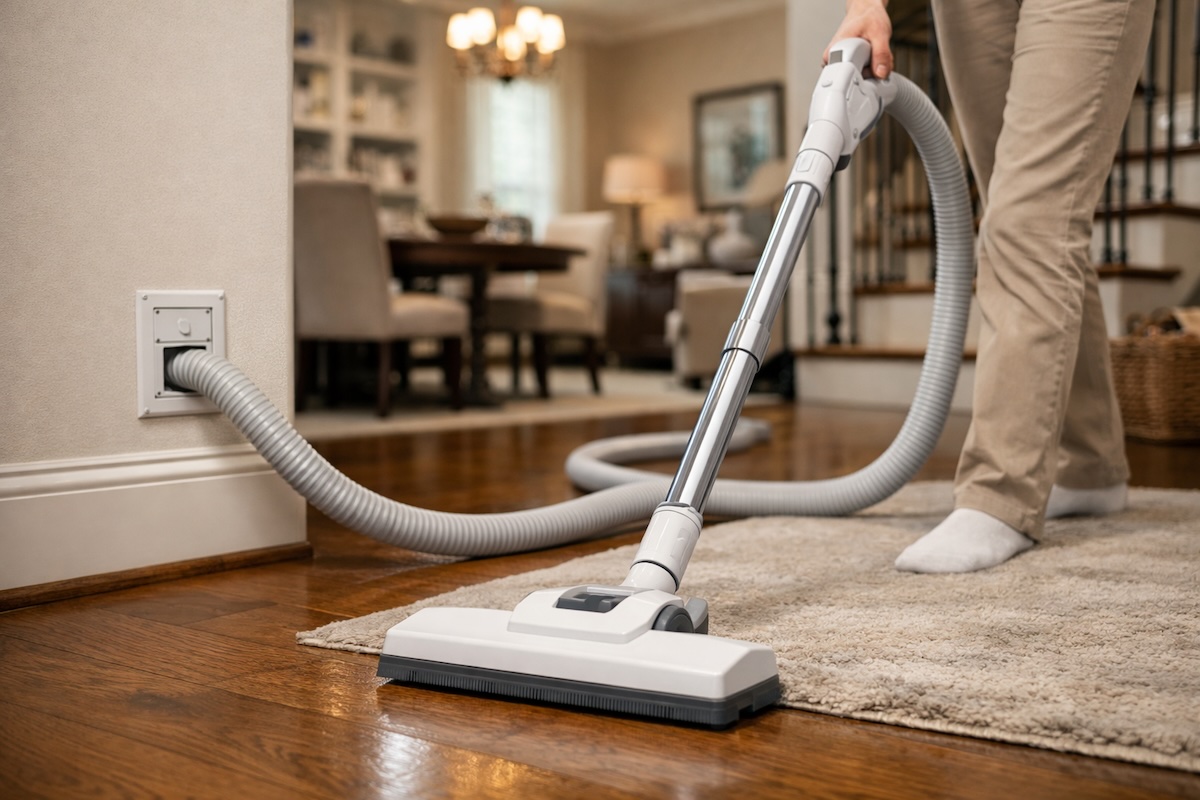
Instead of dragging a full upright vacuum from room to room, around furniture, across thresholds, and up stairs, you use a hose and attachments connected to inlets throughout the house. For many homeowners, that feels lighter, smoother, and less tiring.
In pet homes, that matters because vacuuming is not usually an occasional task. It’s a regular one.
A system that makes full-house cleaning easier is more likely to get used consistently, and consistency is a big part of staying ahead of pet hair.
Quieter Around Pets and People
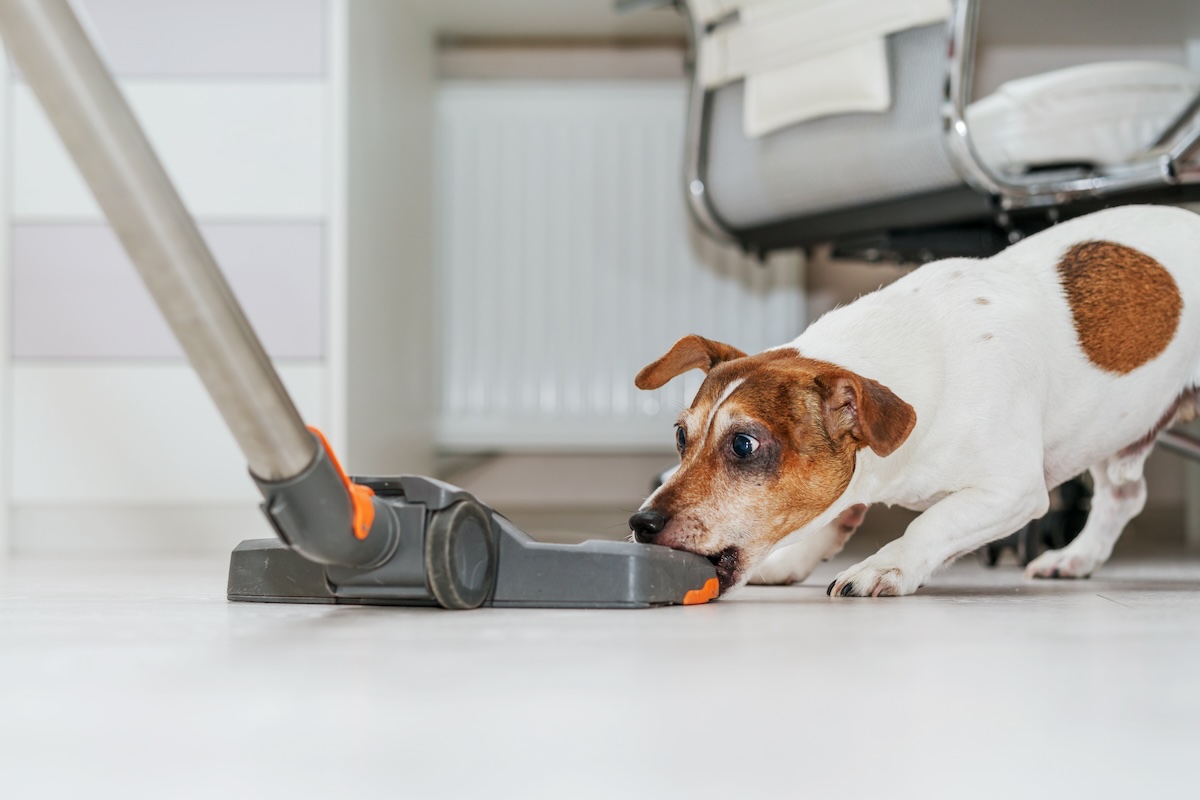
Portable vacuums can be loud because the motor is right there in the room with you. That can make cleaning more stressful for nervous pets and more disruptive for everyone else in the house.
With a central vacuum, the motor is located away from the main living area. You still hear airflow through the hose, but the experience is generally quieter where you’re actually cleaning.
That can be helpful if:
- your dog barks at the vacuum
- your cat bolts every time cleaning starts
- someone is working from home
- kids are napping or doing homework
- you simply want less noise during routine cleaning
It’s not the main reason most pet owners choose central vac, but it often becomes one of the unexpectedly appreciated benefits.
When a Central Vacuum Makes the Most Sense for Pet Owners
A central vacuum is usually most worthwhile for pet owners who:
Have more than one pet
The more animals you have, the more nonstop the cleanup becomes. A stronger, built-in system often makes more sense as the workload increases.
Live in a larger home
If you are cleaning multiple bedrooms, stairs, large living areas, or several floors, a central vacuum becomes much easier to justify.
Deal with heavy shedding
Some breeds produce enough hair to make a small vacuum feel outmatched almost immediately.
Care a lot about indoor air quality
For households concerned about dander, fine dust, and allergens, a central system can be a smart long-term upgrade.
Plan to stay in the home for years
A central vacuum is a built-in investment. It makes the most sense when you’ll have time to enjoy the convenience and long-term value.
When a Portable Vacuum May Still Be the Better Fit
To be fair, a central vacuum is not automatically the right answer for every pet owner.
A portable upright or cordless vacuum may still be the better choice if:
- you rent your home
- you live in a smaller apartment or condo
- your pet mess is relatively light
- you mainly want quick daily spot cleanup
- your upfront budget is limited
- you expect to move in the near future
There is nothing wrong with choosing a portable vacuum if that fits your space and routine better. The goal is not to force every home into the same solution. The goal is to find the setup that actually makes your life easier.
For some pet owners, that’s a good upright or canister. For others, especially in larger homes with heavier cleaning demands, a central vacuum starts to feel like the better long-term answer.
A Smart Combination for Many Homes
In real life, many pet owners end up using more than one tool.
A cordless vacuum can be great for quick touch-ups—food around the bowl, a little fur by the couch, tracked litter in the laundry room. A central vacuum can then handle the deeper, whole-house cleaning.
That combination works well because each vacuum plays a different role.
The cordless handles speed.
The central vacuum handles coverage, power, and long-term cleanup demands.
For pet owners who want the house to stay under control without constantly feeling like they’re chasing the next mess, that can be an excellent setup.
Final Thoughts

So, is a central vacuum worth it for pet owners? In many homes, absolutely. If you’re dealing with regular shedding, pet dander, full-house vacuuming, and the constant cycle of fur and debris that comes with animal life, a central vacuum system can make cleaning more effective and a lot less frustrating. You get stronger suction, better capacity, improved dust control, and an easier cleaning experience overall.
That does not mean every single pet owner needs one. High-end vacuum cleaners from high-performing, long-lasting vacuum brands like SEBO, Miele and Riccar can absolutely keep up in many pet-friendly homes, especially when the machine is well matched to the flooring and cleaning routine. But if your current vacuum feels like it is always one step behind your pets, it may be less about your effort and more about using a tool that was never designed for that level of demand.
A central vacuum will not stop the shedding. It will not convince your dog to wipe its paws. It will not explain how cat hair ended up in a room the cat never enters. But it can make keeping up with all of it feel much more manageable.