In Middle Tennessee, the best commercial vacuum is usually not the most one on the shelf. It’s the one that can clean a church hallway before Sunday, an office suite on Monday, and a medical waiting room on Tuesday… without turning into a repair project by Thursday. That usually means a bagged commercial vacuum with good filtration, a long cord (~50ft), easy brush access, and parts that can be replaced when needed. That’s exactly why machines like the SEBO G5, CleanMax upright models, Perfect Dual Motor, and Windsor Sensor series keep coming up in serious buying conversations.
What makes a commercial vacuum “the best” for your needs?
Besides the obvious suction, the top commercial vacuum cleaners focus on durability, serviceability, filtration, reach, and operator fatigue. That is, a commercial vac has to clean well, but it also has to survive daily use, roll over thresholds, handle baseboards and chair legs, and make bag changes and brush cleanouts simple enough that a crew will actually do them. On good commercial upright vacuums, some of the details that matter might be metal wear parts, long cords, tool-free or easy brush access, indicator lights for clogs or full bags, and filtration that does not spit fine dust back into the room.
Good Commercial Vacuum Cleaners
Great overall for long-term reliability: SEBO G5
The SEBO G5 is the kind of upright that makes the most sense for buyers who would rather purchase once and keep it a long time. It comes with a 15-inch cleaning path, a 40-foot cord, an instant-use hose and wand, a low 5.5-inch profile, manual height adjustment, and a sealed three-step filtration system built around an S-class pre-motor microfilter, bag, and exhaust filter.
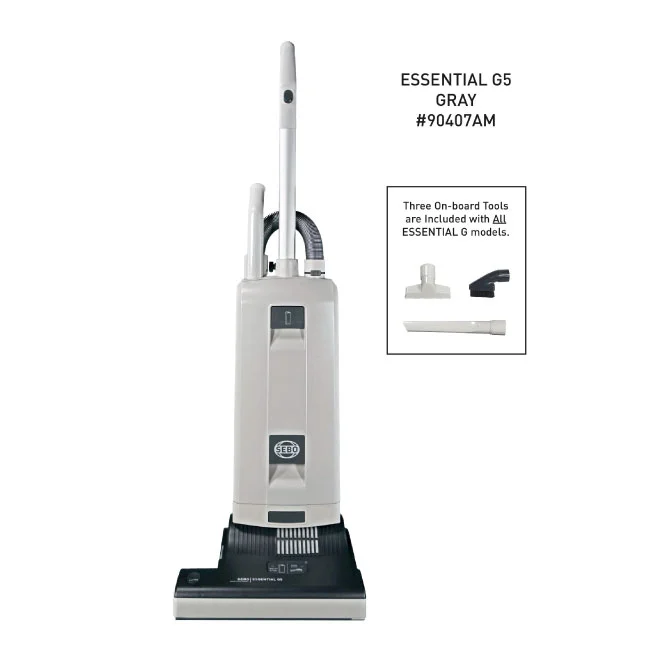
It also has shutoff protection for brush obstructions, clogs, and full-bag conditions, plus tool-free brush removal for maintenance. For carpet-heavy offices, churches, and schools, that is exactly the kind of plainspoken, dependable design that earns trust over time.
The G5 especially fits commercial buyers who value repairability and consistency more than gimmicks. It is not trying to look futuristic. It is trying to keep cleaning. That matters in commercial settings, where the vacuum often gets used by multiple people and needs to keep working even when it is not treated gently. Depending on your needs, it might also be worth taking a look at the more compact SEBO G4 12-inch.
Value-minded workhorse: CleanMax Uprights
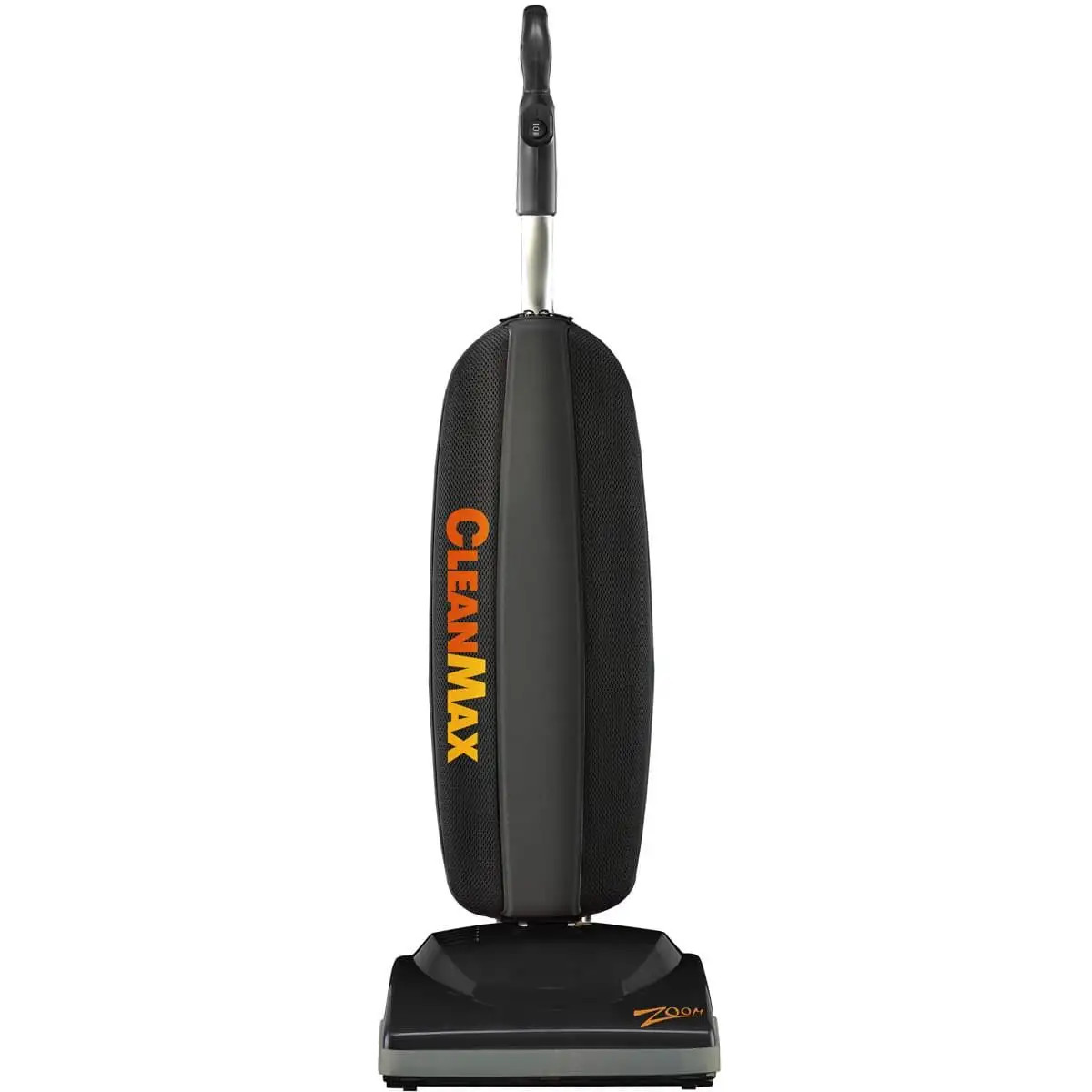
A CleanMax upright, like the CleanMax ZM700 makes sense when the goal is to get solid performance and commercial-grade practicality without jumping into premium vacuum cleaner pricing. The CleanMax Nitro CMNR-QD is another good example because it leans hard into the parts that wear first in real-world use: a metal brushroll with replaceable brush strips, metal handle tube, metal cord hook, metal telescopic wand, and a 40-foot cord with a pigtail for easier replacement. It also uses HEPA-style filtration and is built for one-pass cleaning across carpet and bare floors.
For buyers who want more onboard capability, the CleanMax Pro-Series CMP-3T is worth noting. That machine adds automatic height adjustment, a 14-inch nozzle, onboard tools, HEPA filtration, and dual 30-foot commercial cords with a pigtail. In plain terms, CleanMax tends to hit the sweet spot for budget-conscious janitorial buyers who still want a machine that feels commercial instead of disposable.
Best for carpet-heavy routes and heavier soil: Perfect Dual Motor
A Perfect Dual Motor (i.e. the Perfect Vac DM101) is the kind of machine that makes sense when carpet performance is the priority and the cleaning route isn’t light duty. It uses two motors rather than one, pairing a suction motor with a dedicated brush-roll motor. Specs include a 15-inch cleaning path, 50-foot cord, HEPA filtration, roughly 96 CFM, about 84 inches of water lift, and a 3-way switch that can run both motors or suction only.
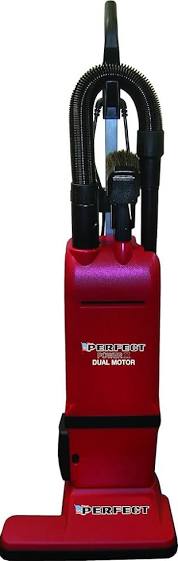
That setup is well suited to commercial carpet, larger open areas, and operators who want a little more muscle on embedded soil. Of course, dual-motor machines can be a little more serious, a little less nimble, and usually make the most sense when the building is mostly carpet and the vacuum is expected to work hard all week. And for a carpeted office complex or a building service contractor with heavy-use routes, that can be the perfect choice (no pun intended).
A solid SEBO-style alternative for commercial buyers: Windsor
When a buyer likes the feel and philosophy of a SEBO-style upright but wants to look at another well-established commercial option, Windsor’s Sensor line belongs in the conversation. The Sensor S12/S15 models are single-motor workhorses with 40-foot cords, 69 dBA noise levels, 105 CFM airflow, flat-to-floor cleaning, no-tool brush removal, indicator lights, and filtration that traps 99.6% of particles at 0.3 microns, with optional HEPA filtration available.
That is why Windsor often appeals to the same kind of buyer who is drawn to a SEBO G5: somebody who wants a straightforward commercial upright with a long cord, easy maintenance, dependable carpet cleaning, and a build that feels like it belongs in hotels, offices, schools, and churches instead of a big-box impulse aisle. If automatic brush-height adjustment is important, the Windsor Sensor XP 12 steps up with that feature while keeping the same commercial DNA.
What about central vac systems for commercial use?
Central vac systems can be an excellent fit in the right commercial setting, but it is not the right answer for every building. In simple terms, a central vacuum moves the motor and collection unit out of the main cleaning area and into a separate utility space, with tubing run through the building and wall inlets placed where cleaning is needed. That setup can make a lot of sense for properties that want quieter operation, strong suction, cleaner exhaust air, and less wear-and-tear from hauling around a full upright or canister all day.
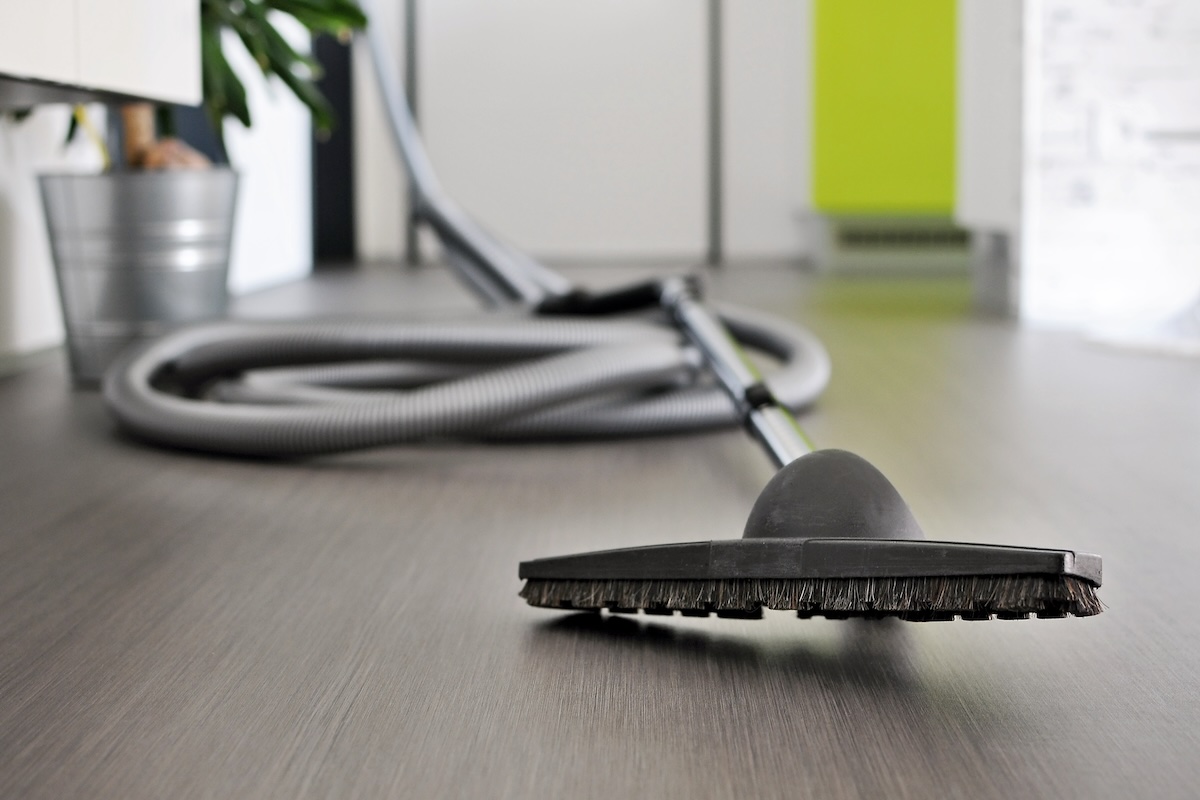
Where central vac tends to shine is in buildings that are cleaned regularly by in-house staff and have a predictable layout. Large homes used as offices, churches, assisted living spaces, custom-built facilities, and certain medical or professional buildings can all be good candidates. One big advantage is that the motor noise stays removed from the room being cleaned, which can matter in places where people are working, meeting, resting, or receiving care. Another advantage is that fine dust is typically exhausted away from the immediate cleaning area instead of being recirculated near the operator.
That said, central vac is usually a better fit for purpose-built spaces than for every standard commercial property. Retrofitting an existing building can be more involved, and the value only pencils out if the building will truly benefit from the system over the long haul. In janitorial routes where crews move from property to property, a dependable upright still makes more practical sense.
Is central vacuum worth it for your needs? Well, that’s more of a building-level decision than a simple equipment purchase. When evaluating central vac for commercial use, some of the main things to look at are motor capacity, tubing layout, number and placement of inlets, hose length, filtration, and service access.
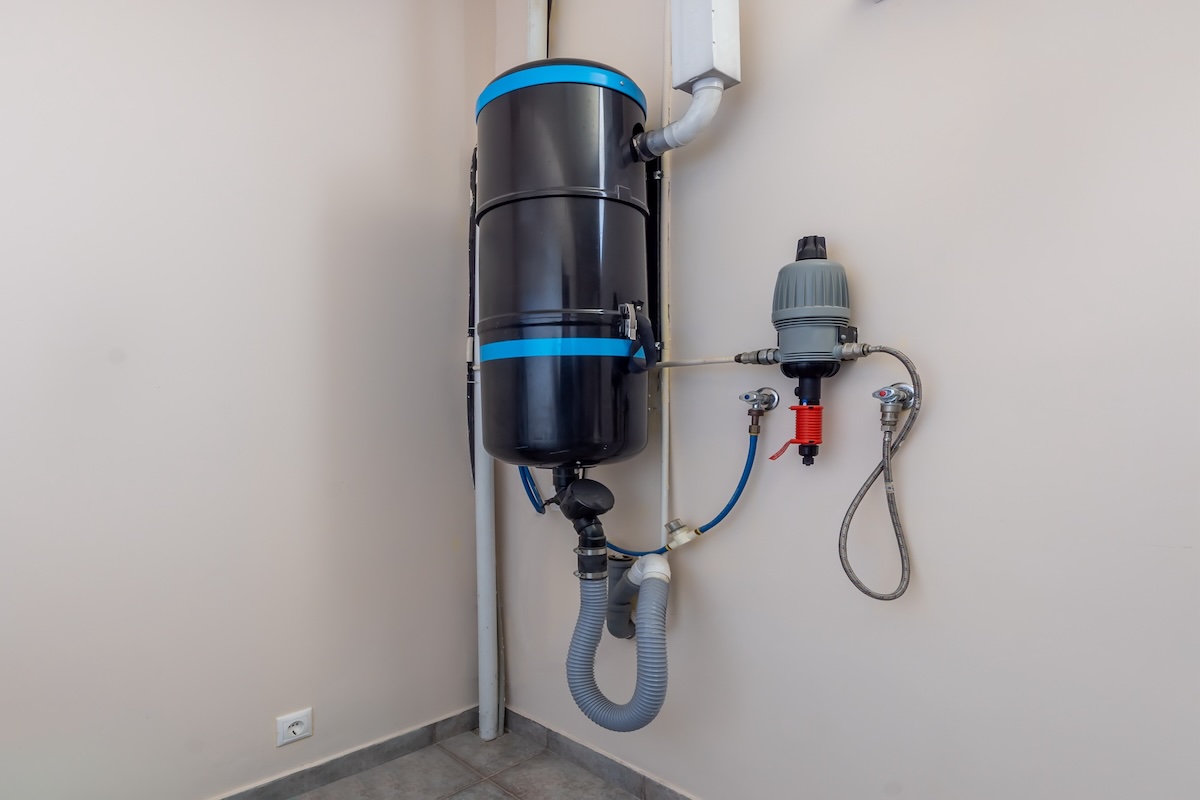
The system has to be designed so staff can reach real cleaning zones without fighting the hose or constantly moving to another inlet. A poorly planned central vac can be more frustrating than helpful, and a well-planned one can be a pleasure to use.
The best way to think about central vac is this: it is not a replacement for every commercial vacuum, but in the right building, it can be one of the cleanest, quietest, and most convenient long-term solutions available. For buyers choosing comparing upright vs central vacuum systems, either can be the “better” choice according to different needs. The question is which one fits the building, the staff, and the cleaning routine best.
How to choose the right commercial vacuum for your specific needs
Start with the floor type(s)
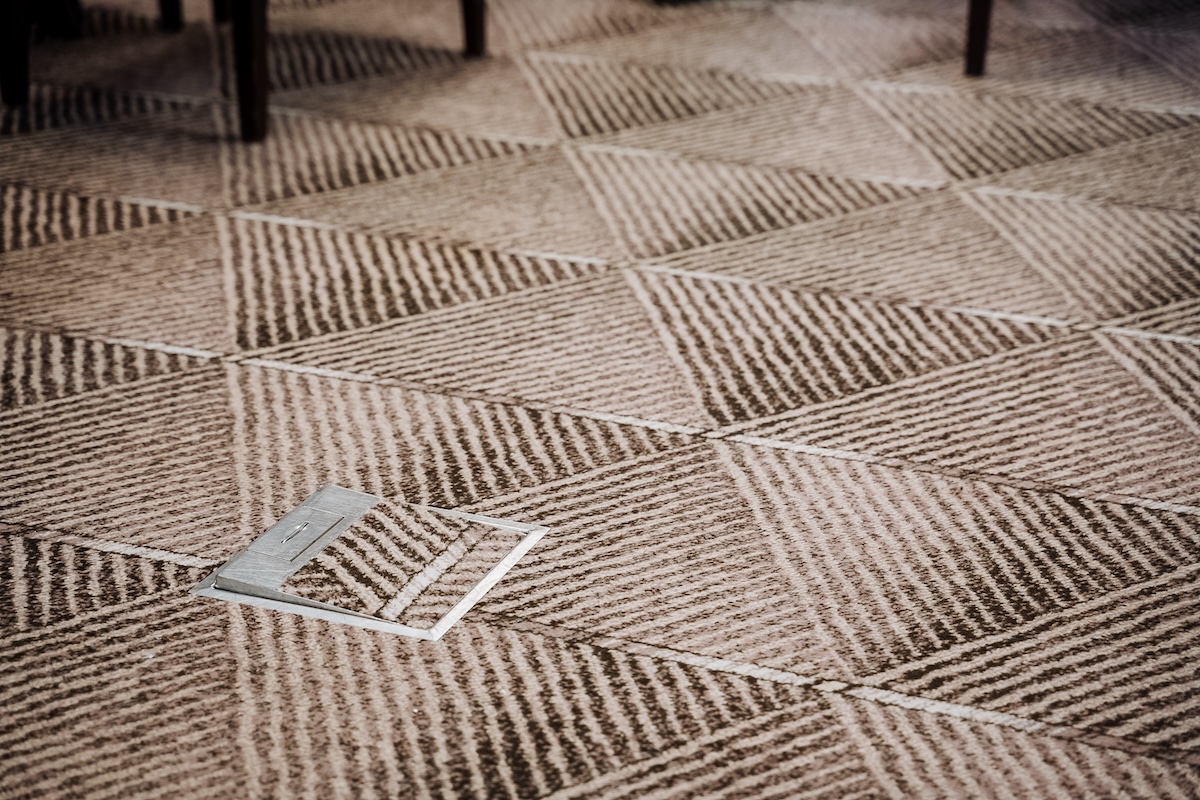
The smartest way to choose a vacuum is to look at the building first. A mostly carpeted office can justify a more dedicated carpet machine. A property with mixed hard floors and carpet needs a vacuum that transitions cleanly and does not fight the operator.
That’s one reason the SEBO G5, Windsor Sensor S, and certain CleanMax uprights make so much sense for broad commercial use: they are designed to handle carpet and hard floors while staying practical for daily routes. A heavier Perfect Dual Motor tends to make more sense when deep carpet agitation and stronger carpet pickup matter more than nimbleness.
Pay attention to filtration
Filtration matters more than a lot of buyers think, especially in medical offices, daycares, churches, and any building where dust cannot just be blown back into the room. The EPA’s definition of a true HEPA filter is 99.97% efficiency at 0.3 microns, and the machine also has to be designed so air does not leak past that final filtration stage. On carpeted spaces, it is also worth looking for CRI Seal of Approval equipment, because the Carpet and Rug Institute tests products for effective soil removal without harming carpet appearance or performance.
That does not mean every buyer needs the most expensive filtration package on earth. It does mean buyers should be wary of vague “HEPA-type” language and should care whether the machine is actually designed to contain fine dust well. Windsor’s Sensor line, for example, publishes fine-particle filtration performance and optional HEPA capability, while several CleanMax and Perfect commercial models are also sold in HEPA-filtered configurations.
Cord length, cleaning path, and shift efficiency matter
On paper, cord length can sound boring. In practice, it is one of the biggest productivity factors in commercial vacuuming. A 40-foot cord on a SEBO G5, Windsor Sensor, or CleanMax Nitro means fewer outlet changes and fewer little interruptions that slow a crew down. A 50-foot cord on a Perfect Dual Motor pushes that even farther for larger carpeted areas.
The size of the cleaning head matters too: 12-inch machines are more nimble, while 15-inch machines can cover open areas faster.
Serviceability is a big deal
A commercial vacuum should be easy to keep in service. That means things like tool-free brush removal, clog indicators, bag-full indicators, replaceable cords, and easy access to routine parts. The SEBO G5 and Windsor Sensor lines both emphasize brush access and warning systems, while the CleanMax Nitro’s pigtail cord and replaceable brush strips speak directly to the kind of wear points that show up in daily use. That is the kind of stuff that saves money quietly, month after month.
Don’t ignore weight (or operator fatigue)
A vacuum that cleans great on paper can still be the wrong fit if it wears the operator out halfway through the route. Windsor’s Sensor S12 is listed around 16 pounds, the CleanMax Nitro around the mid-15-pound range, while more heavy-duty machines like the Perfect DM101 sit a bit higher. That difference matters on stairs, long hallways, and multi-room routes. The best vacuum is not just the one that cleans deeply. It is the one a crew will still use properly at the end of the shift.
Tips: What to avoid
- Possibly the biggest mistake when buying in this category is buying a vacuum that is technically “commercial” in the catalog but built like a disposable household unit. Thin plastic, short cords, poor filtration, awkward tool access, and hard-to-find wear parts will usually cost more in downtime than a better machine would have cost upfront.
- Another common mistake is buying too much vacuum for the building. A dual-motor machine can be excellent, but it is not automatically the best choice for every office or church. Sometimes a simpler upright with a long cord, good filtration, and easy maintenance is the smarter buy.
The Bottom Line
For most buyers, the best commercial vacuum cleaner is not a trendy one. It is a reliable bagged upright that matches the flooring, holds up to daily use, and is easy to maintain.
If the goal is top-shelf long-term reliability, the SEBO G5 is an easy machine to respect. If the goal is practical value, a CleanMax upright deserves a hard look. If the building is carpet-heavy and the route is demanding, the Perfect Dual Motor makes sense. And if the buyer wants that proven, straight-ahead commercial upright feel in the same general lane as a SEBO-style machine, Windsor is absolutely worth considering.
The right commercial vacuum should feel a little boring, honestly. In this business, boring is good. Boring means it starts, cleans, bags up the dirt, and is ready to go again tomorrow.