If you are comparing Riccar and Miele, you are already shopping in a very different category from the average vacuum buyer.
This is not the part of the market where people grab whatever is stacked near the endcap at a big-box store and hope it survives a couple of years. This is the tier where buyers start thinking about filtration, repairability, long-term ownership, how a vacuum feels in the hand, how it handles different types of flooring, and so on.
That is also why a Riccar vs. Miele vacuum cleaner comparison is such a good one: These are two respected premium brands with strong followings, distinct design philosophies, and plenty to offer the kind of homeowner who wants a serious machine. Riccar leans hard into upright performance, deep carpet agitation, HEPA media filtration, and dealer-supported ownership. Miele is still one of the most recognizable names in high-end vacuuming because of its premium canisters, filtration options, thoughtful attachments, and polished overall design. Riccar emphasizes machines built to dig deep into carpet and support healthier indoor air, while Miele’s current lineup continues to emphasize premium canisters, bagged systems, and high-end usability features across models like the Guard L1 and canister families.
For the right buyer at the vacuum cleaner shop, either one can be a very good purchase. Because the real question is not which brand is “better” in some universal sense. It’s which one fits your floors, your home layout, your cleaning habits, and your personal preferences in how a high-end vacuum cleaner should work.
Why Riccar and Miele Appeal to the Same Kind of Buyer
People who cross-shop Riccar and Miele usually want some version of the same thing: a vacuum cleaner that feels like a long-term tool, not a disposable appliance.
They’re likely to care about indoor air quality. They like bagged systems because they are tidy and easy to live with. They are often willing to pay more upfront if it means a better ownership experience. They may have had enough of replacing cheaper vacuums, fighting clogged cyclones, or dealing with machines that look good for six months and then start feeling sloppy.
This buyer usually wants a vacuum that does one or more of the following very well:
- A deep pass on carpet that leaves the floor looking groomed and refreshed.
- A more contained bag-and-filter system for dust.
- Better attachments for stairs, upholstery, edges, and above-floor work.
- Higher-quality fit and finish.
- Better odds of long service life, parts support, or dealer help.
The Big Difference in Philosophy
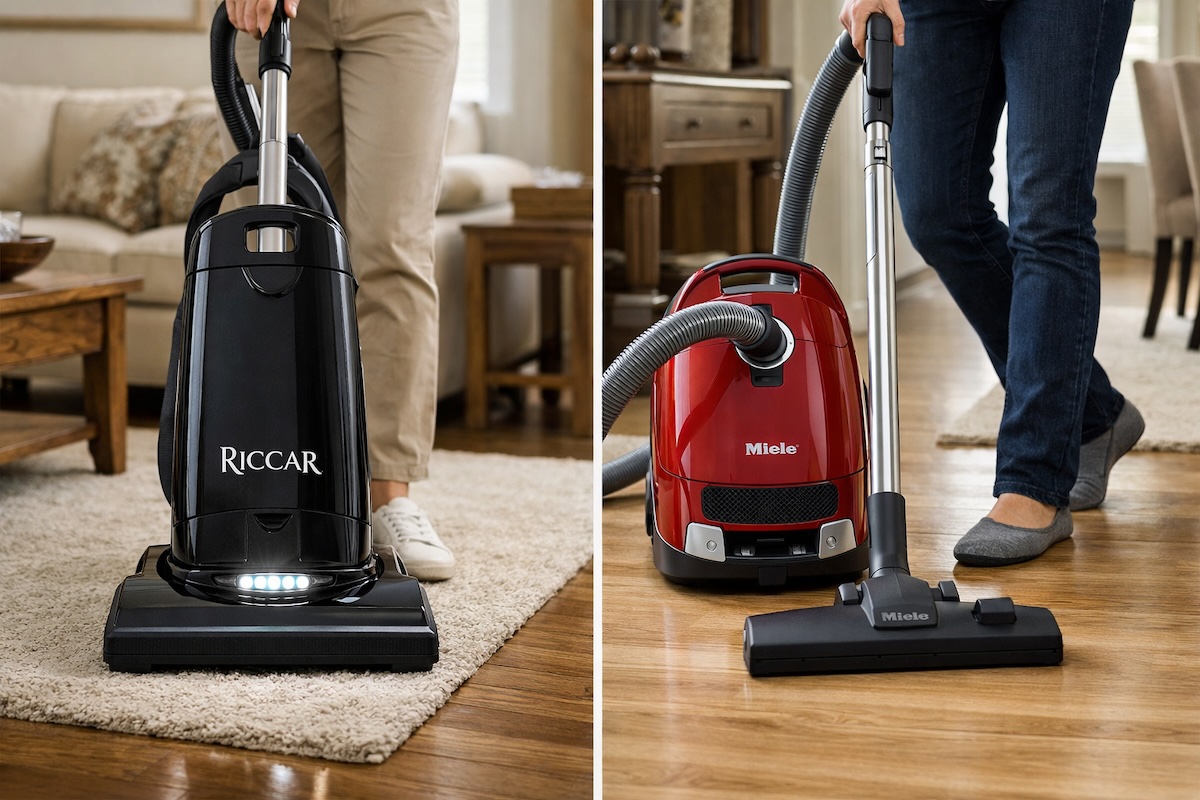
At a high level, Riccar tends to appeal to buyers who want a premium upright with strong carpet presence. Miele is likely to appeal to buyers who want a premium canister with a refined, flexible, whole-home experience.
That difference alone will settle the decision for some households.
If you grew up with upright vacuums, like the feel of a machine that tracks in front of you, and want something that feels especially at home on carpet, Riccar makes a strong first impression. Riccar’s upright range emphasizes durable construction, HEPA media filtration, and carpet-focused performance, and its Tandem Air models use dual motors to combine brushroll-driven agitation with suction for deep carpet work.
If you prefer pulling a canister behind you, like the reach and flexibility of a hose-and-wand system, and want a vacuum that feels especially good on mixed flooring and above-floor tasks, Miele has a very strong case. Miele’s canister lineup centers on compact canister bodies, telescopic wands, multiple floorheads, bagged filtration, and convenience features like cord rewind and onboard storage/parking systems, with newer Guard L1 models adding options like automatic suction adjustment, LCD interface features on some models, and HEPA filtration on allergy-oriented versions.
This is one reason the comparison stays interesting. They overlap in price and in customer profile, but they do not feel interchangeable.
Riccar’s Strengths
Riccar earns a lot of respect from people who want a vacuum that feels substantial, traditional in a good way, and focused on performance first.
The brand’s identity is heavily tied to uprights, especially premium llightweight uprights. If you want the kind of machine that looks ready to take carpeting seriously, this is where Riccar becomes very persuasive. Its Tandem Air technology is built around two motor systems working together, and Riccar positions that design as a major reason its better uprights perform so well on carpet.

On paper and in brand positioning, several Riccar models are aimed directly at homes with lots of carpet, pets, and allergy concerns. The Tandem Air Deluxe and Premium Pet uprights highlight dual motors, HEPA media filtration, self-sealing HEPA media bags, and features aimed at deep cleaning plus above-floor tool use. Riccar says the R30D’s self-sealing charcoal-infused HEPA media bag traps 99.97% of debris at 0.3 microns or larger, and the R40P adds multi-stage HEPA filtration and extended reach for hose-and-wand cleaning.
That kind of design tends to appeal to buyers who want:
- Strong agitation on carpet.
- A more traditional premium upright experience.
- Bagged dirt disposal.
- Dealer-backed guidance and service.
- A machine that feels purpose-built for households that take floor care seriously.
Riccar also has canisters, including Prima models and HEPA media bag options, so it is not only an upright brand. But its identity is still strongly tied to the upright buyer who wants power, filtration, and a more old-school premium feel.
Miele’s Strengths
Miele has been one of the benchmark names in premium vacuums for years, especially for people who want a polished canister experience.
The brand’s canisters are easy to understand once you use one. They are designed around controlled suction, excellent maneuverability through a hose-and-wand setup, practical tool integration, and a level of refinement that many buyers notice right away. Miele’s bagged canisters emphasize dust retention, adjustable telescopic wands, dedicated accessories, easy storage, and filter options including AirClean and HEPA AirClean depending on model.

The newer Guard L1 series shows where Miele continues to push its premium canister concept. Miele describes the Guard L1 as a sealed system with a high-performance fan, streamlined air circuit, and tailored accessories, while specific models add features like four selectable cleaning modes, ComfortFit bag handling, HEPA AirClean filtration for allergy-oriented versions, app integration on some trims, and floorhead options designed to reduce switching between surfaces. Miele also says certain Guard L1 models are tested for the equivalent of 20 years of use.
This is catnip for buyers who like engineering that feels methodical and considered.
Miele is also attractive for people with mixed surfaces, area rugs, lots of furniture, stairs, drapes, upholstery, and awkward corners. Canisters are often easier for that kind of whole-house work because the hose and wand do so much of the maneuvering for you.
That does not mean Miele is only for bare floors. Far from it. The brand sells canister models with electric powerheads for carpeting, turbobrush-equipped pet versions, and high-end models like the Complete C3 Marin and Guard L1 Electro built specifically to handle carpet more seriously.
Filtration and Allergy Appeal
This is one of the biggest reasons people step up into Riccar or Miele in the first place.
Both brands have strong filtration features, and that alone can make them attractive to households that are tired of messy emptying, dusty bagless bins, or cheaper vacuums that seem to redistribute fine dust into the air.
Riccar leans on HEPA media filtration, self-sealing bags, and multi-stage systems in many of its premium uprights. On models like the R30D, Riccar explicitly highlights a self-sealing charcoal-infused HEPA media bag and a filtration setup designed to trap small particles and odors.
Miele’s bagged canister lineup likewise emphasizes dust retention and filter support, with models using AirClean or HEPA AirClean filters depending on trim, and the company positions several canisters as particularly appealing for allergy-focused households. Its bagless Blizzard models also use HEPA Lifetime filtration on certain versions, though bagged Miele canisters remain the classic premium choice for many shoppers in this comparison.
In real-world terms, that means both brands can make sense for buyers who want a more contained, premium dust-handling experience.
If that is one of your top priorities, the conversation may come down less to filtration quality in the abstract and more to which machine format you prefer living with every week.
Carpet Performance
This is where Riccar often becomes especially compelling.
Riccar’s premium upright identity is built around deep carpet work. The Tandem Air concept, dual-motor design, height adjustment, and broader upright posture all point toward buyers who want that familiar, assertive, premium upright behavior on carpet. The Tandem Air Deluxe R30D and Tandem Air Premium R40P are both presented by Riccar as machines designed to deep clean thick carpet while also handling rugs and bare floors.
For a home with a lot of wall-to-wall carpet, especially plush or medium-pile carpet, Riccar often feels like a very natural fit. Some buyers simply want a vacuum that looks and behaves like it was built with carpeting at the center of the assignment. Riccar speaks directly to that customer.
Miele can also be excellent on carpet, but the right model choice matters more. A straight-suction or parquet-oriented canister will not serve a carpet-heavy home the same way an electrobrush-equipped Miele canister will. Models like the Complete C3 Marin, Complete C3 Kona family, and Guard L1 Electro are aimed much more clearly at homes where carpeting is part of the picture.
So if your home is mostly carpet and you want a vacuum that feels unapologetically built for that job, Riccar has a natural edge in brand personality. If your home is carpeted but you still want the flexibility and finesse of a canister system, Miele remains very much in the conversation.
Bare Floors, Area Rugs, and Mixed-Surface Homes
Canister vacuums tend to be pleasant in homes with hardwood, tile, stone, luxury vinyl plank, delicate rugs, staircases, furniture legs, and a lot of edges to work around. Miele’s telescopic wand setup, compact canister body, and range of floorheads make it easy to understand why so many buyers love them in mixed-floor homes. The company explicitly highlights canisters as convenient for floors, moldings, stairs, draperies, and tight spaces.
That does not mean Riccar cannot serve mixed surfaces well. Some Riccar uprights are designed to transition between carpet, area rugs, and bare floors, and the Prima canister line gives Riccar buyers a hose-and-wand option too. But in terms of brand identity and buyer expectation, Miele tends to feel more naturally at home in the “I have a bit of everything” household.
If your house has a lot of hard flooring and you want a premium vacuum that feels adaptable and composed across rooms, Miele usually has a very strong appeal.
Above-Floor Cleaning and Attachments
Above-floor work is where canisters often win people over.
Stairs, upholstery, baseboards, shelves, drapes, vents, molding, corners, and under-furniture reach can be more pleasant with a hose-and-wand machine. Miele has long leaned into that style of use, and its canisters are built around tool-driven versatility. The brand’s listings emphasize included accessories, adjustable wands, and the ability to manage everything from floors to moldings and draperies.
Riccar premium uprights are not helpless here, though. The R40P, for example, includes a telescoping aluminum wand and hose with a 15-foot cleaning reach, which gives upright buyers a more complete whole-home experience than people sometimes assume.
Still, if above-floor work is a huge part of your routine, Miele’s canister format often feels more inherently suited to it.
Ownership Experience and Service
This is an underrated part of the comparison.
A vacuum in this class is not just a purchase. It is a thing you live with. You buy replacement bags and compatible replacement filters for it. You store it. You carry it or roll it. You may take it in for service at a vacuum repair shop. You may want a local vacuum shop to help you pick the right floorhead or troubleshoot a minor issue down the line.
Riccar puts a lot of emphasis on its independent retailer network and authorized dealers. That can be a big plus for buyers who like in-person demonstrations, local service, and brand-specific help rather than a more anonymous online-only experience. Riccar’s support materials direct owners to authorized retailers for service and replacement parts, and the company frames dealer support as part of the product ecosystem.
Miele also offers retailer support, service booking, manuals, and spare parts access, but its market presence often feels a little more nationally standardized and brand-polished. Miele’s support pages provide repair booking, manual lookup, and spare parts shopping, which can be reassuring for long-term ownership.
Both of these brands make more sense than bargain vacuums for buyers who view support as part of the package.
Bagged vs. Bagless in This Comparison
Comparing bagless vs bagged vacuums is very common for buyers looking at any class of vacuum cleaners. And for many people shopping Riccar vs. Miele, the answer is simple: bagged still feels premium.
That is not because bagless cannot work well. It is because many premium-vacuum buyers prefer the tidier disposal, more contained dust handling, and calmer maintenance routine that bagged machines offer.

Riccar’s premium features are strongly tied to self-sealing HEPA media bags and multi-stage filtration. Miele’s classic premium identity also leans heavily on bagged canisters with purpose-built bags and filter systems. Both brands support the idea that using a bagged vacuum can feel more effective, especially for households with lots of pet hair, or household members who are sensitive to dust exposure during emptying.
Miele does sell bagless options like the Blizzard CX1, and those can make sense for the right buyer, but when people ask “Riccar vs. Miele,” the comparison most often lands in premium bagged territory.
Design Feel: American Upright Muscle vs. European Canister Refinement
Riccar often gives off a premium upright, performance-first, dealer-floor kind of energy. It feels grounded, substantial, and practical. For some buyers, that is deeply appealing. They want a machine that looks serious and feels like it means business.
Miele often gives off a more polished, streamlined, design-forward canister feel. It is a brand that has long understood that premium buyers notice usability details, storage touches, cord rewind behavior, wand feel, and how elegantly the machine moves through a room. Miele’s premium Guard line makes that especially obvious with features like LCD interfaces on some trims, ComfortFit bag handling, and app integration at the upper end.
Neither personality is wrong. They just appeal to different instincts.
Some people want the vacuum equivalent of a well-built upright workhorse. Some want the vacuum equivalent of a highly refined canister touring machine. Both impulses make sense.
Which Brand Is Better for Pet Owners?
Both can be excellent, but the best answer depends on how pet hair shows up in your house.
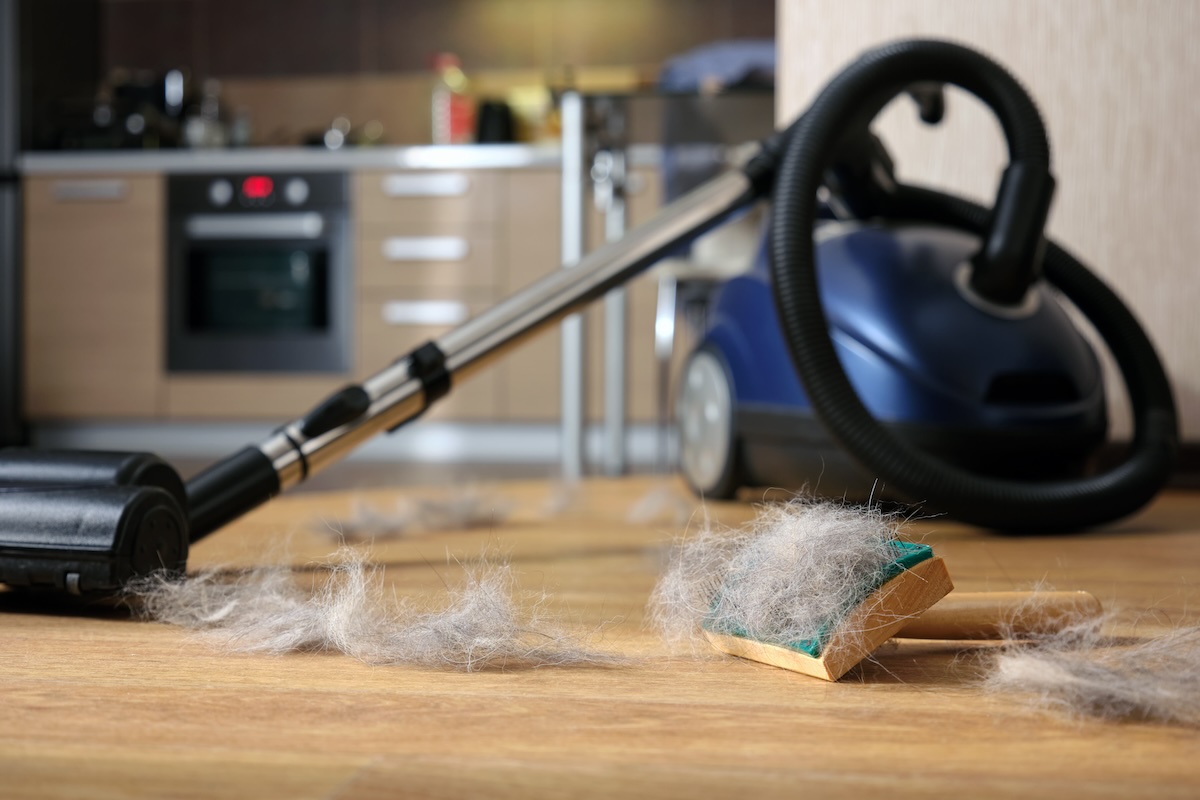
If you are dealing with carpeted rooms, fur embedded in pile, and a desire for an upright that can really work the floor, Riccar’s premium pet-oriented uprights make a lot of sense. The Tandem Air Premium Pet is marketed directly toward allergy sufferers and pet owners, with dual motors and multi-stage HEPA filtration. Models like the Riccar R27P Clean Air Premium Pet also fit naturally into this conversation, pairing Riccar’s carpet-focused upright design with pet-oriented features like HEPA media bags, strong brushroll agitation, and tools aimed at lifting hair from upholstery and stairs.
If your pet hair battle includes upholstery, stairs, area rugs, hard floors, and lots of above-floor cleanup, Miele’s pet-oriented canisters are very attractive. The Guard L1 Cat & Dog includes an Active AirClean filter, a turbobrush for stubborn soiling and animal hair, and accessory support that fits the canister format well.
So this is not one of those categories where one brand obviously outshines the other. They simply approach the pet-owner problem differently.
Which Brand Feels More Premium?
Both of these brands produce high-quality vacuum cleaners, but they do feel slightly different:
- Riccar feels premium in the way a purpose-built specialty machine feels premium. The value proposition is rooted in performance, filtration, sturdiness, and the sense that this is a vacuum bought by someone who wanted a “real” vacuum. That specific kind of premium feel is different from the way many vacuums try to signal quality today.Instead of leaning (only) on sleek styling, flashy features, or marketing-heavy design cues, Riccar’s premium identity comes from the fundamentals: sturdy construction, strong carpet agitation, bagged filtration, and the sense that the machine was built first as a long-term cleaning tool. The appeal is practical rather than decorative, which is why buyers describe Riccar as feeling like a “real vacuum” rather than just a nicer-looking appliance.
- Miele feels premium in the way a highly developed product ecosystem feels premium. The value proposition is rooted in finish, control, flexibility, refined operation, and the sense that the company has spent years thinking through the little details.With Miele, the impression comes from refinement across the entire experience: the fit and finish of the canister, the way the wand and attachments integrate, the smooth suction control, the cord rewind, the storage systems, and the overall sense of careful engineering. The result is a vacuum that feels thoughtfully developed from end to end, where usability, flexibility, and small design details combine to create a polished, highly considered cleaning experience.
Many buyers will naturally lean toward one of these identities, but both brands appeal to people who appreciate well-made, high-end vacuums. The difference is less about quality and more about personality.
Who Should Buy Riccar?
Riccar makes a lot of sense if you want a premium upright first and foremost. Their machines are a strong fit for homes with a lot of carpeting, buyers who value HEPA media bags and multi-stage filtration, and people who like the idea of buying through an independent vacuum dealer who can demonstrate models and help with service. Riccar is also appealing if you want something that feels substantial and built around deep floor performance rather than around maximum format flexibility.
A Riccar may be your kind of vacuum if you hear “premium upright with strong carpet focus” and think, yes, that sounds exactly right.
Who Should Buy Miele?
Miele makes a lot of sense if you want a premium canister experience, especially in a home with mixed flooring and a lot of above-floor cleaning.
They’re a strong fit for buyers who value maneuverability, accessories, bagged dust control, thoughtful convenience features, and the overall polished feel of a high-end canister. It also makes sense for shoppers who like the option of choosing among several canister trims based on whether their home is mostly hard floors, mixed surfaces, or carpet-heavy with an electrobrush.
A Miele may be your kind of vacuum if you want the vacuuming experience itself to feel smoother, more flexible, and more tailored to varied tasks around the house.
Riccar vs Miele for the Buyer Who Is Upgrading From a Big Box Store/Budget Vacuum
This is probably the most important audience for this article. If you have spent years with mainstream budget vacuums, both Riccar and Miele can feel like a serious step up in the things that start to matter once you have owned enough mediocre machines.
The difference is not just suction in a generic sense.
It’s the way the machine is designed to hold onto dust more effectively. It is the way bags and filters are integrated into ownership. It is the way attachments feel intentional instead of tossed into the box. It is the way the vacuum behaves on flooring, week after week. It’s the sense that the machine was built for people who would notice the difference.
Takeaways
| Category | Riccar | Miele |
|---|---|---|
| Overall Design Philosophy | Performance-focused upright machines built around strong carpet agitation, filtration, and durability | Refined canister systems designed for versatility, maneuverability, and whole-home usability |
| Typical Machine Format | Primarily premium uprights (with some canister models) | Primarily premium canisters |
| Carpet Cleaning Strength | Excellent on carpet, especially in Tandem Air uprights with dual-motor systems and height adjustment | Very capable on carpet when paired with an electric powerhead (such as C3 Electro or Guard L1 Electro models) |
| Bare Floors & Mixed Flooring | Works well, but uprights are more carpet-centric by design | Especially comfortable on hard floors, rugs, and mixed flooring environments |
| Above-Floor Cleaning | Good hose-and-wand reach on premium models like the R40P | One of the major strengths of the canister design — easy access to stairs, upholstery, shelves, and corners |
| Filtration Approach | HEPA media bags and multi-stage filtration systems in many models | Bagged AirClean systems with optional HEPA AirClean filters and sealed system design |
| Bagged vs Bagless Options | Primarily bagged | Primarily bagged, with some bagless models like the Blizzard CX1 |
| Pet-Owner Appeal | Strong carpet agitation and HEPA filtration options aimed at pet hair in carpeting | Pet-focused models with turbobrushes, electric powerheads, and odor-control filters |
| Build & Feel | Substantial, traditional upright build with a performance-first feel | Polished engineering with refined controls, smooth maneuverability, and thoughtful usability features |
| Dealer & Service Network | Strong emphasis on independent vacuum dealers and in-person service | Broad global brand support with parts, service booking, and retailer support |
| Typical Buyer Preference | Someone who wants a premium upright built to work carpets hard | Someone who prefers the flexibility and control of a premium canister system |
Final Verdict: Riccar vs. Miele
Riccar and Miele both occupy the premium end of the vacuum market, but they approach the job from different directions.
It’s worth remembering that this comparison is not about one brand consistently outperforming the other in every situation. Both Riccar and Miele build high-quality machines capable of excellent cleaning results across a wide range of homes and floor types. The more meaningful difference comes down to how the vacuums are designed and how people prefer to use them.
Riccar is especially appealing for buyers who want a serious upright, deep carpet performance, strong filtration, and dealer-backed ownership. Miele is especially appealing for buyers who want a premium canister, excellent whole-home versatility, polished usability, and a highly refined bagged vacuum experience.
That said, while Riccar often has a natural appeal in carpet-heavy homes and Miele often feels especially well suited to mixed-floor and above-floor cleaning, those are tendencies rather than absolutes. The exact model, floorhead, and layout of the home still matter a lot. A well-matched Miele can be excellent on carpet, and a well-equipped Riccar can handle much, much more than just wall-to-wall flooring.
So the simplest way to think about buying Riccar vs. Miele is this:
- Choose Riccar if you want the premium upright mindset.
- Choose Miele if you want the premium canister mindset.
If you are already in the market for either one, that is good news. You are not sorting through junk. You are choosing between two brands that speak to people who want better floor care, better filtration, and a vacuum they can feel good about owning.
And in a market crowded with disposable-feeling machines, that is a great place to start.