It’s a slightly unusual comparison on the surface. A central vacuum system is built into the home, while an upright vacuum is something you buy, use, and eventually replace. They’re not exactly designed to compete in the same lane.
But the question still comes up all the time—and for very good reason. After all, most homeowners aren’t thinking within product categories. They’re thinking in outcomes: “What’s the best way to keep this house clean, and do it with as little hassle as possible?”
A lot of Nashville homeowners start this comparison in the same place: they’re tired of dragging a bulky vacuum around the house, tired of emptying a dusty bin after what feels like every other use, and tired of wondering why something that sounds so powerful still leaves grit behind in the carpet.
This is usually where central vacuum systems enter the conversation. At first, they can sound like just another trendy home upgrade, but once you understand how they work—or better yet, use one—the appeal starts to make sense. Stronger suction, less noise where you’re cleaning, longer service life, fewer trips to the trash can, and better control of dust and allergens all add up quickly.
At the same time, a central vacuum isn’t automatically the right fit for every type of person. Installation is an investment, hose storage needs to be thought through, and for renters or frequent movers, well, a portable option is usually going to be the more practical route.
Today, let’s take a real-world look at central vacuum systems vs. upright vacuum cleaners and what tends to make the most sense depending on your home and how you clean.
What Is a Central Vacuum System?
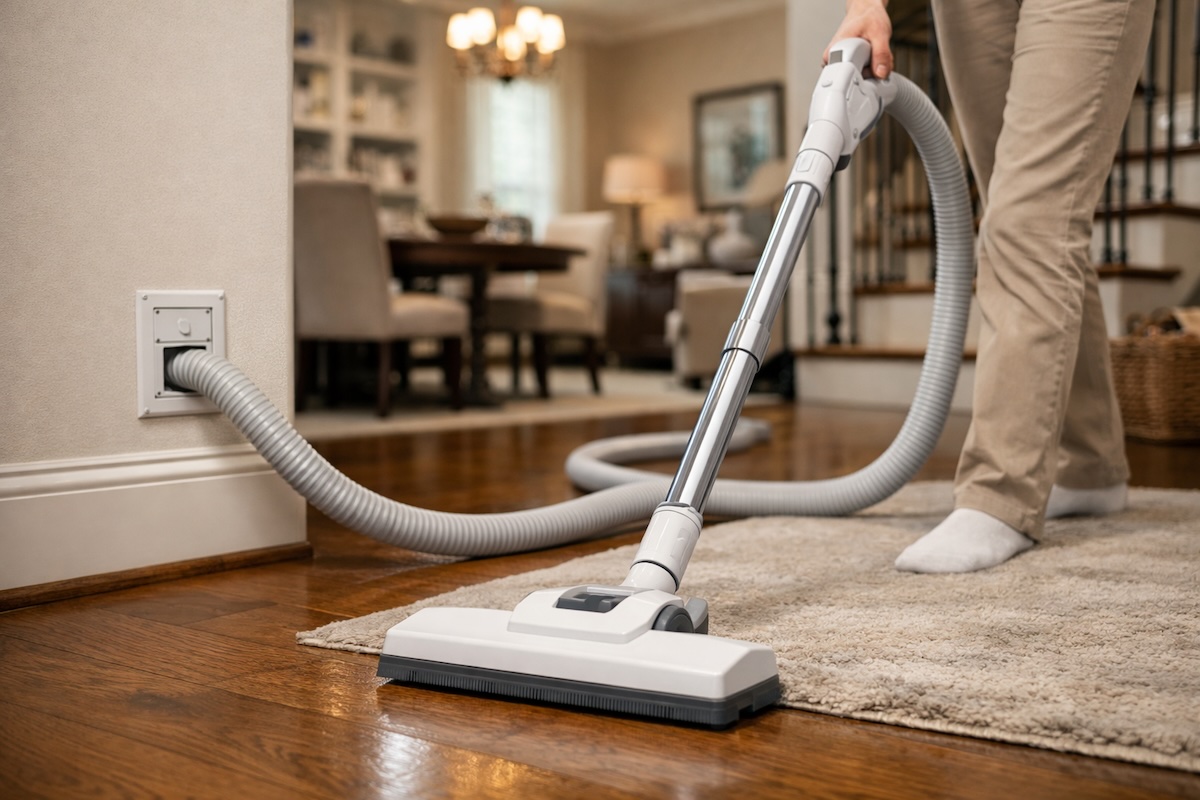
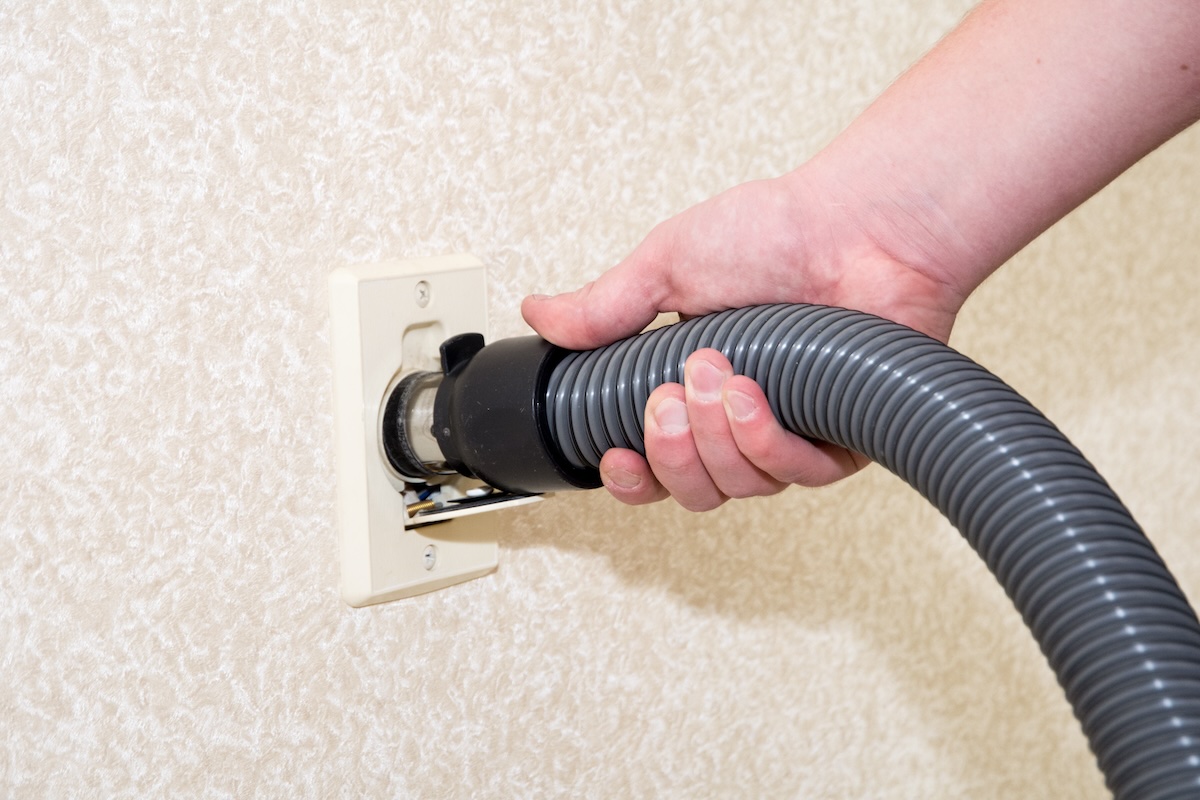
A central vacuum system is a built-in whole-house vacuum. Instead of carrying the entire machine from room to room, you plug a hose into wall inlets installed throughout the home. Behind those inlets is a network of tubing that carries dirt and debris to a power unit placed in a garage, basement, utility room, or another out-of-the-way area.
That power unit contains the motor and a large collection canister or bag. In many systems, exhausted air is either filtered very well or vented away from the main living area.
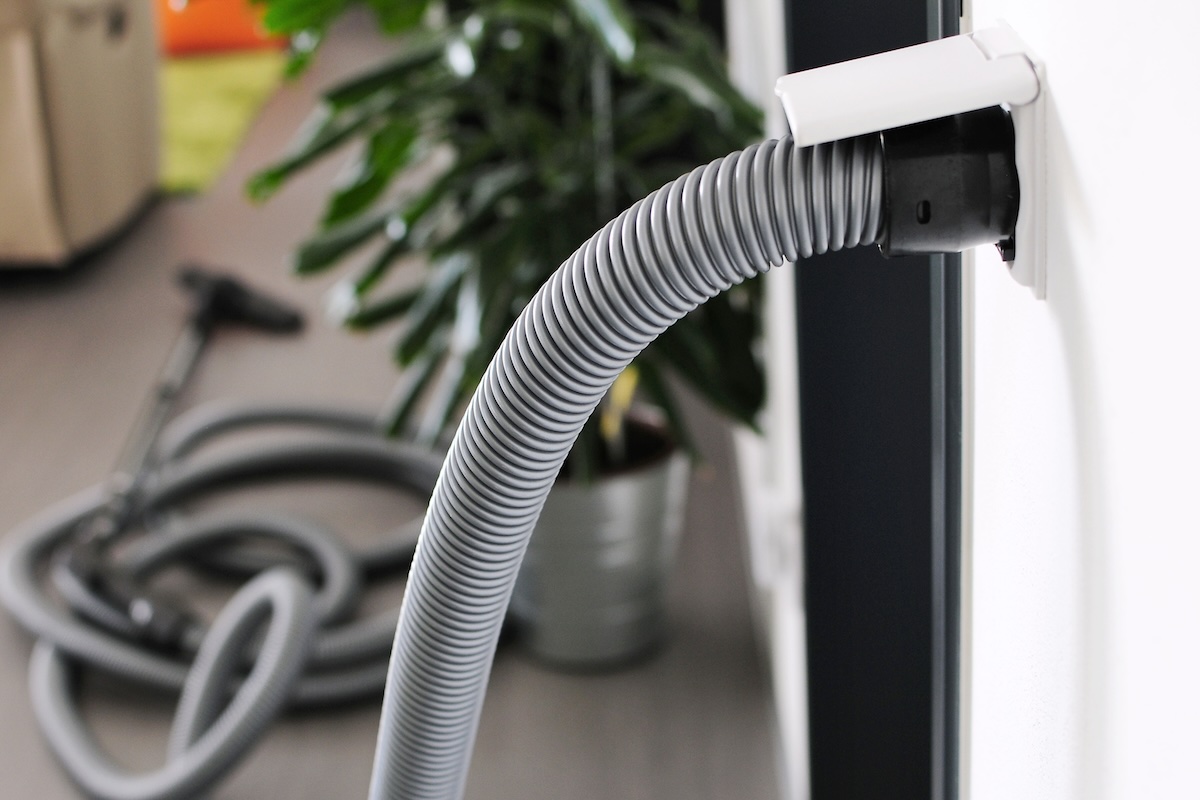
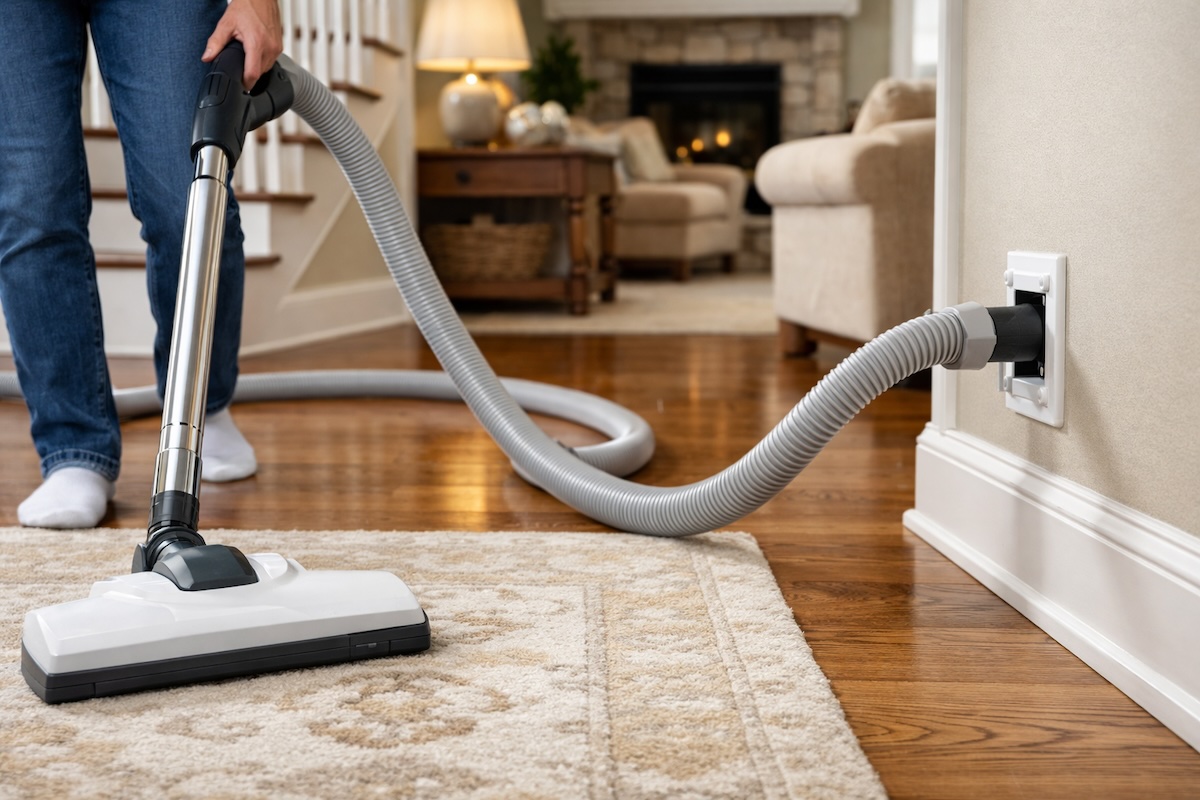
From a user standpoint, the experience is pretty simple. You carry the hose and attachments, plug into the nearest inlet, and vacuum without hauling a full upright or canister machine behind you.
What Is an Upright Vacuum?
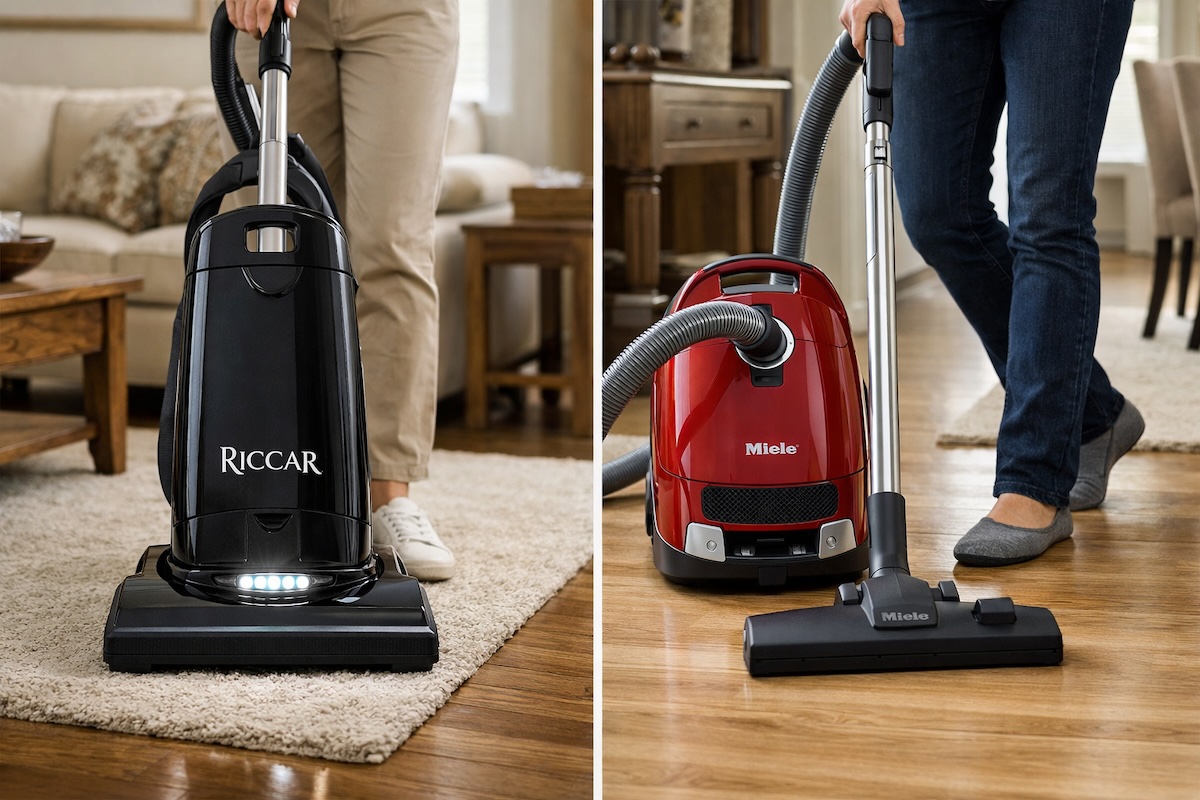
An upright vacuum is the familiar all-in-one machine most people grew up with. Motor, suction path, dust collection, and filtration are all built into one movable unit. It may be corded or cordless, bagged or bagless, basic or premium.
Upright vacuum cleaners remain popular for a reason. They are easy to buy, easy to replace, and easy to understand. You bring one home, charge it or plug it in, and start vacuuming the same day. That simplicity is one of the upright vacuum’s strongest arguments, and for a lot of households, it’s exactly what makes them the right choice.
They’re also flexible. You can move them anywhere, use them in different rooms without planning around inlets, and switch models as your needs or preferences change. There’s a wide range of performance levels too, from lightweight cordless units for quick cleanups to more powerful corded uprights designed for deeper carpet cleaning.
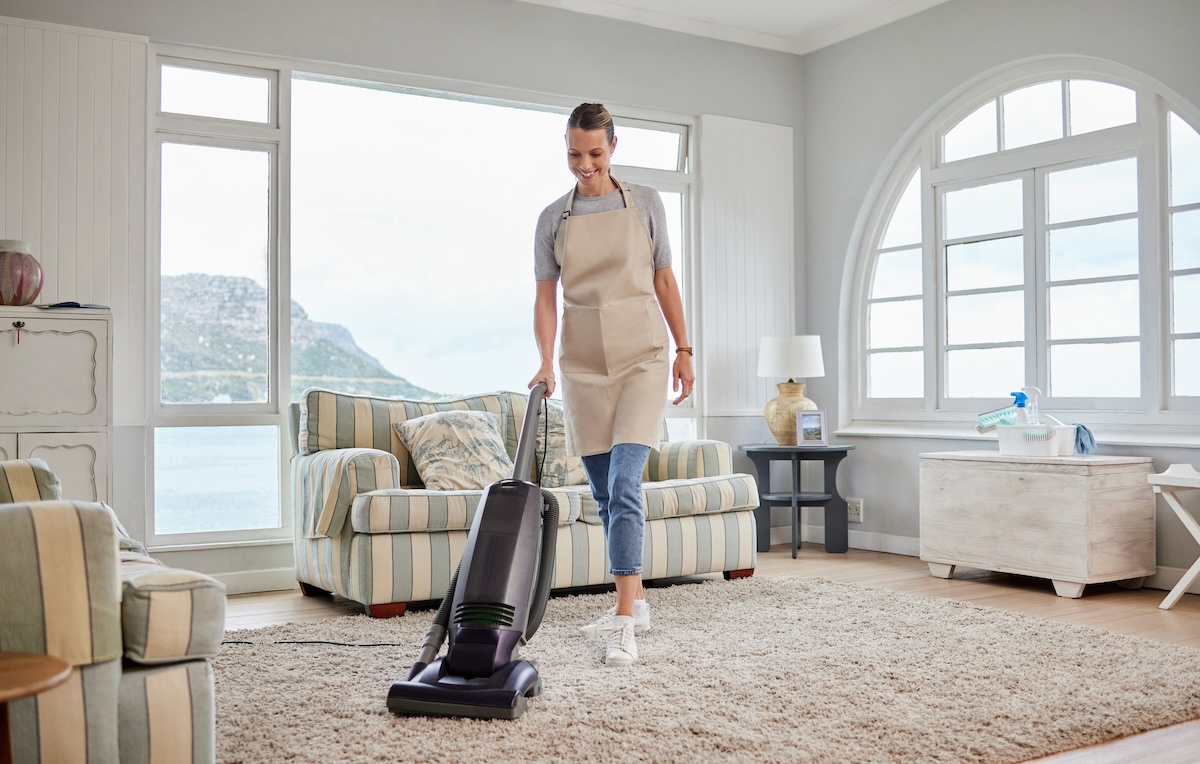
At the same time, that all-in-one, portable design comes with a few tradeoffs:
- You’re carrying the motor, the dust container, and the entire machine with you as you clean.
- Capacity is smaller, so emptying happens more often.
- Because everything is happening right there in the room, noise and airflow are part of the experience.
That’s where the comparison starts to get interesting. Upright vacuums do a lot of things well, and we carry them because they make sense for many homes. But they solve the cleaning problem in a very different way than a built-in system does, which is why it’s worth looking at both options side by side before deciding what fits best.
Central Vacuum vs. Upright Vacuum Comparison Chart
| Feature | Central Vacuum | Upright Vacuum |
|---|---|---|
| Suction power | Typically stronger and more consistent | Good to very good, but usually less powerful |
| Noise in living areas | Lower, since motor is remote | Higher, since motor is right beside you |
| Ease of use | Light hose and tools, no full machine to carry | Grab-and-go simplicity, but heavier in use (Thought lightweight upright vacuums are available) |
| Installation | Requires planning and installation | No installation required |
| Dust capacity | Large canister or bag, emptied far less often | Smaller bin or bag, emptied much more often |
| Indoor air handling | Often better for fine dust and allergens | Can release some dust during use or emptying |
| Lifespan | Commonly much longer | Usually shorter overall service life compared to a central vac, though premium uprights can last many years |
| Upfront cost | Higher | Lower |
| Portability | Tied to the home | Easy to move or replace |
| Resale appeal | Can be seen as a built-in home upgrade | No home-value impact |
Why Central Vacuums Usually Feel More Powerful
This is actually one of the biggest reasons that homeowners end up loving their central vacuum systems. Portable vacuums have to fit the motor, the filtration, the collection bin, and the form factor into a relatively compact machine you can push around the house. A central vacuum power unit does not have that same design constraint. So, it can use a larger motor, larger airflow path, and a much bigger collection area.
That usually translates into stronger suction and better overall airflow, especially for deep carpet cleaning, pet hair, grit, and fine debris.
A good upright can still perform well. Some high-end models do a respectable job. But in a straight head-to-head comparison, central vacuum systems usually win on raw whole-house cleaning ability.
If you have thick carpet, multiple stories, pets, kids, or a house that seems to manufacture dust like it has side hustles, that extra power starts to feel less like a luxury and more like relief.
Why Central Vacuums Are Usually Quieter
Anyone who has vacuumed while someone else was on a call, watching TV, napping, studying, or already one irritation away from losing their patience knows this is not a minor issue.
With a central vacuum, the loudest part of the system is usually located away from the main living space. You still hear airflow through the hose, but you are not standing next to a loud motor the whole time.
Indoor Air Quality Comparison
This is where central vacuum systems have one of their strongest practical advantages.
Many portable vacuums do a decent job capturing dirt, but they still operate right in the room with you. Depending on the machine, filter design, seal quality, and how full the bin is, some fine particles can end up back in the air during use or when you empty the container.
A central vac moves dirt and debris away from the living area and stores it in a separate power unit. Some systems also vent exhaust outside the main occupied space. Even when they don’t, their filtration setup is often better suited to controlling fine dust than a typical portable vacuum.
For households dealing with allergies, pet dander, or just the sense that dust comes back five minutes after vacuuming, this is one of the most persuasive reasons to consider a built-in system.
Convenience
People talk about convenience like it’s one thing, but it really breaks into two different ideas.
- An upright vacuum is convenient because it’s simple. Buy it, store it, use it, done.
- A central vacuum is convenient because the cleaning process itself can be easier once the system is in place.
With a central vacuum, you’re not dragging the motor, dust container, and full body of the machine around furniture, up stairs, across thresholds, and into every bedroom. You’re working with a hose, wand, and attachments. For many homeowners, that feels lighter and less tiring, especially in larger homes.
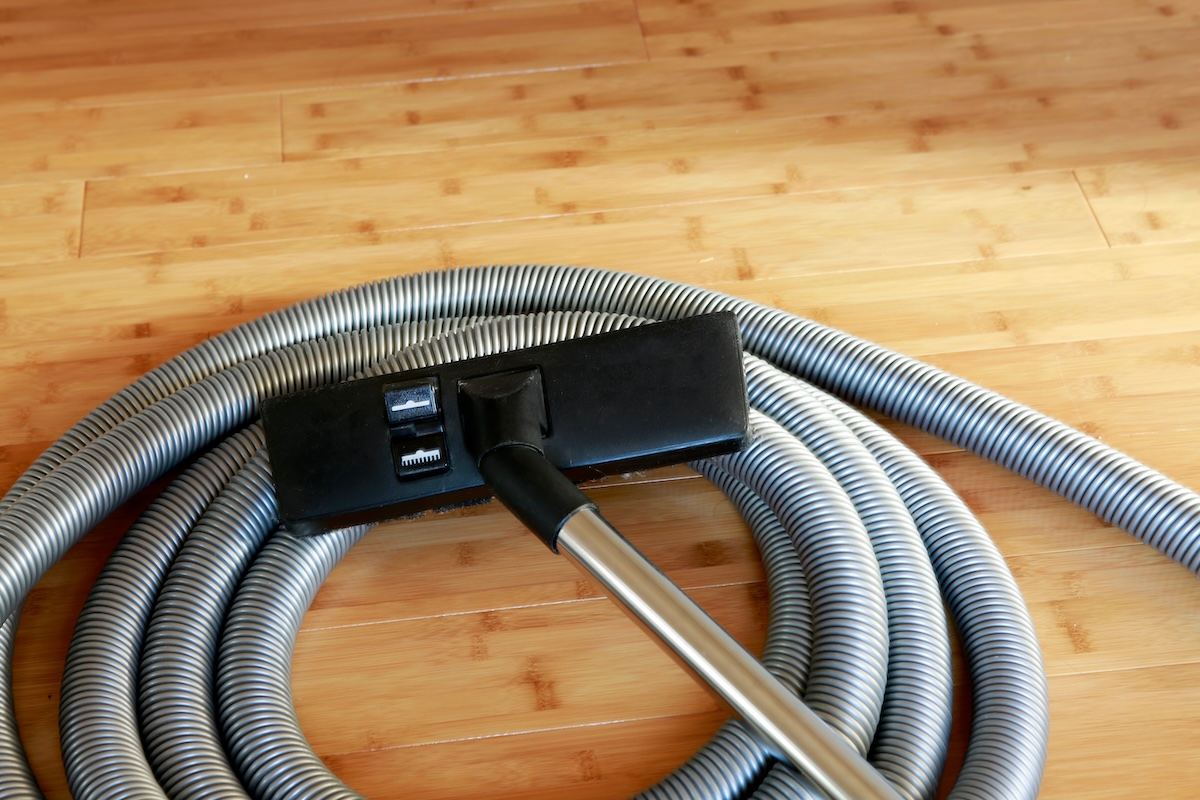
That said, there is one catch people should hear plainly: hose management can be the annoying part. A traditional central vac hose can be long, a little awkward, and mildly dramatic in the hallway if you’re not careful. Retractable hose systems improve that quite a bit, but they add cost and require planning.
So the most honest version is this: an upright vacuum is simpler to become an owner of, but a central vacuum system is often more pleasant to use.
Maintenance
Fewer Trash-Can Trips vs. Simpler Hardware
A central vacuum usually needs less frequent emptying because the debris canister or bag is much larger. Depending on home size and usage, some people empty it every few months rather than every few days or weeks.
That alone can be a major quality-of-life upgrade. (You also avoid dealing with a small dust bin cloud puffing into your face every time it is time for maintenance.) Anyone who has ever emptied a bagless vacuum indoors already understands this point.
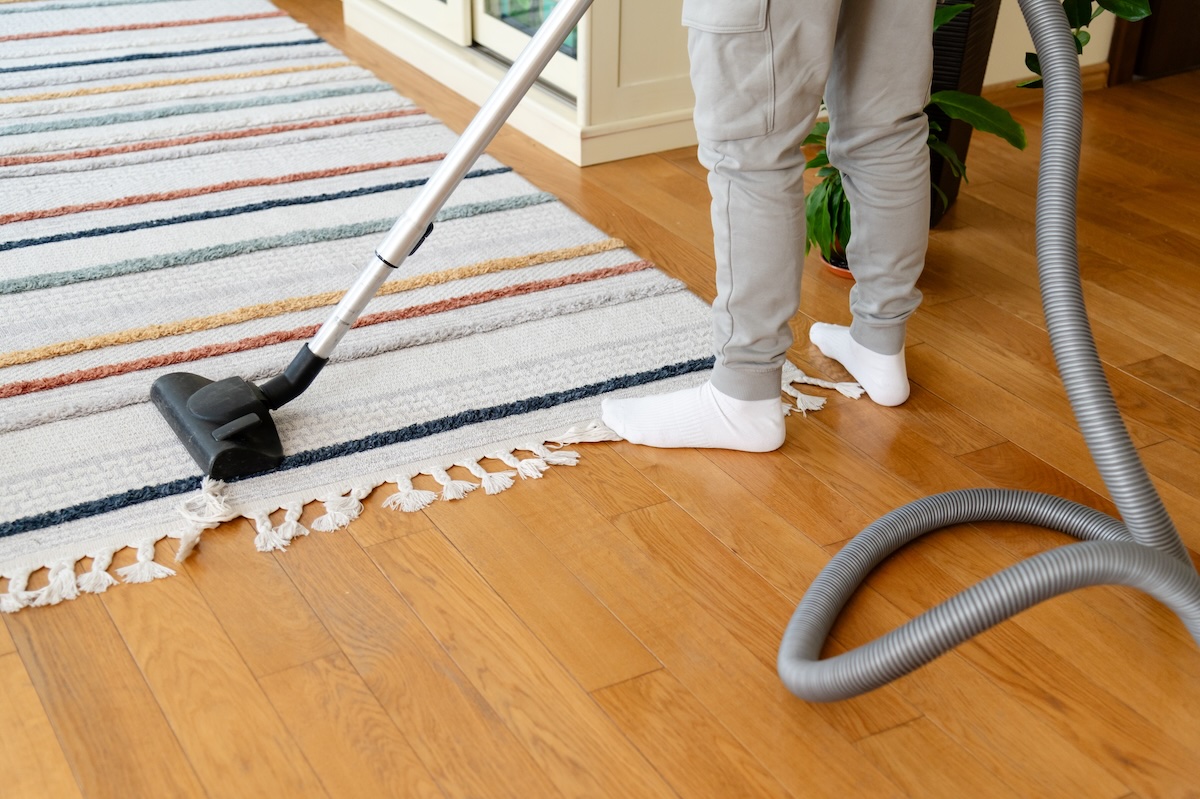
Upright vacuums, especially bagless ones, usually need more frequent attention. Smaller bins fill faster. Filters need cleaning and eventually replacement. Hair gets tangled around brush rolls. Wheels, swivels, latches, battery packs, and folding joints all live a harder life because the entire machine is constantly being pushed, tilted, carried, and bumped around.
That does not mean uprights are bad. It just means central systems tend to spread the workload more intelligently.
Lifespan and Long-Term Value
This is another area where central vacuum systems often separate themselves from portable vacuums.
A well-installed central vacuum system can last many years, and the in-wall tubing itself can last a very long time. Power units often outlast multiple portable vacuums over the same stretch of homeownership. Hoses and attachments may need replacement along the way, but the overall system is built more like home equipment than a disposable appliance.
Portable uprights usually have a shorter life expectancy, though some high-end vacuum cleaners can hold up for many years. In some cases, even decades.
Still, from a long-term cost standpoint, a central vacuum can make more sense than it first appears, especially if you plan to stay in the home for years.
Upfront Cost: Where Upright Vacuums Have the Clear Advantage
If you need the lower upfront cost, upright vacuums win. A portable upright vacuum might cost anywhere from a modest amount to a premium price, but it is still a far smaller initial commitment than a central vacuum system. A central vacuum requires equipment, installation, inlet placement, tubing runs, and possibly drywall or finishing work depending on the home.
That higher starting price is the biggest reason many homeowners hesitate, and it is a fair hesitation. Central vacuums tend to make the best financial sense for people who:
- own their home
- plan to stay there for a while
- want a more permanent cleaning solution with more convenience and long-term performance
If that is not your situation, an upright or cordless vacuum would likely be the smarter buy.
Cordless vs Central Vacuums
This comparison comes up more often than you might expect, mostly because cordless vacuums have gotten so good at what they do. It’s not a strange question necessarily, it’s just that these two aren’t really built for the exact same role.
Cordless vacuums changed expectations around convenience. They’re quick to grab, easy to use, and genuinely useful for everyday cleanup, especially in smaller homes or apartments.
At the same time, they’re not direct replacements for a central vacuum in larger spaces or for full-house cleaning.
Where cordless vacuums shine
They’re excellent for quick, daily cleanup. Crumbs in the kitchen, dirt by the door, a little pet hair on a rug—it’s handled in seconds. The appeal is speed and low friction. You see a mess, you take care of it, and you’re done.
Where cordless vacuums start to show limits
Battery life is finite, dust bins are small, and suction is typically lower than a full central vacuum system. They’re great for short tasks, but less ideal for cleaning an entire house, especially if you’re dealing with a lot of square footage, carpet, pet hair, or stairs.
Where central vacuums pull ahead
A central vacuum doesn’t come with a battery timer in the background. There’s no need to think about charge cycles or power fading halfway through. Suction is stronger, capacity is much larger, and the system is designed for full-house cleaning rather than quick touch-ups.
In a lot of homes, the two end up working well together. A cordless vacuum handles the day-to-day messes, while a central vacuum takes care of the deeper, whole-house cleaning when it’s time to reset everything.
Who Should Seriously Consider a Central Vacuum?
A central vacuum tends to make the most sense for these households:
Large homes
If you have a bigger house, multiple floors, or long cleaning sessions, the built-in convenience and stronger suction are easier to justify.
Families with pets
Pet hair, dander, tracked litter, and whatever mysterious floor confetti appears around food bowls can test any vacuum. Central systems usually handle this workload better.
Households dealing with allergies
Because central vacuums generally do a better job moving dust away from the living space, they can be a better fit for homeowners who care a lot about fine particle control.
Older homeowners or anyone tired of hauling a full machine
Carrying a heavy upright upstairs is nobody’s favorite hobby. A hose and lightweight attachments can be much easier to manage.
Long-term homeowners
If you plan to stay put, a built-in system has more time to pay you back in convenience, durability, and daily use.
Who Should Probably Stick With an Upright or Cordless Vacuum?
Portable vacuums still make more sense in plenty of situations.
- Renters – You are not going to install a central vacuum in a place you do not own.
- Smaller homes and apartments – In compact spaces, the benefit gap narrows. A decent upright or cordless vacuum may do everything you need.
- Tight upfront budgets – A central vacuum may be better in some categories, but better is not the same thing as necessary. If the initial cost does not fit, that is the answer.
- Households that mainly need fast spot cleanup – If your cleaning style is more “grab it, hit the mess, put it back,” a cordless or upright vacuum may match your habits better.
- Frequent movers – If you expect to relocate, portability beats permanence. That said, it’s worth considering that a central vacuum can potentially add value/appeal as a built-in feature, especially in larger homes. If you’re planning to sell in the near future, the decision usually comes down to whether you want to enjoy the system while you live there. If the timeline is very short, many homeowners stick with a quality portable vacuum and focus their upgrade budget elsewhere. If you have a few years, a central vacuum often pays off in daily use and can still be a nice bonus for the next owner.
Real-Life Scenarios Where Central Vac Systems Shine
Pet owner in a larger house
This is prime central vacuum territory. Strong suction, less frequent emptying, better control of pet hair and dander, and easier whole-house cleaning all work in your favor.
Apartment resident
A central vacuum is almost certainly overkill here. A good upright or cordless model is the practical move.
Busy family with kids
A central vacuum can make full-house cleaning faster and less tiring, especially when traffic, crumbs, dirt, and pet hair seem to respawn overnight.
Homeowner planning a remodel or new build
This is one of the best times to consider central vacuum installation because access is easier and planning can happen before the walls are closed.
Someone tired of replacing vacuums every few years
A central system deserves a hard look. It costs more up front, but it is usually built for a much longer relationship.
Does a Central Vacuum Add Home Value?
It can. A central vacuum system is generally viewed as a built-in home feature rather than another appliance sitting in a closet. It may not transform resale value on its own, but it can definitely add appeal, especially in larger homes or in markets where buyers appreciate practical built-in upgrades.
For the right buyer, it reads as a thoughtful upgrade. It suggests the home was designed or improved with long-term function in mind, not just surface-level finishes. It’s the kind of feature that may not drive the showing, but it can help reinforce the overall impression of a well-equipped, higher-end home once they’re already interested.
What to Know Before Installing a Central Vacuum System
A central vacuum is a long-term upgrade, and like any built-in system, it works best when you go in with clear expectations.
Higher upfront cost
This is usually the first consideration. A central vacuum is more of an investment than a portable unit, but it’s also built very differently. You’re installing a system designed to last for years, not replacing a small appliance every few seasons.
Hose storage and handling
Traditional hoses are long by design so you can cover more area from each inlet. That can feel a little awkward if the system isn’t planned well. The good news is there are clean solutions for this, including retractable hose systems and better inlet placement, which make a big difference in day-to-day use.
It’s a built-in feature
A central vacuum becomes part of the home. You don’t take it with you, but it stays behind as a functional upgrade for the next owner. For many homeowners, that can makes sense, especially in larger or higher-end homes where built-in features are expected.
Planning makes a big difference
Retrofitting is absolutely doable in most homes, and can be easier than many homeowners think. That said, the best results come from thoughtful design. Proper inlet placement, hose reach, and system sizing are what separate a good setup from a truly great central vac setup.
As you can see, none of these are necessarily deal-breakers. They’re simply the practical considerations that come with installing a specialized system designed to improve how the entire home is cleaned.
Final Thoughts
Central vacuum vs. upright vacuum isn’t really about one being universally better. It’s about choosing what fits your home and how you live day to day.
Upright and cordless vacuums have earned their place. They’re easy to buy, easy to use, and perfect for quick cleanups or smaller spaces. For a lot of households, they get the job done just fine.
Central vacuum systems step into a different role. They take something you already do—cleaning your floors—and make it feel more like a built-in part of the home rather than a chore you have to manage with a portable machine. You get stronger, more consistent performance, less noise where you’re actually cleaning, better control over dust, and fewer interruptions to empty a bin or deal with a full unit.
Both options can deliver a high-end cleaning experience when you choose well. A premium upright with the right features can feel refined, capable, and satisfying to use in its own way. It’s direct, familiar, and always ready to go.
But a central vacuum system tends to fade into the background in the best possible way. It becomes part of the house itself: something that’s there when you need it, powerful without being intrusive, and improving how the space is maintained over time.
In the end, it comes down to how you want cleaning to feel. If you prefer simplicity and flexibility, a high-end upright fits naturally into that routine. If you like the idea of a home that handles more of the work behind the scenes, a central vacuum starts to make a lot of sense.