So, your central vacuum’s acting up. Maybe it won’t turn on. Maybe it keeps running when it shouldn’t. Or maybe it’s lost suction entirely.
What now?
Before we jump to conclusions, let’s quickly go over how this system actually works. You’ve got a power unit, usually mounted in the garage or basement. That’s your motor and collection bin. From there, a network of PVC tubing runs through your walls, connecting to inlets around the house. When everything’s working right, it’s a surprisingly elegant system — quiet, powerful, and generally a lot more convenient than dragging a portable vacuum from room to room. It’s that whole-house efficiency and stronger effectiveness that makes installing a central vacuum worth it in the first place.
But like any closed system, when something goes wrong—whether that’s electrical, mechanical, or even just a clog—it throws the whole thing off. What we’re going to do here is break down the most common failure points, what they tell us about the system, and when it’s best to bring in someone with the tools to trace the issue safely.
Whether your central vacuum won’t turn on, won’t shut off, or has lost suction, here’s what those symptoms might mean, and whether or not it might be time to call in a pro.
“My Central Vacuum Won’t Turn On”
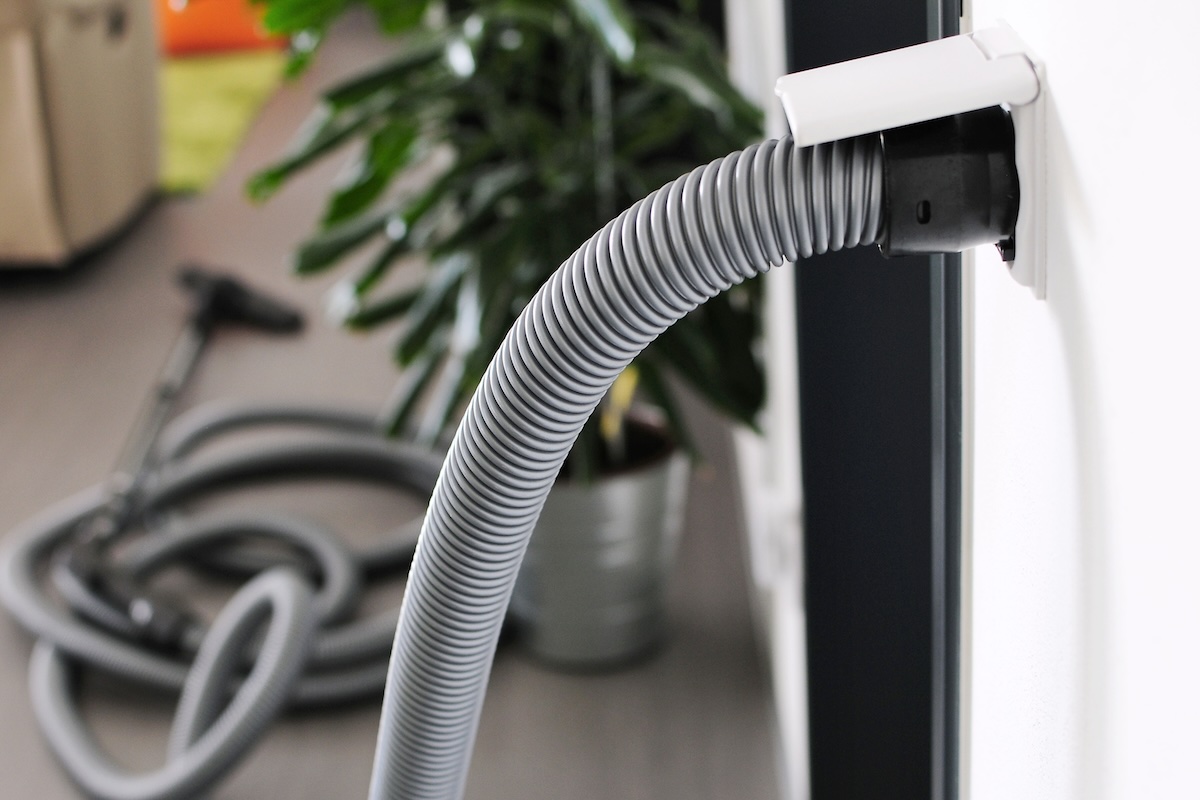
This is usually the first sign something’s wrong, and it can be the most frustrating to deal with. You plug in the hose like always, maybe hear a faint click, but nothing happens, no motor hum, no suction. Just silence.
Here’s what could be happening:
- Power is disrupted. This might be a tripped breaker, unplugged unit, or even a blown fuse in the vacuum’s dedicated circuit.
- The low-voltage wire is damaged. Central vacuums use a low-voltage wire to signal the motor to start. If this wire is broken, chewed, or loose at the inlet or unit, the motor won’t kick on. (This can be especially common in older systems or homes where pests have chewed wiring in the attic or walls.)
- A failed relay or circuit board. If the unit has power but doesn’t respond, the internal electronics may have failed. That is usually not user-serviceable. This kind of issue usually requires a diagnostic from someone familiar with these systems, since replacement parts vary by brand and model.
- Dead motor or failed capacitor. If the motor itself has gone out, or if the capacitor that helps it start has failed, the unit may be completely unresponsive—or it may hum faintly but never spin up. Motors don’t usually fail out of nowhere, but if the system is over 10–15 years old, it’s certainly possible.
When the unit won’t power up at all, the key is to rule out the basics—breaker, reset switch, outlet. If those check out, there’s a good chance the issue is internal. It’s time to let a professional diagnose the wiring and internal components, especially before assuming the system needs to be replaced. A technician with a multimeter and some system knowledge can save a lot of unnecessary part-swapping or teardown.
“My Central Vacuum Won’t Shut Off”
If your vacuum keeps running after you unplug the hose, that’s usually a sign the system is getting a constant “on” signal when it shouldn’t be. (Think of it like a light switch that’s stuck in the on position, except that the “switch” might be inside the wall, at the inlet, or inside the vacuum unit itself.)
This can happen for a few different reasons:
- A stuck relay or failed control board inside the power unit
- An inlet that’s still sending a signal because of a faulty connection or stuck contact
- Low-voltage wires shorted together somewhere in the wall system
A technician will usually start by checking whether the unit still runs when disconnected from the low-voltage signal lines. That tells them whether the problem is in the system’s wiring or inside the motor housing. Either way, diagnosing this requires testing continuity and signal flow—something best handled with the right tools and a clear wiring diagram.
Even though low-voltage wiring is relatively safe to handle (it’s not line voltage), not all homeowners are comfortable opening up a power unit and identifying the right terminals. There’s also a risk of misidentifying wires or pulling something too hard, damaging the board or relay in the process. If they’re dealing with a system that’s been retrofitted or modified over the years, even simple steps can have unexpected consequences.
If your vacuum won’t shut off on its own, it’s time to shut off the breaker or unplug the unit and schedule a service call. A qualified repair tech can isolate the issue quickly without damaging the board or chasing phantom shorts through your walls.
If Your Central Vacuum Has No Suction or Low Suction
This is one of the most common problems with central vac systems, and easily one of the most annoying. Everything powers on, but it barely picks anything up. Or the suction’s gone entirely at certain inlets.
The upside? It doesn’t usually mean the motor is dying. Most of the time, the system is running, but the airflow is being blocked, leaked, or restricted somewhere between the hose and the canister.
Here are some things worth checking out:
1. Is the canister full?
If the debris canister or bag is full—or the filter is completely clogged—it’ll choke the airflow. Empty the canister and gently tap out the filter if it’s reusable.
2. Are the hose or inlets clogged?
Hair, construction dust, or even small objects can get lodged in the system. Even something like a bottle cap can get jammed in the hose or behind the inlet valve. A pro can “snake” the lines with special equipment/safely reverse the airflow and dislodge blockages without damaging the piping. Avoid trying to use coat hangers or shop vacs to reverse flow, which can make the problem worse.
3. Are there leaks in the piping?
Cracked PVC, broken inlet seals, or dislodged joints can all cause suction loss. These aren’t always visible without testing the system under load, which is why a service call can save a lot of guesswork.
4. Unit is running but airflow is restricted
In rare cases, the motor runs but one of the exhaust paths is blocked, limiting airflow. That might happen after vacuuming fine dust (like drywall compound or ashes), which clogs filters internally and restricts airflow without ever filling the bin.
Suction problems can usually be fixed without replacing major parts—but finding where the blockage or leak is takes some detective work. A central vacuum repair technician can isolate the problem with airflow testing tools, and in most cases, restore performance without needing to replace the motor or install new lines.
If the Power Unit Runs, But Nothing Happens at the Hose
This might look like a complete failure, but it’s often a low-voltage signaling issue:
- The hose switch isn’t working
- The contacts in the inlet are dirty or corroded
- There’s a wiring fault between the inlet and the unit
Before you assume the motor is dead, check whether the unit runs when you press the manual switch on the canister (if it has one). If it does, the motor’s fine—and the issue is between the hose and the signal wiring.
If the Whole System Just Stopped Suddenly
This one tends to happen after a big cleaning day—or after vacuuming something you weren’t supposed to (like drywall dust).
If your central vacuum stopped working mid-use, here’s what might be going on:
- Thermal overload protection kicked in. Many units have built-in shutoff if the motor gets too hot.
- Motor brushes are worn out. After 10–15 years, some motors will fail gradually. You might hear a whining noise or see black dust inside the canister before total failure.
- Capacitor failure. If the motor won’t start but hums or clicks, the capacitor may be bad.
Again, none of these are easy to test without tools—and attempting to open the motor housing without knowing what you’re doing is risky (and often voids any remaining warranty).
When to Call a Central Vacuum Repair Professional
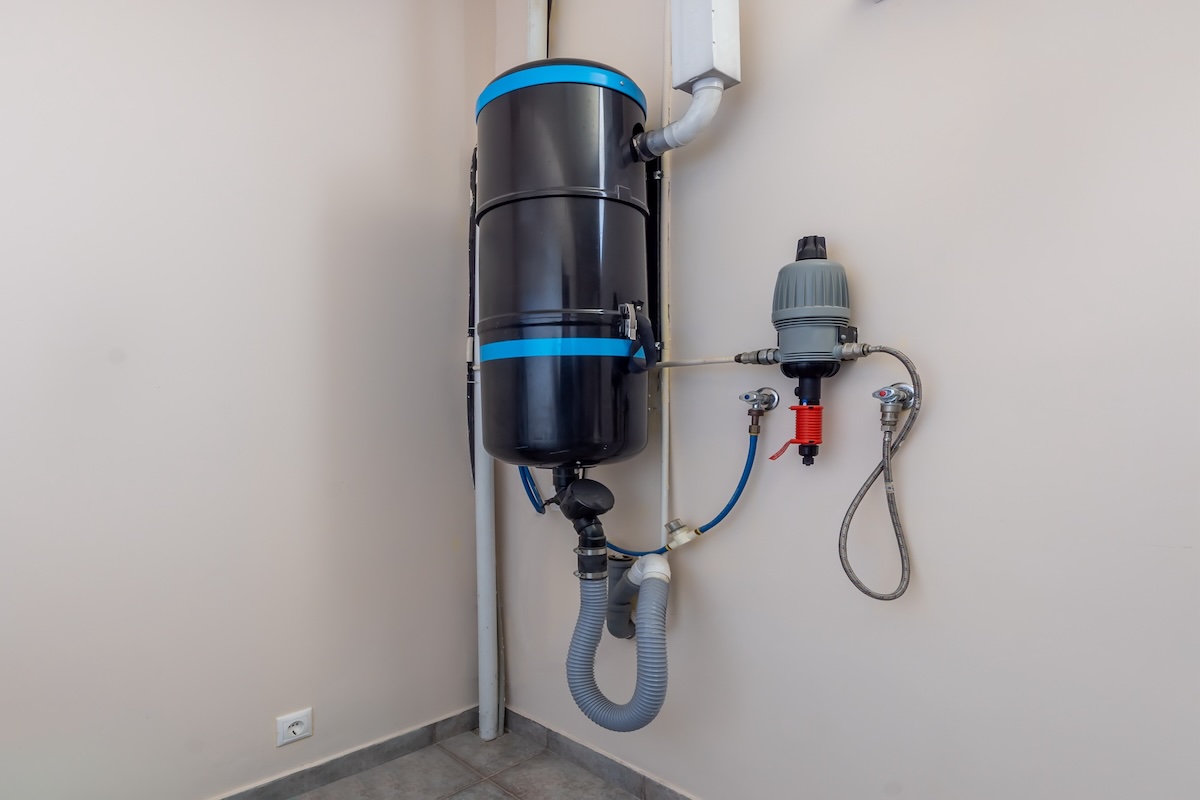
Central vac systems can be deceptively complex under the surface. The power unit might be easy to access, but everything else is routed through low-voltage wiring and hard-piped tubing behind finished walls. Diagnosing a failure means knowing how to test suction at the right points, trace wiring faults, and recognize when a motor issue is electrical vs mechanical.
A good repair tech can isolate what’s failing, why it’s happening, and whether it’s worth fixing or upgrading. That can keep you from troubleshooting false leads or replacing components that were never the problem to begin with.
A central vacuum system can give you 5 different symptoms with 1 root cause, or 1 symptom caused by 5 different things:
- Example: A low-voltage short.
This can cause:- The unit not turning on
- The unit not turning off
- Sporadic power behavior
- The hose switch doing nothing
- Random inlets not working
(All from one wiring issue.)
- Example: A clog in the main trunk line.
This can lead to:- Low suction at every inlet
- The motor running louder than usual
- Overheating/shutdown mid-use
- Debris backing up into the hose
- Filter contamination from reversed pressure
- Example: “Won’t turn on” could be:
- A tripped breaker
- A blown internal fuse
- A bad relay
- A wiring fault in a wall inlet
- A failed hose switch
- A dead motor or capacitor
Without the correct tools or wiring knowledge, it’s easy to misread the signs and go down the wrong path. You might replace a perfectly good hose, swap out a motor that was never the issue, or miss a wiring short that’s buried behind drywall. Getting a trained tech to take a look at your central vac can save hours of frustration and prevent accidental damage to an otherwise repairable system.
Takeaway
When a central vacuum stops working right, it’s almost never random. There’s always a reason—it’s just a matter of finding it. But without a plan, troubleshooting usually turns into guesswork. And with a system built into your walls, guessing wrong can get expensive fast.
Whether your central vacuum won’t turn on, won’t shut off, or has no suction, the root cause is almost always specific—and solvable. But poking around without a clear plan can cause more harm than good.
If your system isn’t working right, the best next step is to schedule a diagnostic with a central vacuum specialist. They’ll identify what’s really going wrong—and help you decide if repair or upgrade makes more sense based on how your home is wired. That repair call can easily pay for itself, especially if it saves you from replacing the system, replacing the wrong part, or chasing a problem that isn’t even in the unit.
If your central vac system’s misbehaving, the best move is to get someone who knows these inside and out to take a look. There’s a very fine line between troubleshooting/trial and error and needlessly tearing up drywall. A good central vacuum repair service keeps you on the right side of it.