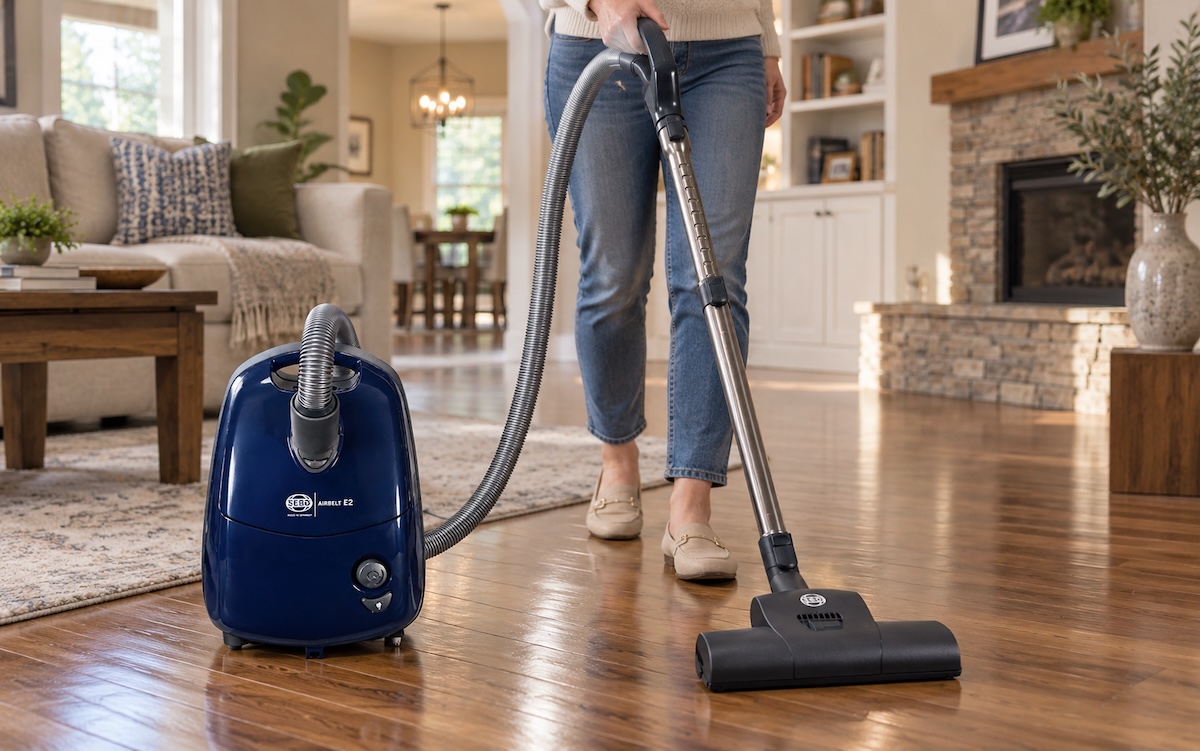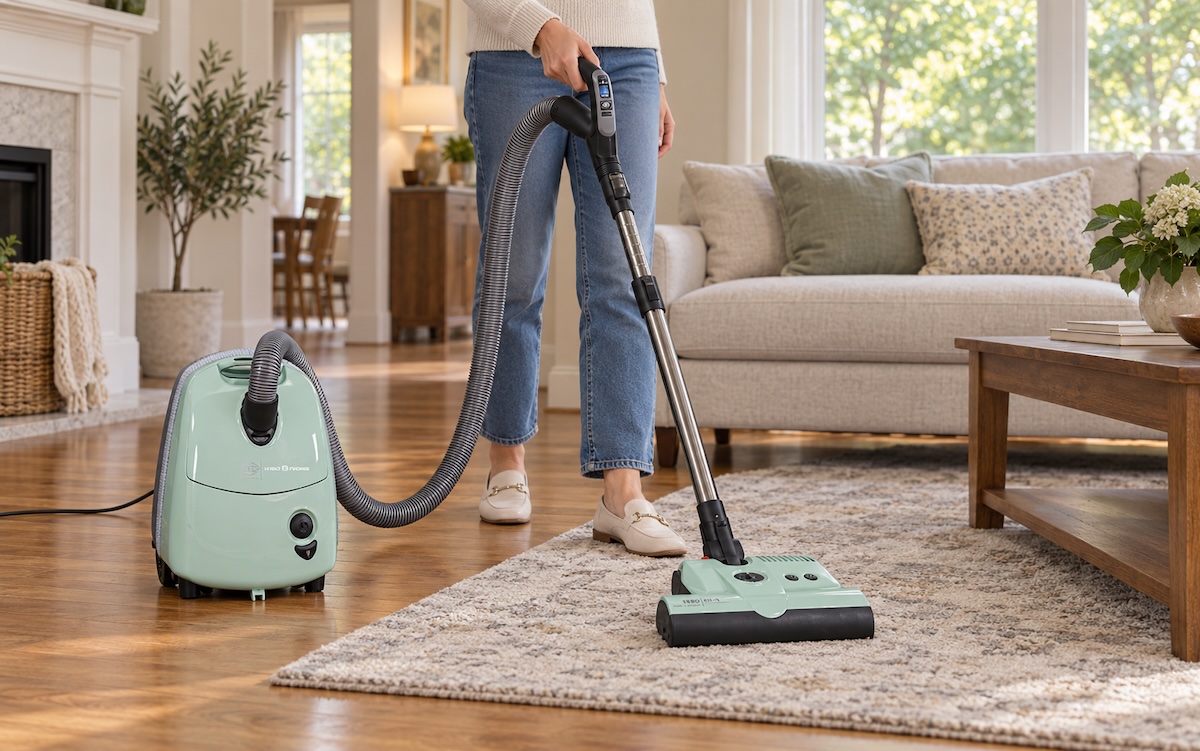
If you’re the type of homeowner who vacuums once a month and forgets where you left the dustpan, this might not be for you. But if you’ve ever wrestled an upright vacuum into a closet, dragged a canister behind you like an unwilling toddler, or played tug-of-war with a tangled extension cord mid-clean… then yes, you’ve probably wondered if there’s “a better way.”
Central vacuum systems are one of those home upgrades that rarely get center stage, but have a strong community of diehard fans. They’re installed behind walls, hidden in baseboards, and humming away in basements or garages while doing a job most of us barely think about until something breaks, or starts smelling like burnt Cheerios. When chosen and installed right, they mean more suction, less noise, and fewer allergens.
In most modern systems, there are no bags to buy or change. Most central vacuum systems installed today use a bagless collection canister, especially in residential installations. These units collect debris in a large container that you empty directly, often just 2 or 3 times a year. There’s no need to buy or replace vacuum bags, and maintenance is minimal. Some units even let you choose between bagged and bagless operation.
Still, let’s not pretend these systems are for everyone—or for every house. They require forethought, upfront installation costs, and a willingness to rethink how you clean.
So today, let’s look at how central vacuum systems work, what makes them worth considering, where they shine, and where they don’t.
Whether you’re designing your dream home, planning a smart remodel, or just sick of your current vacuum’s half-hearted attempts at picking up dog hair, we’ll walk you through the real pros, cons, and what kind of homeowner gets the most value out of a central vac system.
What Is a Central Vacuum System?
A central vacuum system, also called a built-in vacuum, is a whole-house solution that replaces the need for a portable upright or canister vacuum. Instead of rolling a unit room-to-room, you plug a lightweight hose into wall inlets that connect to tubing behind your walls. That tubing leads to a powerful motor and collection canister—usually located in your garage, utility room, or basement.
When the hose is inserted into an inlet, the system turns on automatically. Once you’re done, removing the hose turns it off.
Components
- Wall inlets: Discreet ports installed throughout the home for hose connection
- Tubing: PVC piping inside walls or under floors that carries debris to the collection canister
- Power unit: High-suction motor and dirt canister located outside the living space
- VacPan toe-kick inlet: A popular kitchen feature—just sweep debris into a slot under the cabinet and it vanishes
This isn’t new tech—central vacuums have been around since the 1950s—but today’s systems (like CycloVac) are vastly more efficient, quieter, and easier to install than you might expect.
Who Are Central Vac Systems Worth It For?
- Pet owners who are tired of lingering dander and fur
- Allergy sufferers who want a real difference in air quality
- Large households or homes with lots of carpeted areas
- People building custom homes who want future-proof features
- Anyone who wants powerful, nearly silent vacuuming with minimal upkeep
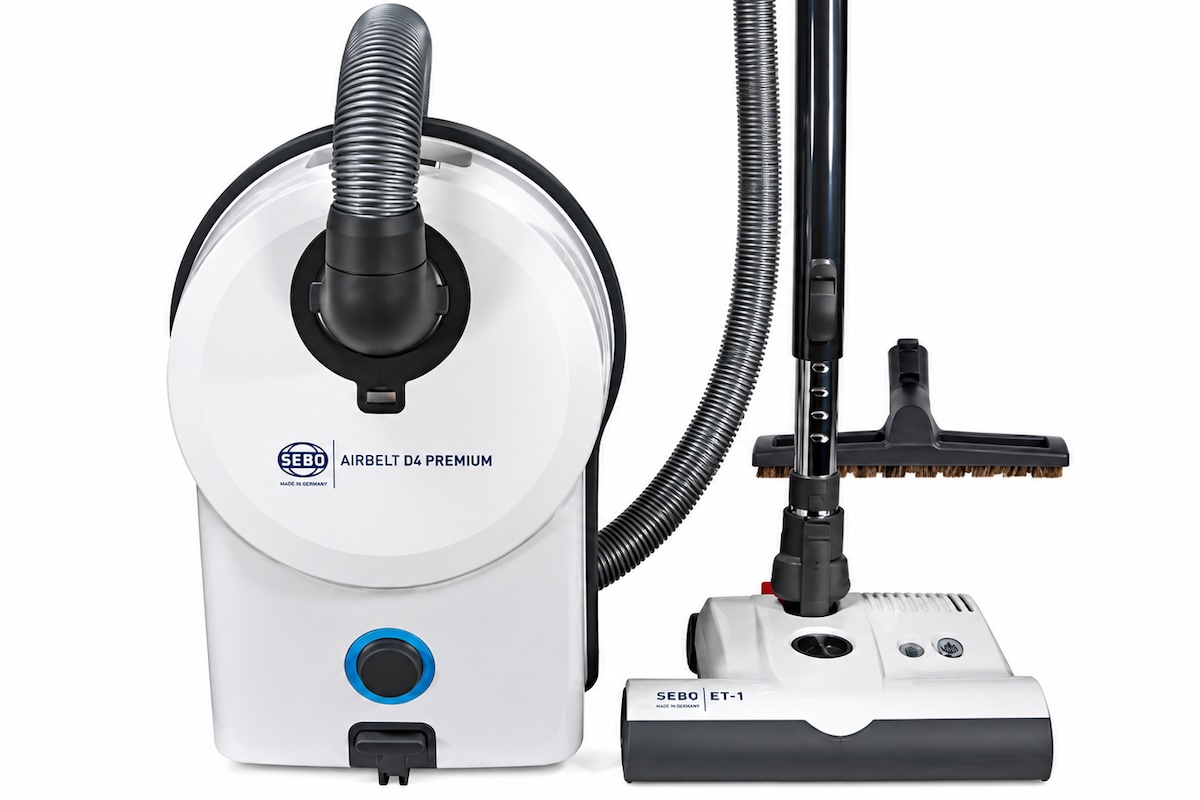
It’s not that uprights or canisters aren’t worth it, high-end vacuum cleaners (like those from Miele, Sebo, Riccar, etc.) are incredibly powerful and well-designed. But they’re ultimately portable tools. Central vacuum systems like those from Cyclovac are more like plumbing/HVAC, or a built-in appliance: integrated into your home, engineered for long-term performance, and designed to quietly handle the dirty work for decades.
How Central Vacuum Systems Work
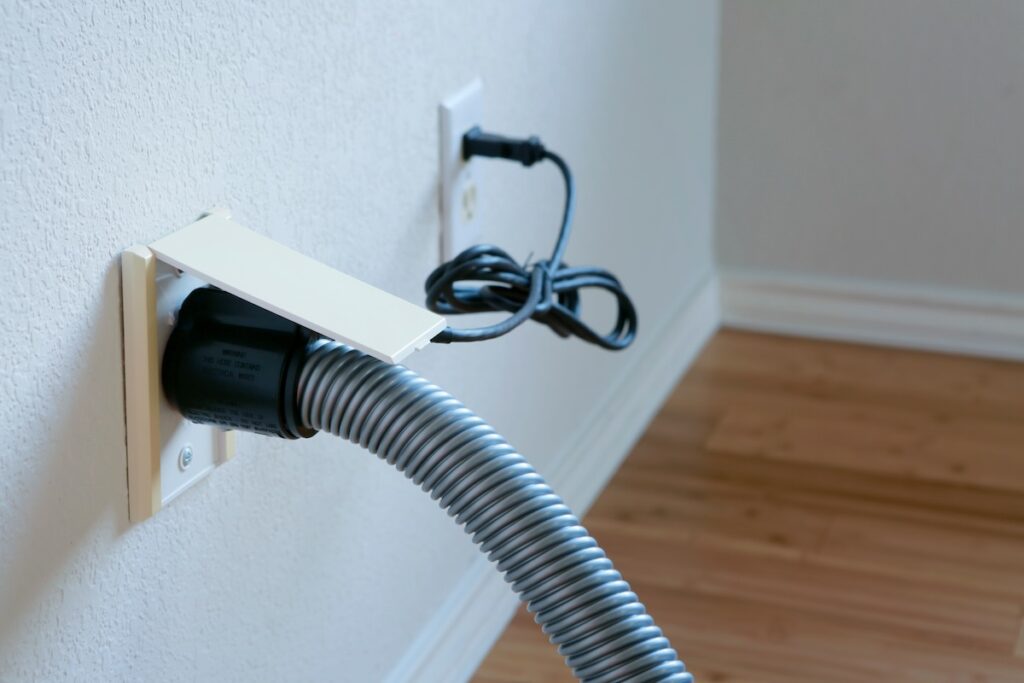
Instead of cords, bags, or heavy units, you use a lightweight, flexible hose—often extendable to 30 feet or longer—with your choice of handle and attachments. In a way, it’s a bit like powerful “cordless” vacuuming, with more reach and far more suction.
Many homeowners install inlets in every room, while others opt for just 1–2 inlets in strategic locations. With a long hose and thoughtful placement, most average-sized homes need only two inlets total.
As for suction power? A good central vac has 3 to 5 times the suction of a standard upright vacuum. That means deeper cleaning, especially in carpets and around baseboards.
The Benefits of a Central Vacuum System
1. Improved Air Quality
Traditional vacuums stir up dust—even HEPA-filtered models release small particles into the room. A central vacuum vents outside the living space, so there’s virtually no re-circulation of allergens, dust, or fine particles.
This makes a major difference for people with allergies, asthma, or sensitivity to pet dander.
2. Quiet Operation
Because the motor is isolated—typically in the garage or basement—you can vacuum without the roar. You’ll still hear some air movement at the hose end, but it’s far quieter than a traditional vacuum. You can easily carry on a conversation or take a call.
3. Exceptional Cleaning Power
Central vacuums are engineered for power. Even mid-range models outperform high-end portable vacuums when it comes to suction strength and consistency. Whether it’s deep pile carpet, hardwood floors, or those impossible ceiling cobwebs—central vac handles it all with ease.
4. Convenient Attachments & Customization
Central vacuum accessories include everything from telescoping wands to motorized brush heads, crevice tools, pet grooming nozzles, and garage/car cleaning kits, there’s a tool for every job. Systems like CycloVac offer modular handle options and ergonomic hose upgrades.
You can even integrate retractable hoses or hide-a-hose systems that disappear into the wall when not in use.
5. Low Maintenance
- No bags to buy or change with bagless systems
- Large canister needs to be emptied only 2–3 times per year
- Most systems require no maintenance between emptyings
- Long lifespan (often over 2 decades with minimal upkeep)
6. Adds Long-Term Home Value
A professionally installed central vacuum system is considered a desirable built-in feature, especially in higher-end homes. While it won’t guarantee a higher sale price, it can be a tie-breaker for buyers comparing homes, and it demonstrates thoughtful upgrades.
What About the Downsides?
Even the best central vac system isn’t the right fit for every household. Here’s what to keep in mind:
1. Installation Can Be Tricky in Old Houses
While it’s easiest (and cheapest) to install during new construction, most systems can still be retrofitted into existing homes. The key is having sufficient wall access, attic or basement space, and a route for the tubing. In homes with minimal wall cavities, installation might require creative routing or limit how many inlets can be placed.
That said, modern central vac systems are often designed with retrofit installation in mind. Some installers specialize in working with finished homes and have developed techniques to route tubing through closets, behind kitchen cabinets, under floors, or alongside existing utilities. Installers can sometimes complete the job in as little as a single day, with little to no visible damage. Some manufacturers even offer low-profile surface-mount options for specific situations.
2. The Hose Isn’t Tiny
Central vacuum hoses are long—usually 30 to 35 feet—which is what allows you to cover most of your home from a single inlet. While they’re lightweight and easy to maneuver, they can take up more storage space than many people expect.
Some homeowners install a wall-mounted hose hanger in a utility closet, while others opt for retractable hide-a-hose systems that tuck the hose back into the wall automatically (at a higher cost). It’s not a major drawback per se, but it’s worth planning for.
3. Not Always Cost-Effective for Short-Term Living
If you’re planning to move in the very near future, the ROI becomes murky. You may not recoup the upfront cost unless you market the system as part of your home sale strategy. If you’re only going to be in the home for another year or two, the economics change considerably—and this could be a dealbreaker.
The upfront cost of a central vac system can be difficult to justify if you won’t be around to enjoy its benefits over time. Unlike visible upgrades like kitchen remodels or flooring, a central vac system isn’t something all buyers will immediately notice or assign dollar value to—especially if they’ve never used one before.
Unless you’re in a premium home segment where upgrades and integrated features like central vac are expected, you’re unlikely to recoup the full investment on a short timeline.
Bottom line: If resale is just a year or two away, and you’re not personally motivated by the air quality or convenience benefits, you may be better off with a high-end portable vacuum instead. Central vacuum systems pay off best when you plan to stay put.
Comparing Central Vac to Traditional Vacuums
| Feature | Central Vacuum System | Upright/Canister Vacuum |
| Suction Power | 3–5x stronger | Varies by model |
| Air Quality | Ventilates outside | Some re-circulation |
| Noise Level | Very quiet (motor in garage) | Loud motor inside home |
| Convenience | No cords, no bags, no lifting | Corded, must be carried room to room |
| Maintenance | Empty 2–3x per year | Replace bags, filters more often |
| Installation Required | Yes | No |
| Upfront Cost | Higher | Lower |
| Lifespan | 20+ years | 4–6 years typical |
If you’re leaning toward central vacuum technology, the next question is which system fits your home and lifestyle best. CycloVac offers a range of units designed for everything from compact suburban homes to large custom builds with heavy-duty cleaning needs. Below is a quick side-by-side look at a few of their most popular models, each built to deliver serious suction with minimal noise and maintenance.
Popular Central Vacuum Units at a Glance
| Model | Type | Best For |
|---|---|---|
| CycloVac H625 Hybrid Central Vacuum | Hybrid Power Unit | Standard homes, balanced power |
| CycloVac H725 Central Vacuum Unit | Standard Power Unit | Everyday whole‑house cleaning |
| CycloVac HD7525 Hybrid | Heavy‑Duty Hybrid | Large homes, deep‑clean needs |
| CycloVac HD925 Central Vacuum – Hybrid | Hybrid Power Unit | Enhanced power for most homes |
Bottom Line: Is a Central Vacuum System Worth It?
- Yes—if you’re planning to stay in your home for 5+ years, value air quality, and hate the hassle of portable vacuums.
- Yes—if you’re building a new home, and want to add long-term value and convenience.
- Maybe not—if you move often, live in a small apartment or condo, or lack access for easy retrofitting.
Thinking About Installing One?
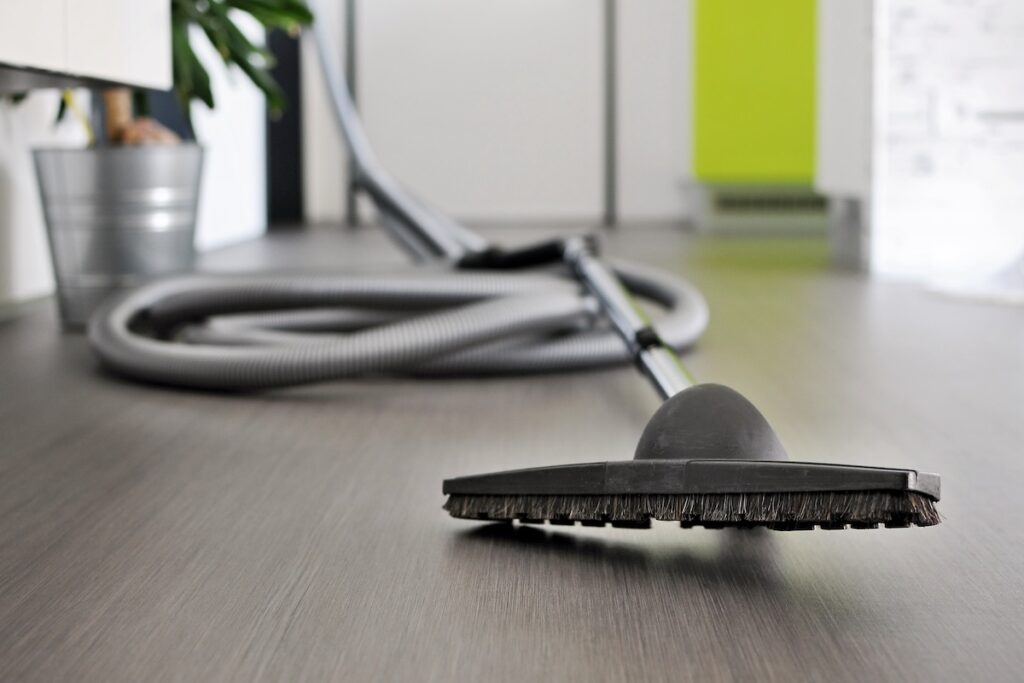
If you’re curious about outfitting your home with a central vac, start with our selection of central vacuum systems. We carry models built to perform in real homes—not just on showroom floors—and we’re happy to walk you through what fits your space and budget.
Already have one that needs some love? We handle central vacuum repair, upgrades, and retrofits too. Whether you’re mapping out a new build or trying to solve the mystery of an older existing unit in your garage, head to our contact page and we’ll help you design a system that makes life easier.